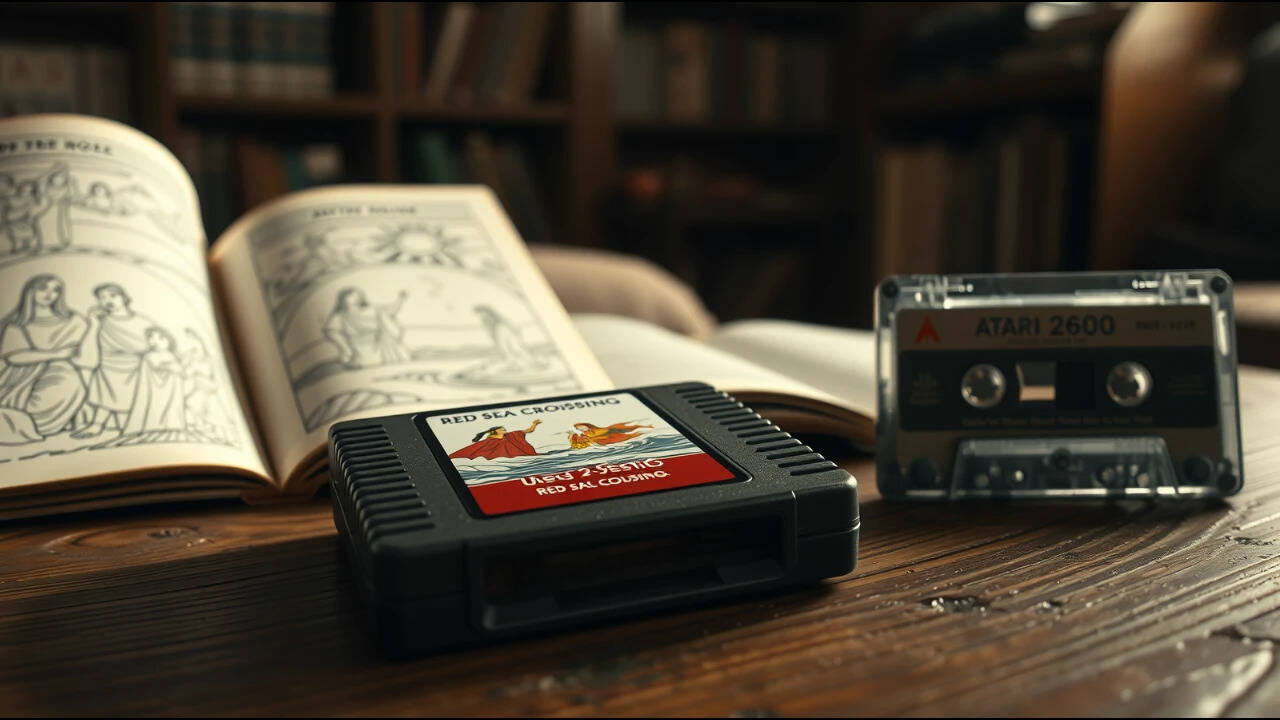
The plastic shell is yellowed, scuffed at the corners by decades of indifference, and marked with a crude, handwritten label that smells faintly of a suburban basement in 1983.
To anyone else, it is junk. A piece of industrial petroleum discarded in an era before plastic learned how to decompose. But when the digital gavel fell at a specialty auction, a quiet transaction finalized a sobering reality. Six thousand, five hundred and sixty-two dollars and fifty cents. For a game that was never supposed to exist.
We collect ghosts because we are terrified of vanishing.
Consider the developer who sat in a room smelling of ozone and soldering iron smoke over forty years ago. His name was Tod Frye, though at the time he was just a pair of tired eyes staring at a glowing CRT monitor, trying to squeeze an impossible universe out of four kilobytes of ROM. Atari had given him a mandate: convert Pac-Man into an Atari 2600 cartridge, and do it yesterday. The machine had 128 bytes of RAM. That is not a typo. One hundred and twenty-eight bytes. Your modern refrigerator uses more computing power to regulate its crisper drawer than Frye had to render the most famous arcade icon in human history.
He worked in near isolation, driven by deadlines that ignored human biology. When he finally finished, the game sold millions, but it looked blocky, flickered wildly, and tasted like rushed ambition. Yet, out of that same crucible of corporate panic came something stranger. Something forbidden.
The Red Sea Crossing.
It was a homebrew title developed by Stewart Blumenfeld and published by a company called Inspirational Software in 1983. In an era when video games were largely about blowing up alien armadas or eating dots while avoiding colorful ghosts, this one dared to tread elsewhere. It placed the player in the sandals of Moses, guiding the Israelites across the parting waters of the Red Sea while dodging fish, rocks, and the ticking clock of divine intervention.
Only a handful of copies were ever produced. Not millions. Not thousands. Dozens. Maybe fewer. They were sold out of the back of magazines, through small classified ads, or handed directly to friends and local hobbyists like contraband.
For decades, these grey or black plastic cartridges sat in cardboard boxes tucked deep into bedroom closets, ignored as their original owners grew up, moved out, traded their Atari consoles for Nintendo systems, and watched the digital world evolve into hyper-realistic 4K nightmarescapes. The parents who bought them probably viewed them as a waste of pocket money. A fad. A distraction.
Then, time did what time always does. It turned trash into treasure.
When a rare relic like the Red Sea Crossing cartridge hits the auction block today, the final price tag is rarely about silicon and copper traces. Nobody is plugging that cartridge into a dusty 2600 to experience cutting-edge entertainment. The frame rate is atrocious. The collision detection is mercifully vague. The graphics are little more than colored rectangles swimming in a sea of CRT scanlines.
We are paying for the witness.
Every high-stakes auction for a vintage game is an archaeological excavation of our own childhoods. It is an attempt to buy back a moment when the future felt wide open, when technology was simple enough to be understood by a single programmer working alone in a bedroom, and when sitting on a shag rug with a joystick felt like piloting a starship into the unknown.
Think about the collector who placed the winning bid of $6,562.50. Picture them in a quiet study, surrounded by modern screens, notifications pinging incessantly from every corner of their professional life. They are successful. They are insulated. They are exhausted.
They did not spend thousands of dollars for a piece of code. They spent it to anchor themselves to a physical object that proves where we came from. That cartridge is an anchor in a digital storm. It survived yard sales, attic cleanouts, moisture, heat, and the relentless march of obsolescence.
There is a profound melancholy in this obsession. We live in an era where digital storefronts can vanish overnight, rendering entire libraries of art inaccessible with the flick of a corporate switch. Everything we buy now is rented, ethereal, stored in distant server farms that hum in the dark. Nothing belongs to us. Nothing has weight.
Contrast that with a 1983 Atari cartridge. You could drop it on the floor, blow into the bottom connector to clear the dust—a ritualistic incantation performed by millions of children who had no idea what oxidation was—and shove it firmly into the slot until it clicked. It was mechanical. Tactile. Real.
The Red Sea Crossing sale is not just a quirky news item for tech historians. It is a mirror held up to our collective nostalgia. It asks us what we value in an age where everything can be instantly duplicated and instantly forgotten.
The anonymous buyer will likely place that cartridge inside a UV-protected acrylic case, sealing it away from the air, the dust, and the passage of years. It will sit on a shelf, glowing under museum-grade lighting, a monument to a forgotten Sunday afternoon in 1983 when a programmer drew a little pixelated figure parting the waves, hoping against hope that someone, somewhere, would notice he was there.
And somewhere out there, in the quiet dark of an old house, another box is waiting to be opened.