A bedroom is supposed to be a fortress. When a child pulls the covers up to their chin, the rest of the world, with all its chaotic dangers, is locked outside. We trust the walls. We trust the quiet of the night.
But sometimes, the world finds a gap.
In Ontario, Canada, a young boy went to sleep in a room he believed was entirely safe. He woke up briefly to a strange, scratching sensation. In the dim light, he saw it: a small, dark shape fluttering near his face. A bat. It was gone as quickly as it appeared. There was no deep, tearing wound. No dramatic pooling of blood. There was just a tiny creature, a fleeting moment of confusion, and then, the comforting return of sleep.
Because the boy showed no visible signs of injury, no one sought medical attention. Parents look for gashes, bruises, and tears. We look for the things that make a child cry out. We do not look for microscopic pinpricks hidden beneath the hair or lost in the creases of skin.
That single night of quiet inaction set a countdown in motion. Weeks later, the boy was gone, taken by the rarest and most terrifyingly absolute disease known to medical science.
It is the first domestically acquired case of human rabies in Ontario since 1967. It did not happen because of neglect. It happened because of a profound, systemic misunderstanding of an invisible threat. We think of rabies as a disease of the loud and the feral—the foaming dog in the street, the snarling raccoon in the alley. The reality is far quieter, far more intimate, and infinitely more dangerous.
The Anatomy of an Invisible Assailant
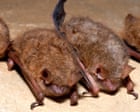
To understand why this tragedy occurred, you have to understand the mechanics of the bat itself. Unlike a dog or a wolf, whose teeth leave unmistakable, jagged evidence of an assault, certain species of bats possess teeth so razor-thin and sharp that their bite can occur during sleep without ever waking the victim.
Think of a hypodermic needle. If someone touches you with a sewing needle, you flinch. If a highly specialized medical instrument pricks you while you are deeply asleep, your brain might register it as a passing itch in a dream.
The virus carried in the saliva of that creature is ancient and brilliant in its cruelty. Once it enters the tissue, it does not rush into the bloodstream. It does not trigger the body's standard immune alarms. Instead, it hides. It creeps along the peripheral nervous system, traveling inch by inch toward the spine and the brain.
During this incubation period, which can last from a few weeks to several months, the person feels entirely healthy. They go to school. They play outside. The memory of the night the bat entered the room fades into a quirky anecdote, or perhaps it is forgotten entirely.
But once the virus reaches the central nervous system, the window slams shut.
The initial symptoms are deceptively mundane. A slight fever. A tingling sensation at the site of the long-healed bite. A feeling of general malaise. It looks like the flu. Then, the virus attacks the brain, causing severe inflammation. The hallmarks of rabies emerge: intense agitation, confusion, hallucinations, and hydrophobia—the terrifying, involuntary muscle spasms triggered by attempting to swallow water.
Medical professionals refer to this as clinical rabies. Once these signs manifest, the mortality rate is virtually one hundred percent. Only a handful of people in human history have ever survived the onset of symptoms, and those survivors often endured severe, permanent neurological damage.
The tragedy of the Canadian boy is not that a cure failed. It is that a simple, highly effective preventative measure was never deployed because no one knew the clock had started.
The Illusion of Distance
We live in an era where we believe modern medicine can reverse almost any mistake if we get to the hospital fast enough. We have antibiotics for infections, antivenoms for snakes, and trauma bays for accidents. This creates a false sense of security. We treat wildlife like characters in a documentary—objects to be observed, appreciated, or gently shooed away.
Public health officials across North America have seen a disturbing trend in recent decades. While rabies in domestic pets has been largely eradicated due to mandatory vaccination laws, the reservoir of the virus in wildlife remains completely untouched. Bats, in particular, are the primary vector for human rabies cases on the continent.
Consider how easily a wild animal enters a home. A loose screen, a small gap under the eaves, an open chimney. A bat can squeeze through a hole the size of a human thumb.
When a bat is found in a home, the standard human reaction is often logistical. How do we get it out? We grab a broom, open a window, and cheer when the animal flies back into the night. We wash our hands, close the window, and think the problem is solved.
This is a catastrophic error.
Public health protocols are unyielding on this point: if a bat is found in a room with a sleeping person, a child, or anyone unable to give a reliable account of what happened, that bat must be captured and tested. If the animal cannot be caught, the person must undergo post-exposure prophylaxis immediately.
The Grace Period
The word prophylaxis sounds clinical, cold, and intimidating. In reality, it is a miracle of immunology. It is a biological shield.
If administered promptly after a potential exposure—well before symptoms appear—the rabies vaccine regimen is incredibly effective. It consists of a dose of human rabies immune globulin, which delivers immediate antibodies to fight the virus at the site of the exposure, followed by a series of vaccinations over a two-week period.
The old myths of the rabies vaccine—the horror stories from the mid-twentieth century involving fourteen painful injections delivered directly into the abdomen with massive needles—are long dead. Today, the shots are given in the arm, just like a standard flu or tetanus vaccine. They are safe, they are routine, and they are completely effective.
The problem is entirely psychological. People do not seek treatment for a wound they cannot see. They do not request a vaccine for an interaction they deemed harmless.
The loss of a child in Ontario is a stark reminder that our relationship with nature requires a healthy dose of fear. Respect for the natural world cannot just be about conservation and appreciation; it must also include a clear-eyed understanding of its dangers. We cannot afford to be polite or casual with vectors of fatal disease.
Rebuilding the Fortress
This loss has sent a tremor through public health agencies across Canada and the United States. It forces us to look at our homes not just as aesthetic sanctuaries, but as barriers that require maintenance. It forces us to have difficult, sober conversations with our families about what to do if the barrier fails.
If you find a bat in your home, the instinct to swat it or chase it out must be suppressed. Put on heavy gloves. Wait for the animal to land. Place a small box or a plastic container over it, slide a piece of cardboard underneath, and secure it. Call local public health or animal control immediately. They can test the animal's brain tissue for the virus. If the test comes back negative, a family is spared a massive amount of anxiety. If it comes back positive, the path forward is crystal clear, and lives are saved.
If the animal escapes, you do not wait. You do not check the skin for marks. You go to the emergency room.
The memory of the young boy from Ontario will linger not as a statistic, but as a profound warning. The world outside our walls is beautiful, complex, and wild. But it is also indifferent to our survival.
When the sun goes down and the shadows stretch across the ceiling, the safety of the bedroom depends entirely on our willingness to see the threats that refuse to make a sound.