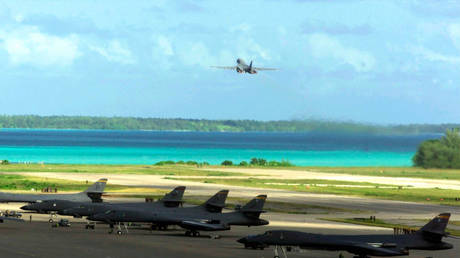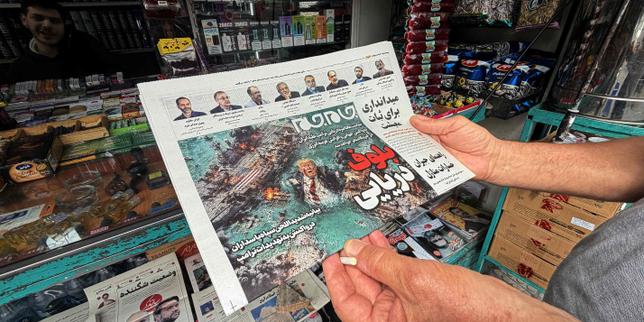
The initiation of a maritime blockade in the Middle East by United States forces at 16:00 hours marks a shift from strategic ambiguity to active containment. While the immediate objective is the restriction of Iranian naval mobility, the secondary and more significant impact is the imposition of a high-cost friction model on global energy transit. The Strait of Hormuz represents a single point of failure in the global energy supply chain, where 21 million barrels of oil—roughly 21% of global petroleum liquid consumption—pass daily. Iran’s counter-assertion that American interference will not be tolerated sets the stage for a classic escalation ladder where the primary currency is no longer diplomatic rhetoric, but the physical control of "choke point" geography.
The Triad of Maritime Interdiction
To understand the mechanics of the current US-led blockade, one must look past the headlines and analyze the three operational pillars required to maintain a naval seal in contested waters.
- Sensory Dominance and ISR Integration: A blockade is only as effective as its detection threshold. The US military utilizes a fused Intelligence, Surveillance, and Reconnaissance (ISR) network. This involves persistent overhead satellite imagery, high-altitude long-endurance (HALE) drones, and Distributed Maritime Operations (DMO). By networking Aegis-equipped destroyers with unmanned surface vessels (USVs), the US creates a digital "tripwire" across the 21-mile-wide navigable channel of the Strait.
- Kinetic Readiness and Rules of Engagement (ROE): The transition to an active blockade implies a change in the ROE. Previously, US assets operated under a "freedom of navigation" mandate, which is reactive. A blockade is proactive. It requires the legal and tactical framework to board, search, and seize vessels suspected of violating the cordon. This shift forces Iran to choose between allowing its sovereignty to be bypassed or engaging in a kinetic response that could trigger a wider regional conflict.
- Logistic Sustenance and Blue-Water Presence: Maintaining a blockade is a resource-intensive endeavor. It requires a constant rotation of Carrier Strike Groups (CSGs) and Expeditionary Strike Groups (ESGs) to ensure no gaps occur during refueling or maintenance cycles. The logistical "tail" of such an operation involves a massive deployment of tankers and supply ships, making the blockade itself a vulnerable target for asymmetric swarming tactics.
Iran’s Asymmetric Counter-Strategy
Tehran’s defense doctrine does not rely on matching the US Navy in a conventional broadside engagement. Instead, Iran utilizes a "Density of Threat" model designed to overwhelm sophisticated defense systems through sheer volume and proximity.
The Strait of Hormuz is geographically suited for Iranian littoral warfare. At its narrowest point, the shipping lanes consist of two-mile-wide channels for inbound and outbound traffic, separated by a two-mile buffer zone. Iran’s Islamic Revolutionary Guard Corps Navy (IRGCN) leverages this cramped geography through three primary mechanisms:
- Fast Attack Craft (FAC) Swarms: Small, highly maneuverable boats armed with anti-ship missiles (ASMs) or acting as "suicide" vessels. These craft use the cluttered radar environment of commercial shipping to mask their approach, aiming to saturate the target’s Close-In Weapon Systems (CIWS).
- Subsurface Mine Warfare: The deployment of bottom-dwelling or moored mines is the most cost-effective method of interdiction. Even the rumor of a minefield can raise maritime insurance premiums to the point of de facto closure of the Strait, achieving Iran’s strategic goals without firing a single missile.
- Land-Based Anti-Ship Cruise Missiles (ASCMs): Iran’s coastline along the Persian Gulf and the Gulf of Oman is a natural fortress. Hidden mobile launchers for Noor or Ghadir missiles provide a shore-to-ship capability that forces US vessels to operate further offshore, diluting the effectiveness of the blockade.
The Economic Cost Function of Maritime Friction
The market response to a blockade is rarely linear. It follows a volatility curve driven by the "Risk Premium" of Brent crude. When the United States imposes a blockade at 16:00, the immediate impact is felt in the Singapore and London exchanges.
The Insurance Bottleneck
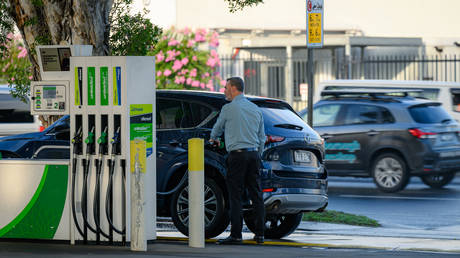
Most commercial vessels are insured through the International Group of P&I Clubs. When a region is declared a "listed area" by the Joint War Committee (JWC), "War Risk" premiums apply. A blockade effectively turns the entire Persian Gulf into a high-risk zone. For a Very Large Crude Carrier (VLCC) carrying $200 million worth of oil, a 1% increase in the war risk premium adds $2 million to the cost of a single voyage. These costs are not absorbed by the shipping companies; they are passed directly to the end consumer, creating an inflationary pressure that bypasses traditional central bank controls.
Supply Chain Elasticity
The global economy operates on "just-in-time" delivery. A blockade in the Strait of Hormuz introduces a temporal delay. Tankers forced to reroute around the Cape of Good Hope add approximately 10 to 15 days to their journey. This creates a "phantom shortage" where global supply remains technically sufficient, but the localized availability in Europe and Asia drops, causing localized price spikes that can exceed 30% within a 72-hour window.
The Escalation Ladder and Terminal Risks
The current standoff is governed by the principles of Game Theory, specifically the "Hawk-Dove" game. The US (The Hawk) has signaled its intent to dominate the space. Iran (The Counter-Hawk) must now decide if the cost of submission exceeds the cost of a localized kinetic exchange.
A critical failure point in this logic is the "Accidental Escalation" factor. In high-tension maritime environments, a misidentified radar return or a nervous commander on a fast-attack craft can trigger a chain reaction. Unlike land-based conflicts where borders provide clear demarcations, maritime blockades are fluid. The distinction between "international waters" and "territorial waters" becomes blurred when high-speed intercepts are occurring.
Iran’s warning that "no American interference will be tolerated" is more than rhetoric; it is a declaration of a "red line" regarding the UN Convention on the Law of the Sea (UNCLOS). While the US is not a signatory to UNCLOS, it recognizes it as customary international law. Iran, however, interprets "innocent passage" through the Strait differently, claiming the right to regulate transit for security reasons.
Strategic Realignment of Global Powers
The blockade does not exist in a vacuum. It forces secondary and tertiary actors—specifically China and India—to reassess their energy security.
- China’s Dilemma: As the world’s largest importer of Iranian oil, China views a US blockade as a direct assault on its industrial capacity. Beijing may respond not with military force, but with economic "grey zone" tactics, such as accelerating the use of the Petroyuan to bypass US-denominated financial sanctions associated with the blockade.
- The Indian Response: India relies heavily on the Persian Gulf for both energy and remittances. A prolonged blockade threatens the stability of the Indian Rupee. This may force New Delhi to accelerate its "North-South Transport Corridor" (NSTC) to bypass the maritime route entirely, shifting the geopolitical center of gravity toward land-based Eurasian trade.
Technological Multipliers in Modern Blockades
The nature of the 16:00 blockade is fundamentally different from those of the 20th century due to the proliferation of autonomous systems. We are witnessing the first "Algorithmic Blockade."
The US Navy’s Task Force 59, based in Bahrain, has spent the last several years integrating AI-driven platforms into Persian Gulf operations. These systems use machine learning to identify anomalous behavior in commercial shipping—vessels that turn off their AIS (Automatic Identification System) transponders or engage in ship-to-ship transfers to hide the origin of their cargo. The blockade is thus enforced by data as much as by hulls. If a ship’s "digital twin" flags it as a high-probability violator, it is intercepted with surgical precision.
This creates a new form of "Electronic Warfare" where Iran attempts to spoof GPS signals or jam the communication links of US drones. The struggle for the Strait of Hormuz is increasingly becoming a battle of the electromagnetic spectrum.
Tactical Reality of the 16:00 Threshold
The specific timing of the blockade—16:00—is significant. In naval operations, timing often aligns with "Change of Watch" or specific light conditions (Golden Hour) that affect visual identification and drone optics. It also serves as a psychological marker, forcing the adversary to respond during the transition to night operations, where US thermal and night-vision capabilities traditionally hold a qualitative edge over the IRGCN.
The fundamental tension lies in the mismatch between American "Systemic Control" and Iranian "Asymmetric Disruption." The US seeks a stable, controlled environment where its superior technology can manage the flow of traffic. Iran seeks a chaotic environment where the proximity of its coastline and the density of its assets can neutralize that technological advantage.
The current blockade is not a static event but a dynamic "Stress Test" of global maritime norms. The immediate strategic requirement for the United States is to maintain the seal without incurring a "Sunk Cost" fallacy where it is forced to defend an increasingly expensive and vulnerable naval presence. For Iran, the requirement is to demonstrate the futility of the blockade through low-level, high-impact disruptions that do not trigger a full-scale US invasion but make the blockade politically and economically unsustainable for Washington.
The operational focus must shift from "Presence" to "Resilience." Success for the US-led coalition depends on the ability to intercept Iranian asymmetric threats without disrupting the flow of neutral commercial traffic—a feat of precision that has rarely been achieved in naval history. If the blockade results in even a 5% reduction in global oil throughput for more than 30 days, the resulting economic shock will likely force a diplomatic retreat, regardless of the military outcome in the Strait. The true metric of victory in this engagement is not ships sunk, but the maintenance of the $85-to-$95-per-barrel price stability window. Beyond that threshold, the blockade becomes a self-inflicted economic wound.