Macron Damascus Visit Trades Artifacts for Diplomatic Footing
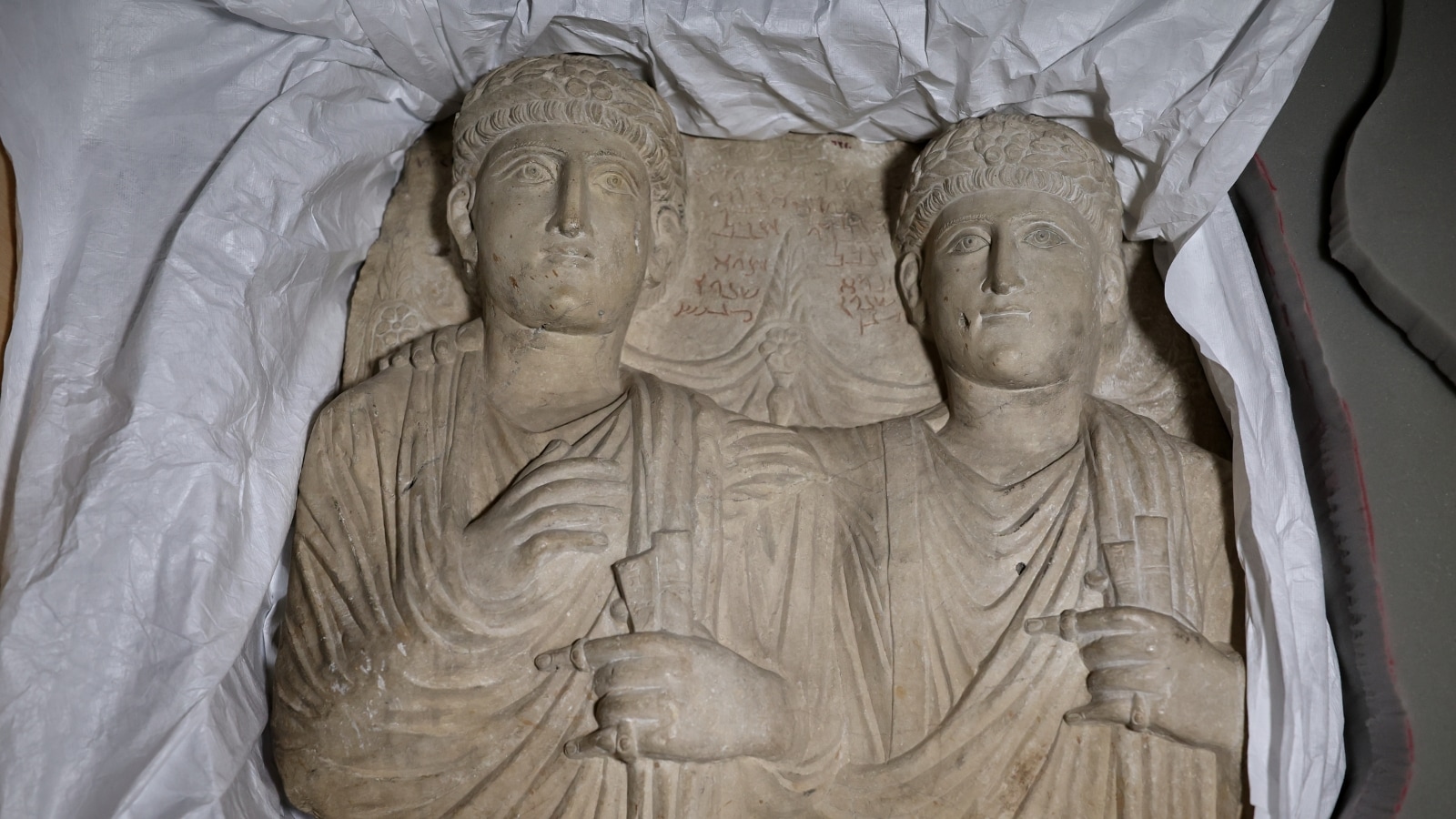
French President Emmanuel Macron recently returned 23 looted antiquities to Damascus during a high-profile state visit, marking the end of a 15-year freeze in diplomatic relations. While official channels framed the repatriation as a pure act of cultural stewardship, the reality on the ground is far more transactional. France is using heritage restitution as a wedge to reopen channel communications with the Syrian regime, bypassing years of Western sanctions and strict isolation policies. This maneuver signals a shift in European foreign policy, where historical artifacts serve as soft-power currency to secure geopolitical influence in the Middle East.
The return of these specific items—ranging from Bronze Age pottery to Roman-era glass—follows over a decade of bureaucratic and legal limbo in Paris. Customs officials seized the artifacts in 2010 at Paris-Charles de Gaulle Airport, tracking them back to illicit excavations in the Syrian desert. For 15 years, they sat in secure storage. The sudden decision to hand them back directly to the Syrian authorities in Damascus, rather than waiting for an internationally monitored transition, reveals the underlying motive. Art is rarely just art when heads of state are involved.
Inside the Laundering Pipelines That Fund Conflict
To understand why these 23 items matter, one must look at how they left Syria. The trafficking of Middle Eastern antiquities is not an opportunistic crime managed by local looters. It is a highly organized, multi-layered industry that integrates directly with international arms dealing and money laundering networks.
During the height of the Syrian civil war, archaeological sites across Palmyra, Apamea, and Ebla became open-pit mines. A distinct three-tiered system governs this trade.
The Excavators
Local networks or armed factions handle the physical digging. They operate under desperate economic conditions or direct coercion, pulling artifacts from the ground with heavy machinery, destroying context and stratification in the process.
The Brokers
Middlemen based in neighboring transit hubs manage the initial transport. These networks specialize in moving goods across porous borders, utilizing established smuggling routes that parallel those used for narcotics and weapons.
The Wholesalers
International syndicates operating out of major European and Asian transport hubs fabricate provenances. They generate fake paperwork, often claiming the items belonged to "old Swiss collections" or were acquired prior to the 1970 UNESCO Convention.
The 23 pieces returned by France traveled this exact path before their interception. By the time an object reaches a gallery in Paris or London, its blood-soaked origin has been washed clean by a paper trail of forged receipts and complicit experts.
The Illusion of Cultural Protection under Authoritarian Regimes
Western nations face a severe ethical dilemma when returning artifacts to active conflict zones or authoritarian states. The official narrative suggests that returning items to their country of origin is the ultimate ethical victory. The practical reality is much darker.
+-------------------------------------------------------------------------+
|                  The Restitution Dilemma                                |
+-------------------------------------------------------------------------+
| Western Seizure  --> Secure Storage --> Geopolitical Negotiating Pawn    |
|                                                                         |
| Return to Regime --> State Propaganda --> Unsecure Regional Museums     |
+-------------------------------------------------------------------------+
When France hands these treasures directly to the Damascus government, it hands them a massive propaganda victory. The regime can present itself to the world as a legitimate custodian of global heritage, distracting from a decade of documented structural destruction. Furthermore, state-controlled museums in unstable regions are notoriously vulnerable. Staff are underpaid, security systems are outdated, and internal corruption runs rampant. There is no guarantee that these 23 pieces will not slip back into the black market through the back door of a state facility.
How International Law Fails the Past
The legal frameworks designed to prevent cultural property trafficking are structurally broken. The primary tool, the 1970 UNESCO Convention on the Means of Prohibiting and Preventing the Illicit Import, Export and Transfer of Ownership of Cultural Property, relies entirely on voluntary compliance and national enforcement. It lacks teeth.
Most Western legal systems place the burden of proof on the state attempting to seize an object. Prosecutors must prove beyond a reasonable doubt that an item was stolen or illicitly excavated after a specific date. In archaeology, proving a negative is nearly impossible. If an object was dug up secretly, no record of its existence exists prior to its appearance on the market. Traffickers exploit this loophole with ease. They simply keep artifacts hidden in freeports for a decade, waiting for the heat to die down before introducing them to the market with a vague, untraceable history.
France managed to secure the 23 artifacts only because French customs officials acted on a precise tip-off regarding a specific shipment in 2010. Relying on luck and tips is not a viable strategy for protecting global history.
The Strategic Shift in European Diplomacy
Macron's move represents a pragmatic, if cynical, realignment. For years, Europe maintained a unified front: no normalization with Damascus without a comprehensive political transition. That policy failed to dislodge the regime. Now, facing shifting regional dynamics and a desire to counter Iranian and Russian influence in the Mediterranean, Paris is using cultural diplomacy to rebuild broken bridges.
Artifacts are the perfect tool for this strategy. They carry immense emotional and historical weight, allowing governments to conduct high-level meetings under the guise of neutral, academic cooperation. It allows politicians to shake hands without explicitly endorsing a regime's domestic policies.
This creates a dangerous precedent. If ancient heritage becomes a standardized chip in geopolitical poker games, the integrity of international preservation is compromised. Countries will hold onto seized artifacts not because of legal complexities, but because they are waiting for the right political moment to cash them in for diplomatic favors.
Securing the Global Supply Chain Against Illicit Antiquities
Halting the flow of blood antiquities requires moving beyond symbolic returns and addressing the financial infrastructure that enables the trade. Tight border controls are insufficient when the financial transactions occur in plain sight.
First, governments must enforce strict Know Your Customer (KYC) laws on the art market, matching the regulations imposed on the banking sector. Auction houses and private galleries must be legally mandated to verify the absolute chain of custody for any antiquity dating before 1970, with severe criminal penalties for executives who accept vague provenances.
Second, the international community needs to fund independent, decentralized digital registries. By using blockchain technology to log newly discovered or cataloged items in situ, experts can create immutable records that cannot be forged or altered by corrupt officials or international syndicates.
The return of 23 treasures to Syria makes for excellent headlines and smooth diplomatic photo opportunities. It does nothing to dismantle the global networks that continue to strip history from the ground for profit.