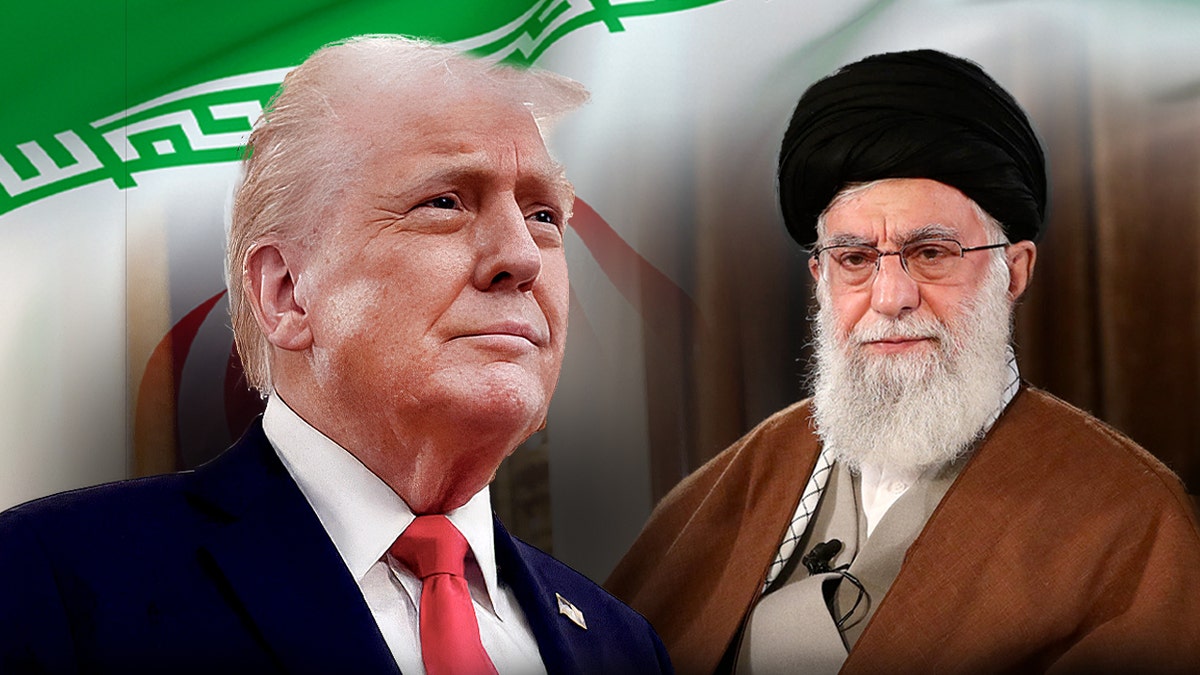
The confrontation over the Strait of Hormuz is not a simple diplomatic spat but a high-stakes kinetic pricing war where the primary variable is the global risk premium on crude oil. While headlines focus on the $500 million daily revenue target for Iran, a structural analysis reveals a complex triad of variables: the physical integrity of the chokepoint, the efficacy of the U.S. Maximum Pressure sanctions regime, and the elasticity of global energy markets. The strategic impasse between the Trump administration and Tehran rests on a fundamental disagreement over the valuation of Iranian sovereignty versus the cost of global maritime instability.
The Revenue Mechanics of the $500 Million Objective
The Iranian claim of a $500 million daily loss due to the blockade is a figure derived from theoretical export capacity rather than current market realities. To reach this number, one must assume an export volume of roughly 2.5 million barrels per day (bpd) at a Brent crude price floor of $200 per barrel—a scenario that only occurs if the Strait is closed entirely, ironically preventing the very exports Iran seeks to monetize.
A more realistic breakdown of the Iranian revenue function involves three distinct streams:
- Direct Crude Exports: The gap between current "ghost fleet" shipments (estimated at 1.2M–1.5M bpd) and pre-sanction levels of 2.5M bpd.
- Condensate and Petrochemicals: Secondary products that bypass traditional crude quotas but remain throttled by banking sanctions.
- The Risk Discount: Iran currently sells its oil at a significant markdown (often $10–$15 below benchmark) to incentivize Chinese independent refineries ("teapots") to assume the risk of U.S. secondary sanctions.
The $500 million figure serves as a political signaling device rather than a balance sheet line item. It quantifies the "opportunity cost" of the blockade, aiming to pressure European and Asian partners to break with Washington's policy to stabilize their own energy costs.
The Structural Architecture of the Blockade
The U.S. strategy does not rely on a physical naval picket line—which would be a violation of international law in international waters—but on a "Financial Blockade." This mechanism operates through the weaponization of the USD-denominated clearing system.
The Primary Enforcement Pillars
- OFAC Designation Density: By labeling the IRGC as a Foreign Terrorist Organization (FTO), the U.S. created a legal environment where any entity interacting with the Iranian energy sector faces total exclusion from the U.S. financial system.
- Maritime Insurance Asymmetry: 90% of the world's P&I (Protection and Indemnity) clubs are based in the West. Without valid insurance, tankers cannot dock at major global ports. The blockade functions by making Iranian oil "uninsurable," effectively de-platforming their fleet from the formal global economy.
- Satellite and AIS Tracking: The "dark fleet" phenomenon—where tankers turn off their Automatic Identification Systems—is countered by high-recount synthetic aperture radar (SAR) imaging. This transparency reduces the efficiency of Iranian smuggling by increasing the logistical friction of ship-to-ship (STS) transfers.
The Strait of Hormuz as a Tactical Lever
The Strait is a maritime bottleneck through which approximately 21 million barrels of oil pass daily, representing roughly 21% of global petroleum liquid consumption. Iran’s threat to close the Strait is its primary "Equalizer" against the financial blockade. However, the logic of a total closure is flawed due to the Doctrine of Mutual Vulnerability.
Iran’s own economy is entirely dependent on the Strait for its limited imports of refined products and its remaining oil exports. Closing the waterway would be an act of economic autarky. Instead, Tehran employs "Gray Zone" tactics:
- Limpet Mine Attacks: Low-attribution strikes designed to spike insurance premiums without triggering a full-scale military response.
- Tanker Seizures: Legalistic retaliations for the seizure of Iranian assets abroad (e.g., the Grace 1 incident).
- Drone Harassment: Forcing U.S. and allied naval assets into high-readiness postures, increasing the operational cost of the "Maximum Pressure" campaign.
The Trump administration’s refusal to de-escalate is based on the calculation that the U.S. is now more resilient to oil shocks than in previous decades. The rise of Permian Basin shale production has shifted the U.S. from a net importer to a swing producer. This "Shale Shield" allows Washington to maintain the blockade with less fear of domestic political fallout from rising gas prices, a luxury previous administrations did not possess.
The Failed Logic of Reopening Negotiations
Iran’s demand for a "reopening" involves a return to the Joint Comprehensive Plan of Action (JCPOA) frameworks, which the current U.S. strategy views as fundamentally broken. The U.S. position defines "reopening" not just as the flow of oil, but as the total cessation of Iranian regional influence and ballistic missile development.
This creates a Binary Negotiation Trap:
- The U.S. Requirement: Total capitulation or economic collapse.
- The Iranian Requirement: Sanctions relief as a prerequisite for any dialogue.
Because neither side can accept the other's starting premise without a loss of face or perceived national security, the "blockade" persists as a permanent state of economic warfare. The $500 million daily loss cited by Iran is the price they pay for strategic autonomy, while the U.S. views the global market volatility as a manageable cost for non-proliferation.
Quantifying the Global Impact
The friction in the Strait creates a "Hormuz Premium" on every barrel of oil sold globally. Analysts estimate this adds $5 to $10 to the price of Brent crude. For a world consuming 100 million barrels a day, the blockade is effectively a $500M–$1B daily tax on the global economy, paid not to Iran or the U.S., but absorbed by the inefficiencies of the supply chain.
Specific sectors face disproportionate exposure:
- East Asian Refineries: Japan and South Korea remain highly dependent on Middle Eastern sour crude. Their "Energy Security Margin" shrinks as the blockade continues.
- Global Shipping: War-risk surcharges for transiting the Persian Gulf have increased ten-fold during peak tension periods.
- OPEC+ Dynamics: Saudi Arabia and the UAE possess bypass pipelines (such as the East-West Pipeline to the Red Sea), but these lack the capacity to handle the full volume of the Strait. This gives Riyadh significant leverage in production quota negotiations, as they can mitigate the blockade’s impact more effectively than their peers.
The Strategic Path Forward
The situation has reached a point of "Stagnant Escalation." The U.S. cannot force a total zero-export reality without a kinetic naval blockade, which would alienate China and India. Conversely, Iran cannot sustain its current fiscal deficit indefinitely without a significant move to break the siege.
The move for the Trump administration is to tighten the "Internal Pressure Valve." By targeting the mid-stream facilitators—the currency exchanges in Dubai and the small-scale banks in Kunlun—the U.S. aims to trigger internal Iranian unrest before the "Hormuz Premium" becomes politically unbearable in the West.
For Iran, the strategy is "Strategic Patience" coupled with "Calculated Instability." They will continue to shadow-box in the Strait, keeping the risk of a $200 barrel alive in the minds of global traders. The $500 million daily loss is not a white flag; it is a bill they are attempting to forward to the international community.
Success in this theater will not be determined by a signed treaty, but by who can longer tolerate the erosion of their economic base. The U.S. is betting on its financial hegemony; Iran is betting on the world’s low tolerance for expensive energy. Until one of these variables shifts—either through a technological breakthrough in energy or a regime-shifting event in Tehran—the blockade remains the defining structural feature of the 21st-century energy market.