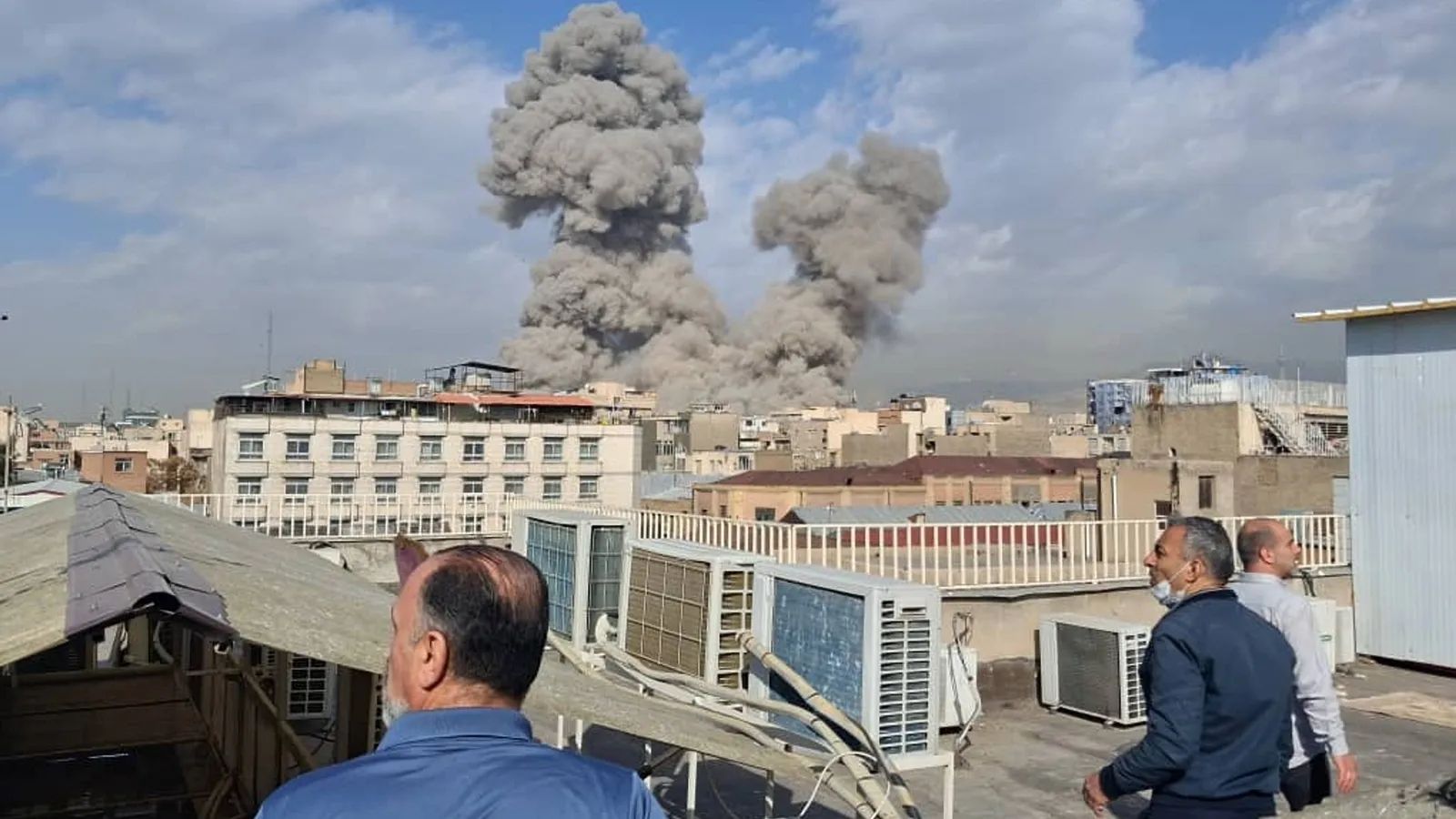
The collapse of the June 2026 interim agreement between the United States and Iran has converted the Persian Gulf from a friction point into an active theater of dual-blockade warfare. When Washington reimposed its naval blockade on Iranian ports on July 15, 2026, Tehran responded not with localized maritime harassment, but with an asymmetric threat to shut down all energy exports from the Middle East. This escalation exposes a structural misalignment in Western strategic assumptions: the belief that conventional naval superiority can neutralize a littoral adversary without triggering a systemic breakdown of global supply chains.
Understanding this conflict requires bypassing superficial political rhetoric and analyzing the hard operational mechanics of maritime denial, economic cost functions, and escalation ladders. For another view, read: this related article.
The Dual Blockade Framework
The current crisis operates on a dual-blockade model, where two asymmetric military strategies run parallel, each targeting the vital economic arteries of the other.
       [United States Blockade]                         [Iranian Counter-Blockade]
                  │                                                 │
                  ▼                                                 ▼
        Interdiction of Iranian                           Interdiction of Strait
           Commercial Ports                                 of Hormuz Transit
                  │                                                 │
                  ▼                                                 ▼
     Strangulation of Iran's State                     Denial of 20% of Global Oil
               Revenues                                  and 20% of LNG Volume
The Outward Blockade (United States)
The United States has deployed naval assets to block Iranian energy exports and raw materials from entering or leaving domestic ports. The tactical objective is to choke off Iran’s primary source of sovereign revenue, forcing the state to capitulate on its nuclear program and regional posture. The enforcement mechanism relies on cruiser and destroyer surface groups redirecting commercial vessels attempting to run the blockade. Further analysis regarding this has been published by Reuters.
The Inward Blockade (Iran)
Iran lacks the conventional blue-water navy to break the U.S. blockade directly. Instead, it utilizes an inward-directed blockade of the Strait of Hormuz—the choke point through which approximately 25% of global seaborne oil and 20% of liquefied natural gas (LNG) transits during peace. By threatening "oil for everyone or for no one," the Islamic Revolutionary Guard Corps (IRGC) seeks to impose a global economic cost that outweighs the U.S. objective.
The Asymmetric Cost Functions
Standard geopolitical analyses treat energy supply disruptions as a uniform global tax. In reality, the economic pain is highly segmented, creating starkly different cost functions for the participating actors.
To model the economic toll of the crisis, the total blockade cost ($C_t$) can be formalized as:
$$C_t = P_d + I_m + \sum (E_r \times V_r)$$
where $P_d$ is the global price premium on Brent crude, $I_m$ is the marginal increase in maritime insurance premiums, and $E_r$ represents regional escalatory strikes against logistical hubs multiplied by their economic volume ($V_r$).
The Western and Asian Demand Shock
Prior to the war, up to 84% of crude oil passing through the Strait of Hormuz was destined for Asian markets, with China receiving a third of its oil via this corridor. While China holds strategic oil reserves estimated at roughly one billion barrels, a prolonged closure forces Asian buyers to compete for non-Gulf barrels, driving Brent crude prices back toward the $120 peak seen earlier in the conflict.
Europe face an even more acute vulnerability. The continent entered the year with historically low gas storage capacity—estimated at just 30%. The complete suspension of Qatari LNG exports, which normally supply 12% to 14% of Europe's gas, has pushed Dutch TTF natural gas benchmarks past €60/MWh. The European Central Bank has already been forced to revise its inflation forecast upward to 2.6%, illustrating how quickly a maritime dispute in the Gulf translates into domestic monetary pressure.
The GCC Domestic Collapse
The blockaded Gulf Cooperation Council (GCC) states suffer a dual shock:
- The Revenue Bottleneck: Unlike Saudi Arabia and the United Arab Emirates, which possess limited overland pipelines capable of diverting a combined 3.5 to 5.5 million barrels per day to west-coast ports, nations like Kuwait, Qatar, and Bahrain rely almost entirely on the Strait for energy monetization.
- The Caloric Emergency: The GCC model is highly reliant on import logistics. Over 80% of the region's caloric intake is imported via maritime routes. The closure has disrupted up to 70% of food imports, necessitating expensive, carbon-heavy airlifts of basic staples.
Operational Mechanics of the Denial Strategy
The threat of a complete halt to West Asia's energy exports is not a diplomatic bluff; it is backed by an established doctrine of anti-access/area denial (A2/AD) in a highly confined maritime environment.
At its narrowest point, the Strait of Hormuz is only 21 miles wide, with shipping lanes restricted to two-mile-wide inbound and outbound channels separated by a two-mile buffer zone. This geography neutralizes the traditional advantages of U.S. carrier strike groups, which must operate in open waters to retain maneuverability. Iran’s denial strategy employs three operational layers:
1. Swarming and Low-Cost Precision Munitions
The IRGC Navy deploys hundreds of fast-attack craft armed with short-range anti-ship missiles and torpedoes. These assets are designed to overwhelm shipboard close-in weapon systems (CIWS) through sheer saturation. This swarm tactic is paired with land-based anti-ship cruise missiles (ASCMs) hidden in the rugged cliffs of the Iranian coastline, presenting a highly survivable, distributed threat.
2. Sea Mining
The deployment of cheap, bottom-dwelling sea mines in the shallow waters of the Strait is the most potent weapon in Iran's arsenal. Clearing these mines requires dedicated mine countermeasures (MCM) vessels, which are slow, lightly armored, and highly vulnerable to land-based missile fire. A single confirmed mine detonation is sufficient to shut down commercial traffic entirely, as Lloyd’s of London and other maritime insurers instantly withdraw coverage for the area.
3. GNSS Jamming and Spoofing
By utilizing ground-based transmitters to spoof Global Navigation Satellite System (GNSS) signals, Iran can alter the perceived location of commercial shipping. This forces vessels to rely on manual pilotage in waters where drift can easily push them into Iranian territorial claims or active minefields.
The U.S. military has threatened to reopen the Strait by force. However, pentagon planners acknowledge that a sustained mine-clearing and sea-control operation would require a significantly larger naval deployment, if not tens of thousands of ground troops, to secure the northern coast of the Gulf.
The Escalation Ladder and Secondary Targets
The escalation has broken out of the immediate maritime domain of the Strait of Hormuz. Following U.S. Central Command airstrikes targeting Iranian missile sites on Greater Tunb Island, the conflict has spread horizontally across the region:
- Kuwait: The IRGC launched cruise missiles at the Mina Abdullah logistics center, a critical transit hub for U.S. military equipment and supplies.
- Jordan: Drone attacks targeted the Al-Azraq base, demonstrating Iran's ability to project power hundreds of miles from its border to hit states hosting American forces.
- Bahrain: Precision strikes hit the U.S. Fifth Fleet headquarters, aiming directly at the command-and-control node orchestrating the U.S. naval escort operations.
This geographic expansion serves a clear signaling function: any attempt to strangulate Iranian ports will result in the systematic destruction of the security infrastructure that protects the energy exports of U.S. allies.
Strategic Recommendations for Market and State Actors
The current escalatory cycle has rendered standard risk-management templates obsolete. Organizations and states exposed to the Persian Gulf corridor must transition from a reactive posture to a resilient operating model based on three strategic interventions.
1. Reroute and Redundancy
Energy buyers must aggressively diversify their sourcing away from Persian Gulf terminals. This requires securing long-term contracts with North American, West African, and North Sea producers, even at premium prices. For GCC producers, the immediate priority must be the expansion of alternative land routes. Saudi Arabia and the UAE must invest in the fast-tracked expansion of their East-West pipelines to bypass the Hormuz bottleneck permanently.
2. Defensive Escort and Intel Integration
Commercial shipping companies cannot rely on passive transit. Vessels must integrate with military-led convoy structures, such as the Persian Gulf Strait Authority. Operational security must include the deployment of military-grade GNSS anti-spoofing technologies on all tankers to counter electronic warfare capabilities.
3. Escalation Management and Negotiated Verification
The U.S. administration must recognize that a purely kinetic solution to the Strait of Hormuz crisis is mathematically unviable without causing a global economic depression. The primary strategic objective must be the establishment of a new negotiated framework—similar to the Islamabad Memorandum—that swaps the lifting of the U.S. port blockade for verified free passage of all commercial vessels. Until such a diplomatic off-ramp is constructed, the risk of a systemic global supply chain collapse remains critical.
Mirror Now coverage of the Strait of Hormuz crisis
This video outlines the immediate tactical developments and regional reactions to the reimposed blockade in the Persian Gulf.


