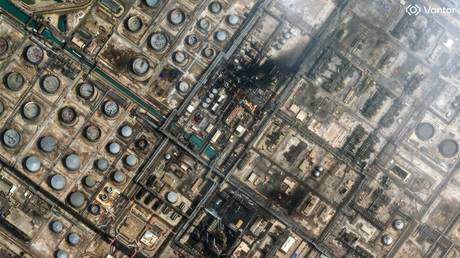
The proposal to liquidate frozen Iranian sovereign assets to fund reconstruction in the Persian Gulf represents a fundamental shift in international financial jurisprudence, moving from defensive asset freezing to offensive capital expropriation. While politically framed as a compensatory mechanism for regional stability, this strategy introduces systemic risks to the global financial architecture. The economic utility of utilizing seized assets must be weighed against three distinct cost vectors: the degradation of sovereign immunity protections, the acceleration of dedollarization incentives among non-aligned central banks, and the certainty of asymmetric retaliatory kinetic or cyber operations in the Strait of Hormuz.
The strategic logic relies on a flawed assumption that frozen assets are inert capital pools. In reality, these assets function as collateral within the international monetary system. Forcing their liquidation transforms a bilateral diplomatic standoff into a systemic precedent, permanently altering the risk premium associated with holding reserves in Western-aligned clearing houses.
The Tri-Border Framework of Sovereign Risk
To evaluate the net utility of this policy, the mechanism must be disassembled into three operational pillars: Legal Capital Architecture, Financial Contagion Vectors, and Kinetic Escalation Triggers.
Legal Capital Architecture
The primary barrier to executing an asset transfer is the doctrine of sovereign immunity, codified under international customary law and specific domestic statutes such as the US Foreign Sovereign Immunities Act (FSIA). Historically, central bank assets enjoy near-absolute immunity from execution, a principle designed to prevent foreign courts from adjudicating the sovereign acts of state entities.
The mechanism required to bypass this protection relies on the "doctrine of countermeasures." Under this framework, injured states may take otherwise unlawful actions against a norm-breaking state to compel compliance with international obligations. However, the application of countermeasures to third-party assets—where the seizing state is not the direct victim of the initial unlawful act—lacks clear customary law precedent.
A state seeking to execute this seizure must establish a direct causal chain between Iranian state action and quantifiable damages in the Gulf. This requires a formal adjudication process to determine liability, a mechanism currently absent from unilateral executive declarations. Without this legal scaffolding, the expropriation transforms from a legal remedy into a targeted asset forfeiture, undermining the predictability required for international capital flows.
Financial Contagion Vectors
Central banks maintain foreign exchange reserves based on a hierarchy of needs: liquidity, security, and yield. Sovereign assets frozen under sanctions retain their legal ownership structure despite being inaccessible. Liquidation permanently dissolves that ownership.
This transition triggers a reallocation calculus for non-aligned states holding reserves in US dollars or Euros. The risk equation changes from a credit risk evaluation to a jurisdictional risk assessment.
Jurisdictional Risk = P(Political Misalignment) × P(Asset Expropriation)
The quantification of this risk causes structural shifts in global asset allocation:
- Diversification into Non-Fiat Assets: Central banks shift marginal reserves into physical gold, which can be stored domestically, bypassing Western clearing infrastructure like Euroclear or the Federal Reserve Bank of New York.
- Bilateral Clearing Networks: Proliferation of non-SWIFT messaging systems (such as China's CIPS or Russia's SPFS) to settle trade in local currencies, eroding the transactional visibility of Western regulatory authorities.
- Discounted Sovereign Debt: Increased yields demanded by foreign purchasers of Western sovereign debt to compensate for the newly introduced political confiscation risk.
The long-term cost of this reserve migration often exceeds the immediate capital injected into regional reconstruction, creating a net negative financial return for the executing jurisdictions.
Kinetic Escalation Triggers
The assumption that asset seizure acts as an effective deterrent ignores the asymmetric escalation dominance possessed by regional state actors. In the Persian Gulf, the cost-imposition strategy shifts immediately from the financial realm to the maritime trade corridors.
The Strait of Hormuz serves as a choke point for approximately 20% of global petroleum consumption. Iran’s military doctrine emphasizes anti-access/area-denial (A2/AD) capabilities designed to exploit this geographic vulnerability.
The escalation cascade follows a predictable sequence of structural shifts:
Asset Liquidation Announcement
  │
  ▼
Asymmetric Maritime Interdiction (Low-signature mining, drone harassment)
  │
  ▼
Surge in Maritime Insurance War Risk Premiums (+300% to +500%)
  │
  ▼
Shifting of Freight Costs to Global Consumer Energy Indexes
The economic burden of reconstruction is thus redistributed onto global energy consumers via inflated supply chain costs. The financial relief provided to Gulf reconstruction projects is neutralized by the macro-inflationary pressures generated by maritime instability.
Quantifying the Cost Function of Reconstructive Capital
A rigorous strategic model must calculate the net economic impact of utilizing these assets. The standard approach assumes a simple additive benefit:
$$\text{Net Benefit} = \text{Value of Seized Assets} - \text{Direct Infrasurcture Repair Costs}$$
This formula is insufficient because it omits systemic externalities. A complete cost function must incorporate institutional degradation, inflationary risk, and security expenditures:
$$C_{\text{total}} = I_{\text{deg}} + R_{\text{esc}} + M_{\text{div}} - A_{\text{liq}}$$
Where:
- $C_{\text{total}}$ is the net strategic cost.
- $I_{\text{deg}}$ represents the institutional degradation of the domestic financial center (measured by capital flight of foreign non-aligned reserves).
- $R_{\text{esc}}$ represents the regional escalation cost (measured by increases in global energy supply chain premiums and maritime insurance).
- $M_{\text{div}}$ represents military diversion costs required to patrol and secure trade lanes post-seizure.
- $A_{\text{liq}}$ is the nominal value of the liquidated Iranian assets injected into reconstruction.
If $C_{\text{total}} > 0$, the policy creates a net structural deficit, regardless of the immediate liquidity it provides to infrastructure projects. Historical precedents of asset freezes indicate that the institutional degradation coefficient ($I_{\text{deg}}$) compounds over time, outlasting the short-term utility of the injected capital ($A_{\text{liq}}$).
Strategic Alternatives to Outright Liquidation
To achieve the objective of regional stabilization without triggering the systemic costs outlined above, alternative financial architectures must be deployed. These mechanisms leverage the frozen assets as diplomatic or economic leverage rather than burning the capital through irreversible liquidation.
The Collateralized Trust Escrow
Instead of liquidating assets to fund immediate reconstruction, the capital remains frozen but serves as a structural guarantee for specialized international reconstruction bonds.
[Frozen Sovereign Assets] ──► Acts as Collateral Pool ──► [International Reconstruction Bonds]
                                                                  │
[Conditional Diplomatic Settlement] ◄── Yield Payments Funded By ─┘
The principal remains untouched, preserving the legal fiction of sovereign immunity and preventing the permanent triggering of jurisdictional risk. The yield generated by the managed portfolio is directed into an independent escrow account administered by a neutral multilateral institution, such as the World Bank or a specialized regional development bank.
Access to these funds is legally tied to verified compliance with regional de-escalation milestones. This transforms the asset pool from a static punitive measure into a dynamic diplomatic instrument, maintaining leverage while avoiding the irreversible legal precedents of outright expropriation.
Asymmetric Reparation Levies
A second mechanism involves the implementation of a structural tariff or levy on specific transactional volumes routed through state-adjacent entities, rather than a blanket seizure of central bank reserves. This approach targets commercial revenue streams associated with the state apparatus rather than the core sovereign reserve architecture.
By decoupling the financial penalty from the central bank's balance sheet, the executing states preserve the integrity of their domestic clearing houses. The legal justification shifts from an untested interpretation of international countermeasures to a standardized commercial regulatory framework, reducing the risk of systemic capital flight from non-aligned nations.
Immediate Operational Directives
Deploying asset liquidation strategies requires a clear-eyed assessment of structural trade-offs. To minimize systemic vulnerability, policymakers must execute a three-step operational sequence before altering the status of frozen capital:
- Conduct a Jurisdictional Capital Audit: Quantify the volume of non-aligned sovereign deposits currently held within domestic clearing institutions. Establish an empirical threshold for acceptable capital flight. If threatened withdrawals exceed 1.5% of total foreign reserves, halt liquidation proceedings immediately.
- Establish a Maritime Escrow Guarantee: Secure binding underwriting agreements from international maritime insurers to cap war risk premiums for commercial vessels in the Persian Gulf, backed by a pre-funded state intervention fund to absorb initial private losses.
- Formalize Multi-Lateral Legal Indemnification: Secure a joint declaration from a minimum of G7 nations establishing a unified legal framework for the countermeasures. This prevents single-jurisdiction capital flight by ensuring that non-aligned states cannot simply migrate assets to alternative Western financial centers to avoid seizure risks.
Execution without these preliminary safeguards transforms a targeted financial instrument into a self-inflicted systemic shock, trading long-term institutional stability for short-term regional liquidity.