Japan’s decision to remove the prohibition on the export of lethal weapons—specifically those developed through international partnerships—represents a fundamental realignment of the nation's postwar "Three Principles on Transfer of Defense Equipment and Technology." This is not a mere bureaucratic adjustment; it is a calculated response to the erosion of the technological and industrial base required for national sovereignty. By allowing the export of the Global Combat Air Program (GCAP) next-generation fighter jets to third-party nations, Tokyo is attempting to solve a three-body problem involving unit cost economics, industrial relevance, and strategic deterrence.
The shift addresses a critical vulnerability in the Japanese defense sector: the "high-cost, low-volume" trap. For decades, Japanese defense contractors were restricted to a single customer—the Japan Self-Defense Forces (JSDF). This created a monopsony that stifled innovation, prevented economies of scale, and resulted in unit costs that were often triple the global average for comparable systems.
The Tri-Pillar Framework of the New Defense Export Logic
The decision to scrap the ban functions across three distinct operational layers. Understanding the implications requires examining how these layers interact to create a self-sustaining defense ecosystem.
1. The Economic Scale Mechanism
In modern aerospace engineering, the research and development (R&D) costs for a sixth-generation fighter jet are estimated to exceed $40 billion. If Japan were to amortize these costs over a domestic-only production run of 100 to 200 aircraft, the price per airframe would be fiscally prohibitive.
The export authorization changes the cost function:
- Marginal Cost Reduction: Increasing the total production volume (including exports to approved third-party nations) drives down the per-unit cost through "learning curve" efficiencies and bulk procurement of raw materials and sub-components.
- R&D Recovery: Revenue from exports provides a mechanism to recoup the massive upfront capital expenditures required for stealth technology, integrated sensors, and engine development.
- Industrial Retention: Japanese heavy industries, such as Mitsubishi Heavy Industries (MHI) and IHI Corporation, have faced declining margins in their defense divisions. Export potential provides the "order book" security necessary to keep high-skilled engineers from migrating to civilian sectors or foreign competitors.
2. The Interoperability and Alliance Integration Layer
The GCAP project is a trilateral venture between Japan, the United Kingdom, and Italy. Maintaining a ban on lethal exports created a "diplomatic friction point." If Japan’s partners wanted to sell the co-developed platform to a regional ally—such as Saudi Arabia or a Southeast Asian partner—Japan’s previous restrictions would have acted as a veto. This would have made Japan an unattractive partner for future high-tech consortia.
By removing this barrier, Japan secures its seat at the table for future multinational defense projects. This ensures that the JSDF’s equipment is natively interoperable with its primary allies. The strategic value here is the creation of a standardized technological ecosystem. When multiple nations operate the same platform, the logistics chain becomes decentralized, making the collective defense posture more resilient to localized disruptions.
3. The Deterrence and Regional Balance Calculus
Tokyo is utilizing defense exports as a tool of statecraft. Providing lethal equipment to regional partners in the Indo-Pacific—specifically those under pressure from territorial incursions—serves as a "force multiplier" for Japanese security interests without requiring the direct presence of the JSDF.
Structural Constraints and Ethical Guardrails
The policy change is not a blanket deregulation. It is governed by a strict set of logical filters designed to maintain the spirit of Japan's pacifist constitution while acknowledging 21st-century realities.
- The Partnership Filter: Exports are currently restricted to equipment co-developed with international partners (primarily the GCAP fighter). This prevents a sudden, uncontrolled flood of Japanese-made small arms or standalone lethal systems into the global market.
- The Recipient Filter: Potential buyers must be countries that have signed defense equipment and technology transfer agreements with Japan. This creates a pre-vetted list of "trusted nodes" in the global security network.
- The Conflict Filter: Weapons cannot be transferred to nations currently engaged in active hostilities. This is a vital distinction intended to prevent Japan from becoming a direct party to an ongoing war, maintaining a defensive posture while supporting "long-term stability."
The Technological Transfer Bottleneck
A significant risk in this new strategy is the "technology leakage" or intellectual property (IP) vulnerability. Japan’s defense industry is renowned for its precision manufacturing and advanced material science—specifically in carbon fiber composites and Gallium Nitride (GaN) based radar systems.
The challenge lies in the "End-Use Monitoring" (EUM) of exported platforms. To mitigate this, Japan must develop a robust legal and technical framework to ensure that:
- Reverse Engineering is Impossible: Implementing hardware and software "kill switches" or tamper-resistant modules in exported airframes.
- Maintenance Dependency: Ensuring that critical software updates and specialized spare parts remain controlled by the Japanese-led consortium, creating a "tethered" relationship with the buyer.
Quantifying the Industrial Shift
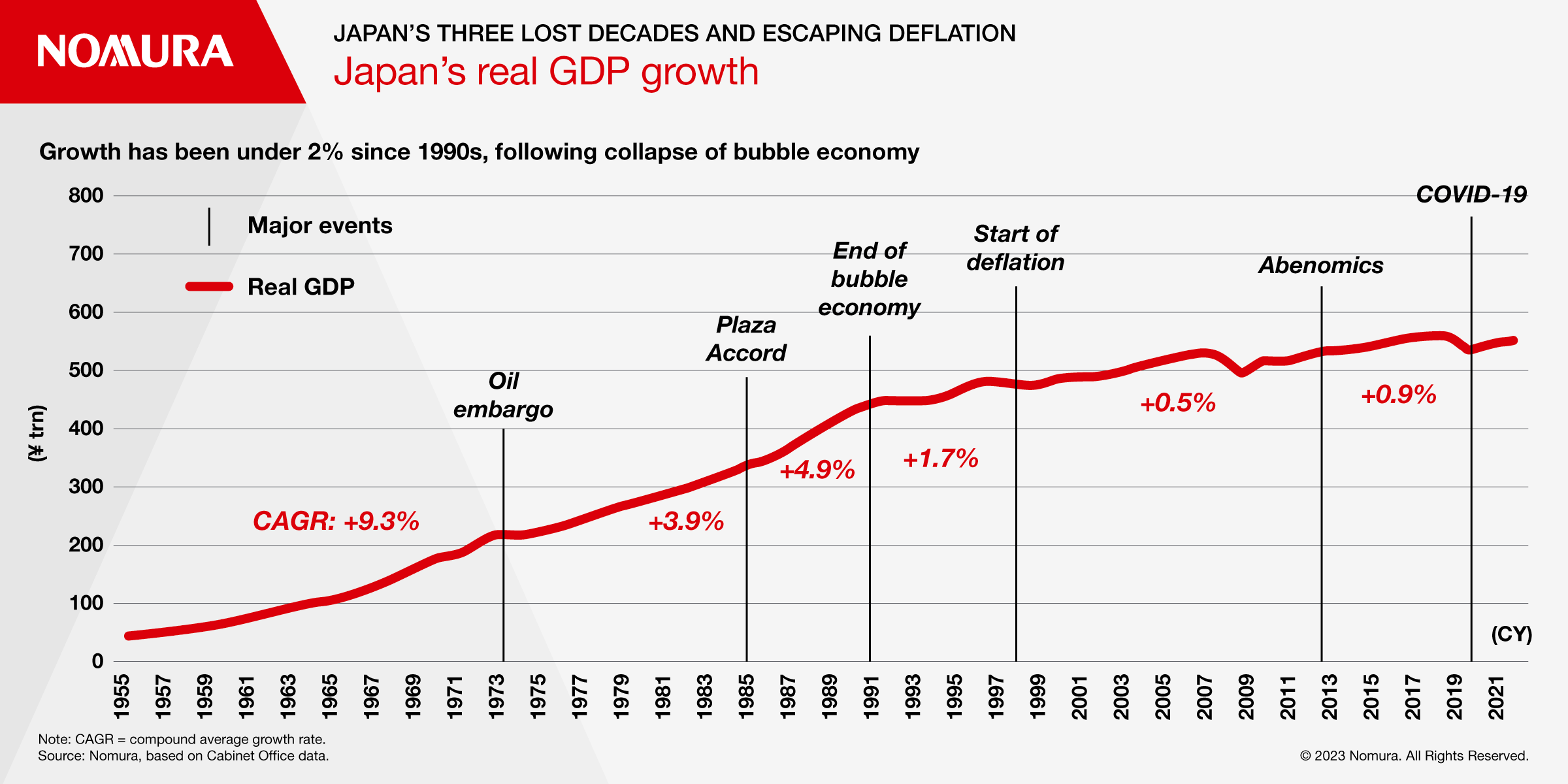
The impact on Japan's Gross Domestic Product (GDP) from defense exports will likely be negligible in the short term (less than 0.1%). However, the qualitative shift is massive. The "Defense Industrial Base" is being redefined from a domestic supply chain into a global value chain.
Consider the "Dual-Use" feedback loop. Technologies developed for the GCAP—such as AI-driven flight control systems and high-bandwidth data links—have immediate applications in the civilian autonomous drone and telecommunications markets. By funding these through a combination of domestic tax revenue and foreign export sales, Japan subsidizes its broader technological advancement.
The Obsolescence Risk
The primary threat to this strategy is the "Long Development Cycle." The GCAP is slated for deployment in 2035. In the interim, the nature of warfare is shifting toward low-cost, attritable unmanned aerial vehicles (UAVs) and electronic warfare. There is a risk that by the time Japan’s lethal export engine is fully operational, the market may have shifted away from high-cost manned fighters toward swarm-based systems.
To counter this, the Cabinet’s decision includes provisions for the "continuous evolution" of the platform. The architecture of the GCAP is modular, allowing for the integration of new technologies as they emerge. The ability to export these "upgrades" will be just as critical as the sale of the initial airframe.
Strategic Realignment Requirements
The success of this policy change hinges on three immediate actions by the Japanese government and industrial stakeholders:
First, the establishment of a dedicated Defense Export Agency. Currently, the responsibility for defense transfers is fragmented across the Ministry of Defense, the Ministry of Foreign Affairs, and the Ministry of Economy, Trade, and Industry (METI). A centralized agency is required to navigate the complex regulatory and diplomatic landscape of international arms sales.
Second, a shift in corporate culture within Japan’s defense contractors. Companies like MHI must transition from a "cost-plus" mindset—where the government guarantees a profit margin—to a "competitive-market" mindset. They must learn to compete with global giants like Lockheed Martin and BAE Systems on price, reliability, and lifecycle support.
Third, the integration of defense exports into the "Free and Open Indo-Pacific" (FOIP) strategy. Exports should not be treated as isolated commercial transactions but as the "connective tissue" of regional security. This means bundling hardware sales with training programs, joint exercises, and long-term maintenance contracts that deeply embed the recipient nation into a security partnership with Japan.
The scrapping of the lethal weapons export ban is a recognition that isolationism is no longer a viable path to security. In a world where technological supremacy requires massive capital and global collaboration, Japan has chosen to integrate its industrial survival with its regional strategic objectives. The fighter jet is the hardware, but the true export is a new, more assertive Japanese role in the global order. No further justification is required for the shift; the arithmetic of modern defense simply demands it.
The final strategic move for Tokyo is the expansion of this framework to include autonomous systems and cyber-defense capabilities. While the current focus is on the GCAP, the underlying logic—sharing R&D costs and building regional dependencies—applies equally to the next generation of sub-surface drones and satellite-based surveillance networks. Japan must move quickly to codify the export protocols for these emerging domains before the window of technological advantage closes.