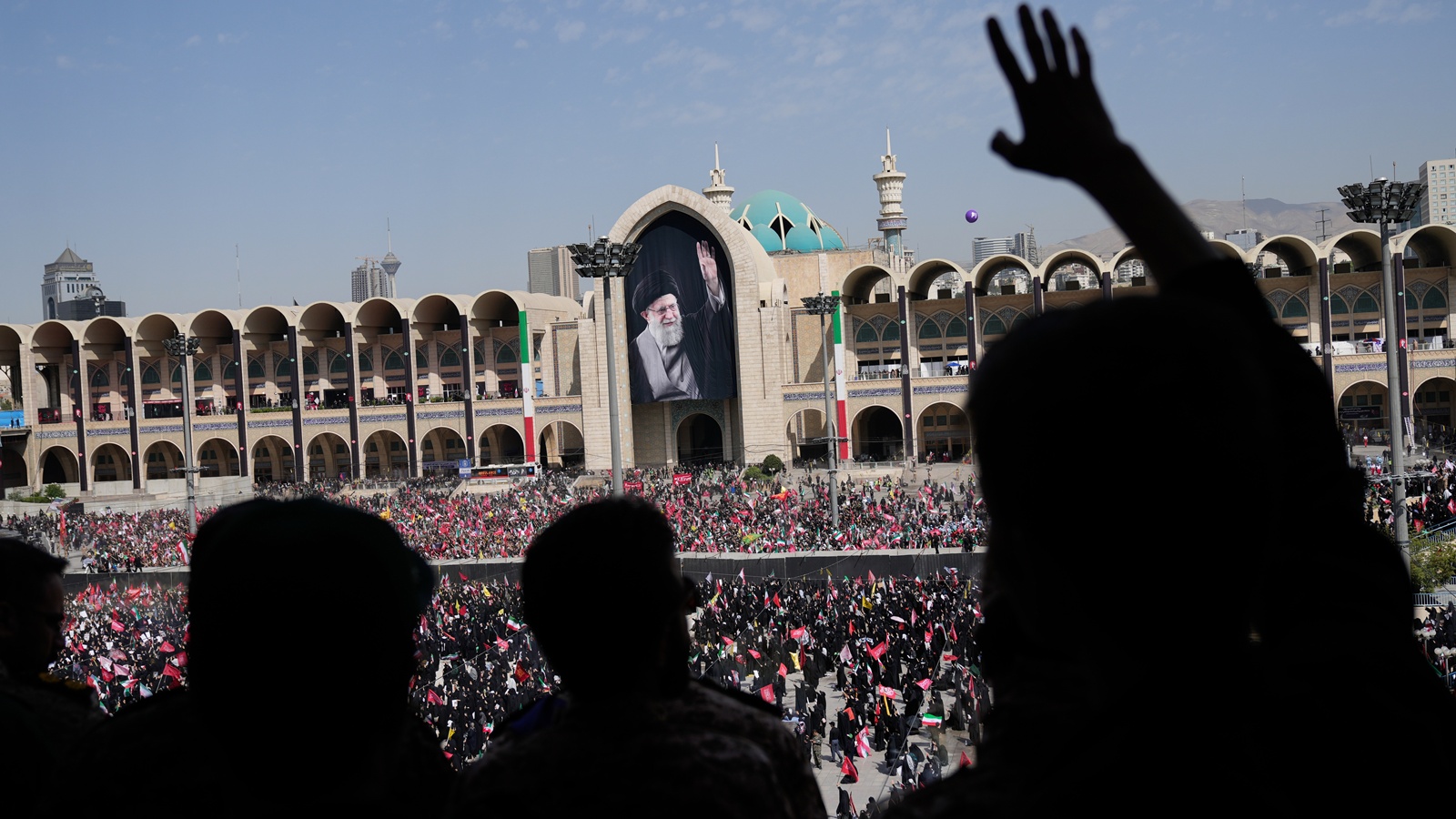
A single, heavy thread of saffron silk rests against the dark velvet covering a casket in the Grand Mosalla of Tehran. The air inside the vast hall carries the sharp scent of rosewater mixed with the stale, heavy heat of July. Outside, the city is a suffocating 36 degrees Celsius, but inside, the chill of mechanical cooling fights against the collective warmth of thousands of breathing, weeping human beings.
For 125 days, this moment was suspended in time. When the airstrikes shook the capital on February 28, terminating the 37-year reign of Ayatollah Ali Khamenei at the age of 86, the world braced for an immediate explosion of state pageantry. Instead, there was a long, eerie silence. A war raged, an interim peace deal was brokered, and all the while, the mortal remains of the Supreme Leader were kept in an undisclosed cold-storage facility, preserved without chemical embalming under strict Islamic protocols.
Now, the gates have opened. The geometry of the room tells a story that the official state bulletins try hard to obscure.
To watch a state funeral is to witness a theater of calculated gestures. Every diplomat who steps across the threshold, every hand extended in condolence, and every deliberate absence is a piece of geopolitical chess played in the presence of the dead.
Consider the physical arrangement of the grief. On the raised platform sits the large casket of the Supreme Leader, topped with his signature black turban to denote his lineage. Directly beneath it rest smaller coffins, including one containing his 14-month-old granddaughter, a stark reminder that when modern ordnance strikes a compound, history makes no exceptions for innocence.
As the morning progresses, a procession of foreign dignitaries is ushered through the heavy security cordons. Their arrivals form a distinct pattern.
Prime Minister Shehbaz Sharif of Pakistan walks with a measured solemnity, representing a neighbor that must live with the permanent reality of a shared, porous border. Senior leaders from Iraq, Armenia, and Tajikistan follow. Then come twelve heads of parliament, primarily from the Arab world, balancing the delicate art of regional proximity against the shifting tides of global alignment.
But it is the arrival of an official delegation from New Delhi that draws the quiet, intense focus of the analysts watching from the galleries.
Pabitra Margherita, India’s Minister of State for External Affairs, walks alongside Lieutenant General Syed Ata Hasnain, the retired military commander currently serving as the Governor of Bihar. They are accompanied by a diverse assembly of Indian religious figures—Sikh, Hindu, Muslim, and Christian leaders—moving together through the grand hall.
To an outside observer, India’s high-level presence at the funeral ceremony of a leader assassinated by Western-aligned strikes might seem paradoxical. New Delhi, after all, has spent the last decade cultivating an intricate, multibillion-dollar strategic partnership with the United States. It is a member of the Quad. It values its deep technology sharing and defense pacts with Washington.
Yet, here stand its official envoys, bowing their heads before the flag of the shrine of Imam Husayn.
This is the reality of strategic autonomy. For India, Iran is not a abstract ideological concept on a television screen; it is geography. It is the Chabahar Port, the maritime gateway that bypasses Pakistan to open trade routes into Central Asia. It is the proximity to the energy lanes of the Persian Gulf. By sending a high-level delegation led by a veteran general and a foreign ministry official, New Delhi sends a quiet, unambiguous signal to both Washington and Tehran: our national interests are dictated by our own map, not someone else's foreign policy.
The Western benches inside the Grand Mosalla remain entirely vacant. No envoys from London, Paris, or Washington are present. Foreign Ministry spokesperson Esmail Baghaei openly condemns the European nations, declaring their absence and their stance on the winter strikes as standing on the wrong side of history. The funeral organizers have intentionally timed the commencement of these public rites to coincide with July 4, a silent, bitter nod to the 250th anniversary of the nation that ordered the drones into the sky.
The political stakes of these six days extend far beyond the diplomatic guest list. The Islamic Republic is using the massive scale of the mourning—which will travel through five cities across Iran and Iraq, including the holy Shiite sanctuaries of Karbala and Najaf, before ending in Mashhad—to perform a profound act of domestic reinforcement.
President Masoud Pezeshkian moves through the dignitaries, his face etched with the exhaustion of a leader who must navigate the fragile transition of power to the late leader's son, Ayatollah Mojtaba Khamenei. Pezeshkian speaks of resilience, claiming this moment is the beginning of a new chapter of national solidarity.
But solidarity is a complicated metric in modern Tehran.
Step outside the perimeter of the Grand Mosalla, past the police roadblocks, the military transport vans, and the hundreds of volunteer food stations handing out halim soup and watermelon to the faithful. On the main thoroughfares, the crowd is a sea of black chadors, men rhythmically beating their chests, weeping openly as their shoulders heave in the midday heat. They demand retribution, chanting phrases that have echoed through the city for nearly fifty years.
Yet, walk three blocks away, past the rows of closed shops and the cooling mist sprays, and the texture of the city shifts. You see young women riding on the backs of motorcycles, their hair uncovered, navigating around the traffic diversions with an air of detached indifference. For them, the massive banners bearing the symbol of the red fist and the slogan "We must rise" belong to a world they live next to, but not entirely within.
The state claims that up to 30 million people will participate across the entire itinerary before the final burial at the Imam Reza shrine on Thursday. The organizers are terrified of the chaos that historically mars these massive gatherings—memories of the tragic crushes during the funerals of Ruhollah Khomeini in 1989 and Qassem Soleimani in 2020 loom large. Every movement of the crowd is heavily managed, every exit point carefully monitored.
As the afternoon sun hits its peak, the heavy humidity makes the air almost unbreathable. A young Indian delegate pauses near the edge of the courtyard, adjusting his formal attire, looking out over the sea of black cloth and the giant statue of a clenched fist being erected in Revolution Square.
The scene is a vivid reminder that geopolitics is rarely about absolute moral certainties. It is about the cold, unyielding friction of necessity. Nations do not mourn out of sentimentality; they attend funerals to declare to the living exactly where they intend to stand when the dust finally settles.
A sudden gust of wind sweeps across the Mosalla courtyard, lifting a cloud of dust and the scent of burning wild rue over the thousands who remain standing in the glare, waiting for the long journey to Mashhad to begin.