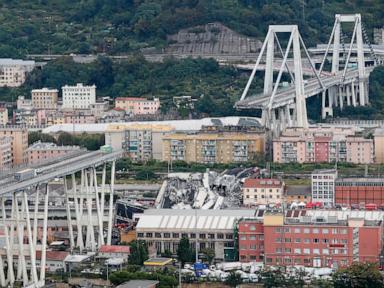
On August 14, 2018, a 200-meter section of the Morandi highway bridge in Genoa gave way during a torrential summer storm. Dozens of cars and trucks plunged into the abyss. The disaster killed 43 people, shattered a major European transit artery, and left an entire nation asking how a concrete marvel of the 1960s could simply disintegrate.
Now, almost eight years after the disaster and following nearly 300 intense court hearings, judges in Genoa are delivering their first-instance verdict.
Fifty-seven defendants—including top corporate executives, maintenance engineers, and government oversight officials—face serious criminal charges. The prosecution has asked for combined prison sentences totaling nearly 400 years.
But this trial isn't just about punishing the people who let a bridge rot. It's a critical test of how modern societies hold private corporations accountable when they run essential public infrastructure. If you think this is just an Italian tragedy, you're missing the bigger picture.
What Really Caused the Morandi Bridge Collapse
To understand the trial, you have to understand the bridge itself.
Inaugurated in 1967, the Morandi Bridge was celebrated as an engineering masterpiece. Designed by Riccardo Morandi, it featured three massive A-shaped concrete pylons and concrete-encased stay cables. The design was sleek, but it had a fatal vulnerability: the steel cables carrying the load were sealed inside concrete. If those steel strands corroded, you couldn't see it from the outside without highly specialized, invasive testing.
The prosecution's case is devastatingly simple. They argue that the bridge was a ticking time bomb.
1967: Bridge opens -> 1993: Major repairs on Pylons 10 & 11 -> 2018: Pylon 9 collapses (No major repairs)
By 1993, operators knew the stay cables on pylons 10 and 11 were degrading, so they reinforced them. Yet, they never carried out the same crucial reinforcement work on pylon 9—the very pylon that failed in 2018. Investigators found that in the 51 years between its opening and its collapse, virtually no structural reinforcement was done on pylon 9’s stays.
Prosecutors allege that managers delayed safety work and ignored warning signs because they wanted to keep profits flowing to shareholders.
The defense team doesn't deny the structural issues, but they shift the blame. They argue the collapse was down to an inherent, original design defect in pylon 9 that no standard maintenance program could have caught or prevented. They claim the failure was an unpredictable engineering anomaly, not criminal neglect.
Inside the Courtroom: The Key Figures on Trial
The sheer scale of this trial is staggering. It has dragged on for four years, exposing the notoriously slow pace of the Italian justice system. The 57 defendants face charges ranging from negligent disaster to multiple counts of manslaughter and forging official documents.
The main players in the dock include:
- Giovanni Castellucci: The former CEO of Atlantia (the holding company controlled by the Benetton family) and its toll-road operator subsidiary, Autostrade per l’Italia (ASPI).
- SPEA Engineers: Technicians from the engineering firm responsible for inspecting and maintaining the bridge.
- Ministry of Infrastructure Officials: Government regulators who were supposed to supervise the private operator but allegedly looked the other way.
While these individuals face personal prison terms of up to 18.5 years, the corporate entities themselves have already managed to sidestep the criminal trial. In 2022, Autostrade per l’Italia and SPEA paid roughly €30 million ($34 million) in a settlement with prosecutors. This deal spared the companies from harsher corporate sanctions and allowed them to continue bidding on public contracts.
For the families of the victims, that settlement felt like a slap in the face. They want individual, personal accountability. They want to see the executives who made the decisions—and pocketed the bonuses—behind bars.
Why This Case Matters Globally
We're seeing a global trend where cash-strapped governments outsource critical infrastructure to private companies. Motorways, bridges, water systems, and power grids are routinely handed over to private consortia under complex concession models.
The Genoa trial exposes the dark side of this arrangement.
When you privatize public infrastructure, you create a fundamental tension: the public needs maximum safety and reliability, while private shareholders want maximum returns on investment. If a private operator can skimp on maintenance, boost its short-term profits, and then blame "unforeseeable design flaws" when things go wrong, the system is broken.
If the Genoa court hands down stiff prison sentences, it sends a clear warning to infrastructure executives worldwide. It means you cannot hide behind technical complexity. If you ignore warning signs to protect your profit margins, you will go to jail.
On the other hand, if the defendants are acquitted or receive light sentences, it sets a worrying precedent. It suggests that once public infrastructure is privatized, the chain of responsibility becomes so tangled that no single person can be held criminally responsible for its failure.
What Happens Next
No matter what the judges decide on Thursday, this legal battle is far from over. In Italy's complex legal system, a first-instance verdict is just the beginning.
- The Appeals Process: Both sides are virtually guaranteed to appeal the ruling. Legal experts estimate it will take at least another 18 months for the appeal trial to finish, and another year after that before the Supreme Court issues a final, binding verdict.
- The Statute of Limitations: The agonizingly slow pace of Italian justice has already worked in favor of the defense. Several lesser charges, such as the forgery of maintenance documents, have already expired under the statute of limitations. Every delay increases the risk that more charges will simply vanish.
- Infrastructure Reform: The disaster forced the Italian government to strip the Benetton family's Atlantia of its stake in Autostrade, effectively returning the toll roads to state-led control. But across Europe and North America, thousands of aging 1960s-era concrete bridges are reaching the end of their design lives.
The immediate task for governments and transport authorities is to audit these structures now. We cannot rely on superficial visual inspections of complex concrete structures. Modern monitoring, using continuous structural sensors and advanced acoustic testing, is the only way to ensure another Morandi tragedy doesn't happen in your backyard.
For the families packing the Genoa courtroom, the technicalities and political reforms are secondary. They want the simple, painful truth officially recorded in a court of law: forty-three people did not die because of bad luck or a sudden storm. They died because the people trusted to keep them safe chose to look the other way.