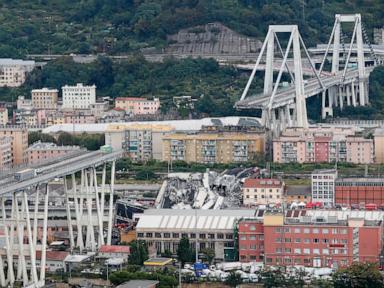
On a rainy morning in August 2018, the Morandi highway bridge in Genoa collapsed. It sent dozens of cars and trucks plunging into the abyss. Forty-three people died. It happened on the eve of Ferragosto, Italy’s major summer holiday, when families were heading out to celebrate. Today, nearly eight years later, a Genoa court is finally set to deliver its first-instance verdict in a massive trial.
This judgment is about more than finding closure for the families of the victims. It's a trial that challenges how we manage public roads, who we trust with public safety, and whether corporate executives can hide behind technical jargon when disaster strikes.
The Ticking Time Bomb of Pillar Nine
The Morandi Bridge, built in 1967, was once celebrated as a triumph of modern engineering. Designed by Riccardo Morandi, it used a highly unusual layout of concrete-encased stay cables. The design was meant to protect the steel tendons inside from the elements. Instead, it did the opposite. It hid the corrosion from inspectors' eyes.
Over decades, the salt air from the Genoa gulf and industrial smog ate away at the hidden steel. Prosecutors argued that the operators knew about this decay. In fact, a court expert during the investigation called the bridge a ticking time bomb. The warning signs were apparently screaming, but those in charge chose to ignore them.
While operators reinforced similar pillars on the bridge in the 1990s, they left pillar nine untouched. That was the very pillar that gave way during the storm. The prosecution’s argument rests on a simple, damning premise: the collapse was entirely preventable. It wasn't an act of God. It was a failure of basic duty.
Inside the Trial of Fifty-Seven Defendants
The scale of this trial is staggering. Over four years and more than 280 hearings, prosecutors built a case against 57 separate defendants. These aren't low-level technicians. The list includes high-ranking executives from Autostrade per l’Italia (ASPI), the company that operated the toll road, and Spea, the engineering firm responsible for inspecting it.
Giovanni Castellucci, the former chief executive of Atlantia (the parent company of ASPI), is the central figure in the courtroom. Prosecutors want an 18-year prison sentence for him. They argue he postponed vital safety work to keep profits flowing and keep shareholders happy. Castellucci and his defense team deny these allegations. They argue the collapse was caused by an original construction defect from the 1960s that no maintenance program could have detected or fixed.
This defense strategy tries to shift the blame from human negligence to a historical engineering flaw. But for the victims' families, this argument feels like a cowardly excuse. If a bridge has a known, fatal design flaw, you don't keep driving millions of cars over it every year without checking the cables.
The Agonizingly Slow Pace of Italian Justice
For the families of the 43 victims, waiting eight years for a first-instance verdict is a form of torture. The long delay highlights the structural issues within Italy’s judicial system.
Because the trial dragged on for so long, some of the lesser charges, including document forgery, have already hit the statute of limitations. This means some defendants will escape punishment for certain actions simply because the clock ran out.
Even after today's verdict, the legal battle is far from over. Under the Italian legal system, defendants can appeal this decision. That process could take another 18 months. After that, the case will likely head to the Supreme Court for a final ruling, stretching this saga closer to a decade of litigation.
Private Profit Versus Public Safety
The Morandi Bridge disaster sparked a national debate over the privatization of Italy's highway network. In the 1990s, Italy handed over large portions of its motorway system to private concessionaires, principally ASPI, which was controlled by the wealthy Benetton family.
The promise of privatization is always efficiency. The reality, in this case, was a tragic conflict of interest. The more money a private operator spends on structural maintenance, the less profit it distributes to its investors. When safety inspections are conducted by a sister company under the same corporate umbrella, the system of checks and balances completely breaks down.
ASPI and Spea managed to exit the criminal trial as corporate entities by paying a 30-million-euro settlement to the state. They also paid out over 60 million euros in compensation to the victims' families. But paying a fine doesn't absolve the individuals who made the decisions. The current CEO of Autostrade, Arrigo Giana, recently issued a public apology, acknowledging that the decisions of the past left indelible scars. It's a nice gesture, but it comes years too late.
Why the World is Watching Genoa
What happened in Genoa should serve as a wake-up call for transport departments globally. Much of the infrastructure in Europe and North America was built during the post-war boom of the 1950s and 1960s. These bridges, tunnels, and overpasses are reaching the end of their intended lifespans.
If governments continue to outsource critical infrastructure maintenance to private firms without strict, independent oversight, more disasters will happen. We need to rethink how we inspect our public works. The Genoa trial shows that self-regulation in infrastructure management is a recipe for disaster.
The next step for cities worldwide is clear. We must demand independent, publicly accessible safety audits of all major bridges. Trusting private concessionaires to grade their own homework is no longer an option. If we don't act on these lessons, the 43 lives lost in Genoa will have been lost in vain.