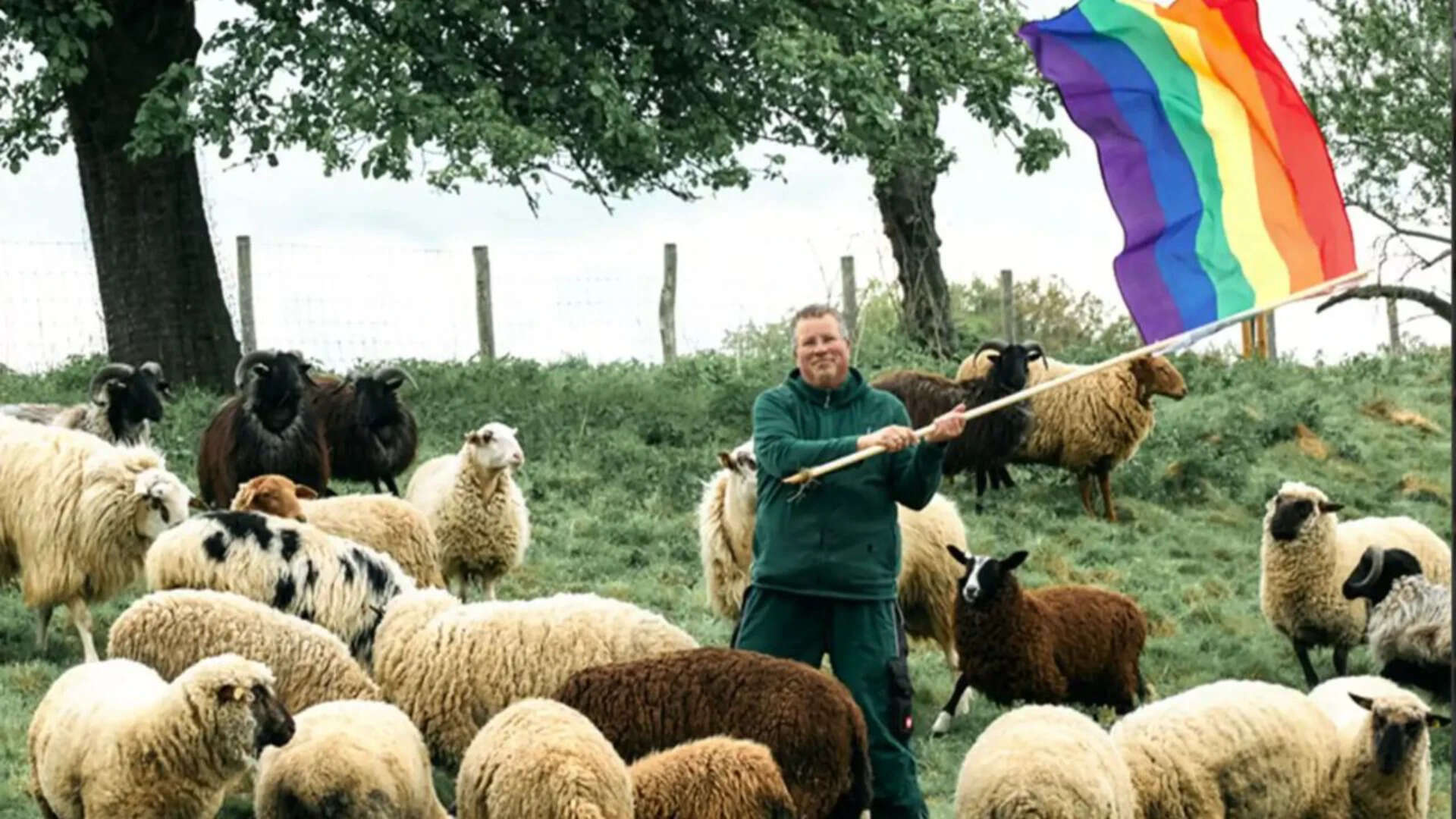
A ram named Rainbow avoided the slaughterhouse for a reason that surprised everyone. He just wasn't interested in ewes.
In standard livestock farming, a ram that won't mate with female sheep loses his commercial value quickly. Farmers usually send them straight to the butcher. But Rainbow's story took a completely different turn when a German activist stepped in, bought the animal, and turned his story into a lifeline for people facing deadly discrimination worldwide.
It sounds like a quirky feel-good viral story on the surface. Look closer, though, and you find a clever fundraising model that uses public attention to solve a dead-serious crisis: helping LGBTQ+ individuals escape regions where being who they are carries a death sentence.
Why Rainbow the Ram Was Headed to the Butcher
Farm animals exist within a strict economic system. Livestock breeders evaluate breeding rams on their ability to pass down genetics and sire offspring. When a ram consistently ignores female sheep in heat, the farm faces a financial loss.
Male sheep exhibiting exclusively same-sex behavior aren't a myth or a novelty. Decades of veterinary research show that roughly 8% of domestic rams display exclusive sexual preference for other rams. They ignore females entirely, even when ewes are in estrus.
"Targeted studies conducted by Oregon Health & Science University and the USDA demonstrated that sexual preference in domestic rams is hardwired into the brain, specifically linked to differences in the ovine sexually dimorphic nucleus."
Despite this documented biological reality, commercial breeding operations can't keep non-breeding stock. Maintaining a sheep costs money every day in feed, veterinary checks, and shelter space. Farmers operate on tight margins. When a ram fails to breed, he goes to market. That was Rainbow's exact situation on a farm in Germany.
Turning Animal Rescue into Direct Human Rights Relief
When Michael Frey, a German LGBTQ+ activist, learned about Rainbow, he didn't just see a single animal in distress. He saw an opportunity to start a broader conversation about survival, acceptance, and direct aid.
Frey bought the ram from the farmer, saving him from immediate slaughter. Instead of simply placing Rainbow in a sanctuary and calling it a day, Frey built a dedicated campaign around him. He used Rainbow's profile to raise funds for organizations that extract LGBTQ+ individuals from countries where homosexual acts remain criminalized or punishable by death.
The money raised doesn't go toward generic awareness campaigns. It goes straight to concrete, life-saving logistics:
- Secure emergency transport out of high-risk zones.
- Temporary safe housing in transit countries.
- Legal aid to process asylum claims in safer nations.
- Basic survival necessities like food and medication during extraction.
This approach bypasses traditional bureaucratic delays. By telling a relatable story centered on saving a single animal, the initiative mobilizes donor funding faster than traditional crisis relief appeals usually manage.
The Reality of LGBTQ+ Rights Across the Globe
It's easy to forget how dangerous the world remains for queer people depending entirely on where they were born. While legal protections have advanced in parts of Western Europe and the Americas, dozens of nations still maintain state-sponsored persecution.
According to data compiled by ILGA World (the International Lesbian, Gay, Bisexual, Trans and Intersex Association), over 60 countries criminalize same-sex acts. In a terrifying handful of jurisdictions, the law mandates the death penalty. In many other regions, state authorities actively ignore mob violence, arbitrary arrests, and systemic torture targeting marginalized individuals.
| Region | Legal Persecution Risk | Typical Threat Level |
| Country Examples | Criminalized Acts | Maximum Legal Penalty |
| Parts of Sub-Saharan Africa | Severe | Long-term Imprisonment / Death |
| Select Middle Eastern Nations | Extreme | Execution / Life Sentence |
| Eastern European Border Zones | Moderate to High | Arbitrary Arrest / State Harassment |
For individuals living under these regimes, staying put isn't an option. Escaping requires capital, connections, and rapid action. A single delay at a border crossing or a denied visa application can mean life or death.
The Science Behind Same Sex Behavior in Animals
People often argue about whether homosexuality is "natural." Rainbow's story cut right through that online debate because biology already answered the question long ago.
Biologists have documented same-sex sexual behavior in over 1,500 animal species. From penguins and dolphins to primates and domestic livestock, nature shows incredible diversity in social and sexual behaviors.
In sheep, the science is particularly clear. Research led by Dr. Charles Roselli found clear neurological markers distinguishing rams that prefer females from those that prefer males. The brain structures responsible for sexual preference show physical differences early in development. It isn't a learned behavior or a choice made by the animal. It's simply how the ram's brain is built.
Understanding this science exposes the absurdity of human prejudice. If sexual diversity exists naturally across wild and domesticated species without moral panic, enforcing legal cruelty against human beings for the same trait looks even more irrational.
How Storytelling Drives Practical Action
Most people freeze when faced with massive, abstract global problems. Hearing that millions of people live under oppressive laws causes empathy fatigue. People feel powerless to help, so they scroll past the news.
Rainbow changed the narrative dynamic.
- A clear, simple entry point. People naturally empathize with animals in danger. The story of a gentle sheep facing slaughter grabs immediate attention.
- An unexpected twist. Learning why the sheep was in danger—his lack of interest in breeding—creates curiosity and challenges assumptions.
- A direct path to action. The campaign bridges the gap between saving the ram and saving human lives, giving donors a tangible outcome for their money.
This isn't just about feel-good marketing. It's tactical fundraising. It meets people where they are, offers an engaging narrative, and converts passive online sympathy into actual financial capital used for real-world emergency evacuations.
What Needs to Happen Next
If you want to support initiatives that protect both animal welfare and human rights, skip the passive social media likes and focus on effective action:
- Support verified escape networks. Look into organizations like the Rainbow Railroad or local refugee assistance funds that directly coordinate emergency evacuations for persecuted individuals.
- Verify where your donations go. Ensure that grassroots campaigns clearly detail how funds are allocated, prioritizing direct assistance, legal fees, and safe passage over administrative overhead.
- Advocate for asylum rights. Pressure local representatives to maintain clear, accessible asylum pathways for refugees fleeing persecution based on sexual orientation or gender identity.
Stories like Rainbow's show that creative, direct approaches can shatter apathy and deliver real help to people facing extreme danger.


