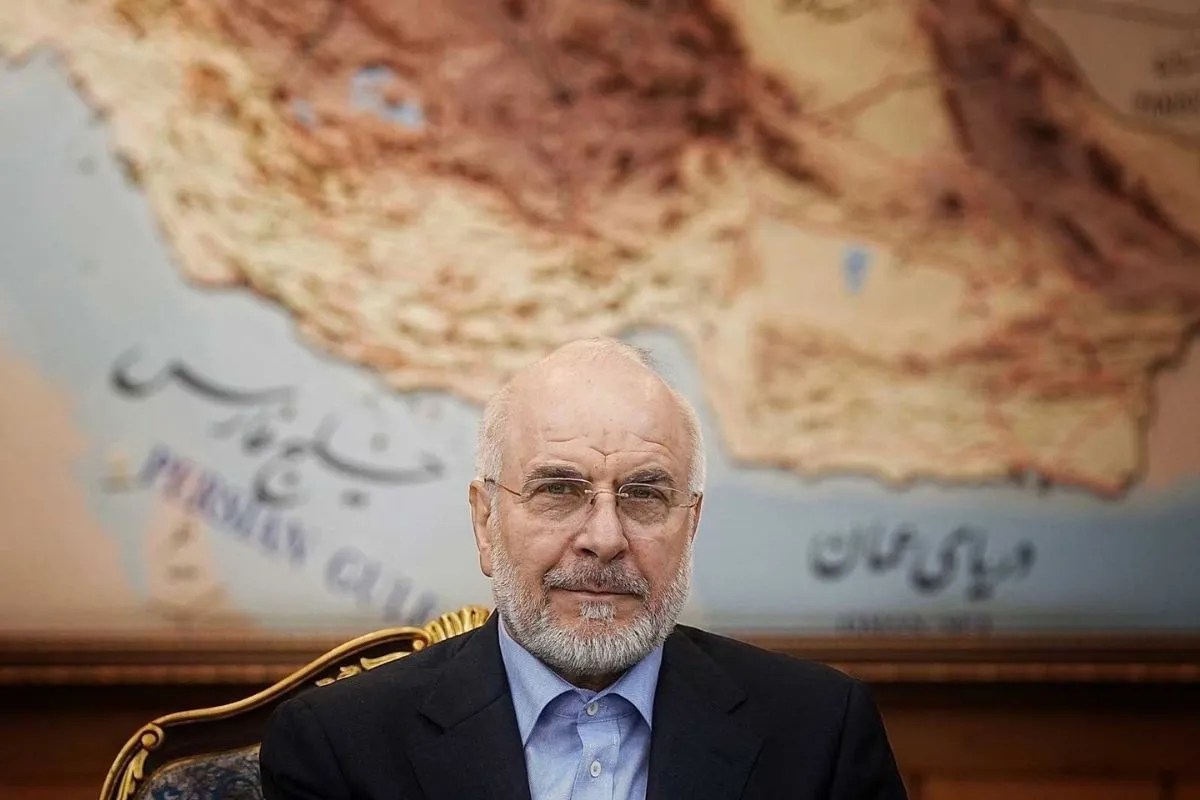
The cold, fluorescent hum of a parliament chamber rarely sounds like a casino floor. Yet when Iranian Parliament Speaker Mohammad Bagher Ghalibaf stood before lawmakers and called Washington's foreign policy the desperation of a "losing gambler" locked onto an "Israel-first" path, the air in the room felt thick with the smell of old cigarette smoke, spilled tea, and high-stakes reckoning.
Listen closely to that phrase. A losing gambler. For an alternative view, read: this related article.
Anyone who has ever sat across from someone who refuses to walk away from a bad hand recognizes the posture immediately. The shoulders are hunched a little tighter. The jaw is clenched just enough to show strain. Every chip pushed toward the center of the felt carries not confidence, but panic—a desperate attempt to win back what has already slipped away through doubling down on a losing bet.
When Ghalibaf leveled that accusation at the United States and warned that tying American strategy so tightly to an "Israel-first" approach represents a perilous turning point, he was doing more than trading diplomatic insults. He was offering a diagnosis of power under strain, speaking from inside a capital that has spent decades staring down sanctions, proxy shadows, airstrikes, and geopolitical brinkmanship. Similar coverage on this matter has been provided by The New York Times.
I have stood in rooms thousands of miles from Tehran where ordinary people argued over headlines like this while waiting for a bus in the rain. You feel the distance between grand statecraft and daily survival almost instantly. A speech in a parliamentary hall sounds abstract until you remember that speeches move fleets, harden positions, spook markets, and decide whether a family in Isfahan, Tel Aviv, or a quiet American suburb sleeps soundly or wakes up to sirens and rising fuel prices.
Let us be honest from the start: this corner of world politics is exhausting. Confusing. Often terrifying. Even seasoned observers sometimes lose track of who retaliated first, which red line was crossed last month, and what a given diplomatic salvo actually means on the ground. If you feel a knot of skepticism when politicians trade dramatic labels like "losing gambler" or "dangerous turn," that skepticism is healthy. Politicians always have an angle. Ghalibaf speaks from the leadership of the Islamic Republic, a system with its own grievances, narratives, and survival instincts. Dismissing his words outright leaves you blind to how adversaries read Washington; swallowing them whole turns you into a megaphone for Tehran.
The real work—and the real drama—lies in looking past the rhetoric to the mechanics of escalation.
The Anatomy of a Doubled-Down Bet
To understand why the "losing gambler" metaphor hits such a raw nerve, let us use an explicit metaphor. Picture a high-stakes card table late at night. A player has already lost a stack of chips, misread the room twice, and watched the pot slip toward rivals. Instead of folding, standing up, and rethinking the game, the player slides every remaining chip into the middle, convinced that one more aggressive play will erase every past mistake.
In international relations, states rarely fold cleanly. Prestige gets tangled up with survival. Domestic politics punishes retreat faster than it rewards restraint. When a superpower or a regional power feels its leverage slipping—whether in influence, deterrence, or diplomatic control—the temptation to escalate rather than recalibrate becomes intense.
Ghalibaf's critique zeroed in on what critics of Washington's Middle East posture call an "Israel-first" alignment: the idea that American policy has become subordinated to or overly fused with Israeli strategic priorities at the expense of broader regional stability and wider U.S. interests. From Tehran's vantage point, Washington's backing of Israel—through military aid, diplomatic cover, and confrontational pressure on Iran and its regional partners—proves that the United States is chasing an unsustainable bet that drags the entire region closer to an all-out conflagration.
Washington, of course, tells a very different story. American policymakers frame their support for Israel as defense of a key democratic partner, deterrence against Iranian-backed armed groups across the region, and protection of maritime trade and regional security architecture. From that perspective, it is Iran's regional network, nuclear advancement, and hostility toward Israel and U.S. forces that create the instability in the first place.
Two capitals. Two mirrors. Neither sees the reflection the way the other does.
Still, calling out a "dangerous turn" touches a nerve that extends far beyond Tehran. Even inside the United States and among traditional allies, debates have grown sharper over whether an unyielding tilt toward one side's military objectives locks Washington into endless entanglement, alienates swing nations across the Global South, and narrows room for diplomacy. When an adversary points to that exact fault line, it is not inventing the debate out of thin air; it is weaponizing a real tension that already exists.
What Happens When Abstract Politics Hits Real Lives
Strategy papers love clean arrows on maps. Real life is messier.
Consider a hypothetical scenario, clearly marked as such, to see how high-level rhetoric ripples downward. Imagine a mid-sized import business in South Asia—say, a family-run trading firm that relies on predictable shipping lanes and steady energy costs to keep trucks moving and warehouses lit. The owner, let us call him Tariq, does not wake up thinking about parliamentary speeches in Tehran or cabinet debates in Washington. He wakes up checking port schedules, exchange rates, and diesel prices.
Now imagine a sudden spike in regional hostility after months of tense posturing. Insurance rates on tankers jump overnight. Rerouted vessels add days or weeks to transit times. Fuel prices tick upward before anyone has even signed a new contract. Tariq does not get a seat at the negotiating table, yet he pays the tax of geopolitical friction on every shipment.
Multiply Tariq by millions of shopkeepers, commuters, farmers, and factory workers across the Middle East, Asia, and Europe. That is the invisible ledger of escalation. When leaders talk about turning points and gambles, they are talking about probabilities that eventually land on someone's doorstep as higher inflation, displaced families, or grieving households.
In Tehran, ordinary Iranians have lived inside that pressure cooker for years—caught between sanctions that squeeze purchasing power at the grocery store and a state leadership that frames defiance as honor and survival. In Israel, families know the visceral weight of sirens, rocket alerts, and mobilization orders that turn ordinary Tuesdays into emergencies. And across the region, civilians in Lebanon, Gaza, Yemen, Iraq, and Syria have repeatedly borne the heaviest physical cost whenever great-power rivalries and regional proxy conflicts collide.
Nobody escapes the blast radius of a reckless gamble forever. Not even the house.
Why Words Like "Desperation" Carry Strategic Weight
Why did Ghalibaf choose the language of a losing gambler rather than dry bureaucratic jargon?
Because humiliation and overreach are emotional levers. In political theater, labeling an opponent desperate is an attempt to shift momentum—to tell allies, domestic audiences, and wavering neighbors that the other side is running out of good options.
History offers plenty of cautionary tales where leaders mistook bluster for strength or assumed escalation would force an easy surrender. From imperial miscalculations in the twentieth century to modern regional wars that lasted far longer and cost far more than anyone predicted on day one, dangerous turning points rarely announce themselves with trumpets. They arrive quietly, disguised as necessary firmness, one more strike, one more sanction, one more show of resolve.
Yet there is also a trap in Ghalibaf's own framing. If you convince yourself that your rival is merely a desperate gambler on the brink of collapse, you can underestimate their capacity to hit back hard or misread where their actual red lines sit. Overconfidence on one side often feeds paranoia on the other. A spiral starts when both capitals believe they are cornered and neither believes the other will blink.
That is the paradox at the heart of this confrontation. Every side claims it is acting out of necessity and self-defense. Every move meant to restore deterrence can look like provocation from across the aisle.
Stepping Back From the Noise
So what should a thoughtful reader do when confronted with sharp warnings about "Israel-first" policy, Iranian parliamentary rebukes, and dangerous turning points?
First, slow down. Headlines thrive on instant outrage and binary teams. Ask who benefits from a particular framing, what facts are verified on the ground, and what interests are left unsaid.
Second, pay attention to incentives rather than slogans. Slogans are cheap; incentives shape behavior. Watch how diplomatic channels open or close, how regional neighbors hedge their bets, how energy markets react, and how domestic pressures push leaders toward either brinkmanship or back-channel compromise.
Third, keep the human stakes visible. Behind every geopolitical label—regime, superpower, ally, adversary, proxy—stand real people trying to build a decent life in a turbulent century.
The argument over whether Washington's approach is a losing bet or a necessary stand will not be settled by a single speech in parliament or a single cable out of a foreign ministry. It will be tested in choices made under pressure—when the stakes are highest, tempers are shortest, and the temptation to push all the chips forward is hardest to resist.
Watch the hands on the table. Not just the chips.
A single coin spins on a polished wooden desk, wobbling faster as its momentum dies, before clattering flat against the grain.


