New Delhi and Dhaka have once again pledged to tighten controls along their shared 4,096-kilometer border, framing the latest round of bilateral talks as a breakthrough in managing undocumented migration and cross-border crime. The official communiqués describe a future of synchronized patrolling, advanced surveillance tech, and seamless bureaucratic cooperation. Yet, anyone who has monitored this geopolitical fault line for the last few decades recognizes the script. These periodic agreements rarely translate into stability on the ground because they deliberately ignore the structural, economic, and environmental realities that drive human movement across Bengal.
The core issue is not a lack of barbed wire or border guards. Instead, the persistent friction stems from a fundamental misalignment of national priorities. While India increasingly views the border through a strict national security lens inflected by domestic electoral politics, Bangladesh views the frontier through the prism of economic survival and historical interdependence. Until both nations confront the economic dependency of border communities and the looming displacement caused by climate change, high-level security summits will remain exercises in diplomatic theater.
The Myth of the Hard Border
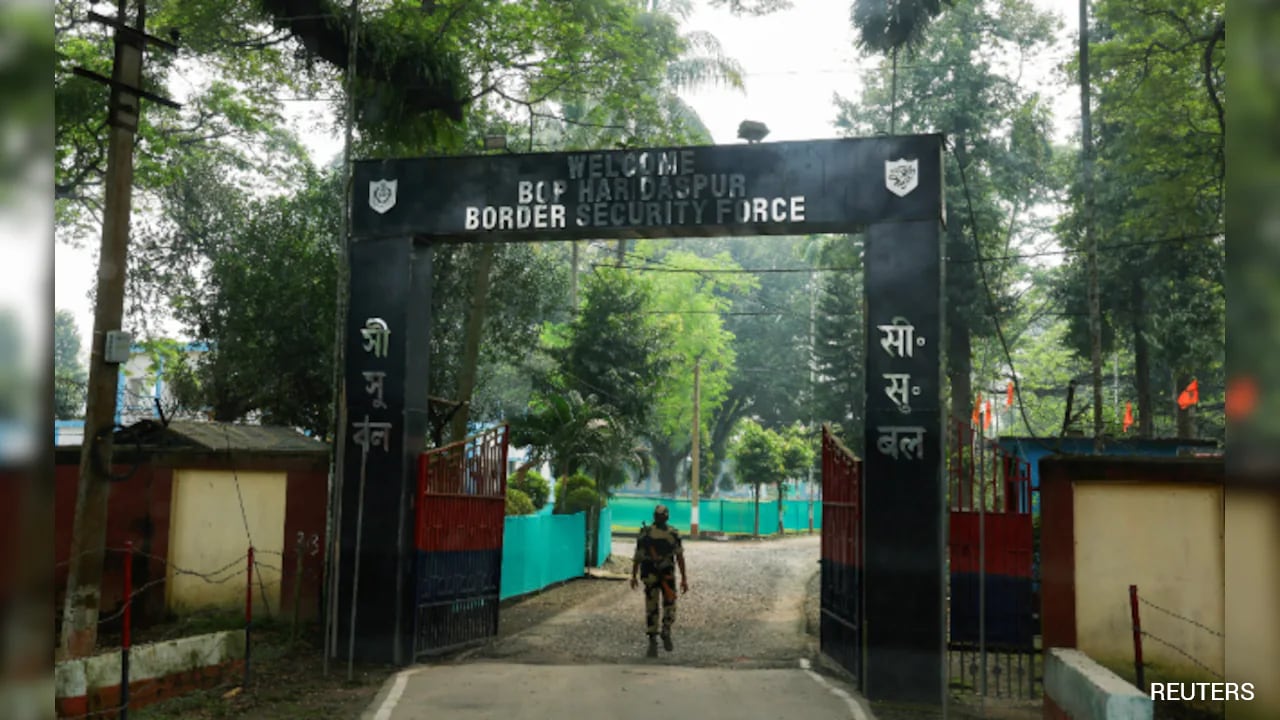
For over a decade, India has pursued the construction of a massive physical barrier along the frontier. Thousands of kilometers of double-walled fencing, floodlights, and high-tech sensors line the plains, rivers, and swamps of West Bengal, Assam, Tripura, Mizoram, and Meghalaya. The Border Security Force (BSF) patrols this perimeter with an iron fist.
It is an expensive illusion. The geography of the region defies total containment.
Dozens of rivers cut across the boundary line, shifting courses with every monsoon season. Vast patches of the border consist of char lands—unstable silt islands that emerge and disappear in the middle of shared riverways. Fencing cannot be permanently anchored in mud that dissolves every July.
When physical barriers fail, security forces rely on raw manpower and strict enforcement. This approach has turned the borderlands into some of the most dangerous agrarian zones in Asia. Human rights organizations have repeatedly documented the heavy toll of this militarization. Incidents of firing on civilians, cow smugglers, and subsistence farmers are common. This violence does not stop migration; it merely raises the premium charged by human traffickers who know which river channels remain unmonitored.
The Economic Reality of the Borderlands
National capitals tend to view borders as sharp, definitive lines. The people living along them know better. For centuries, the economy of the Bengal region operated as a single, integrated network. The partition of 1947 and the creation of Bangladesh in 1971 drew political boundaries through communities, cutting off farmers from their traditional markets, laborers from their jobs, and families from their kin.
Today, an informal economy thrives because the formal economy fails to meet local needs.
- The Cattle Trade: Despite intense crackdowns by Indian authorities, the smuggling of cattle remains a highly lucrative business. Demand for beef and leather in Bangladesh drives a vast underground supply chain that stretches deep into the Indian heartland.
- Agricultural Labor: During harvesting seasons, the wage differentials between Indian states and Bangladeshi districts create a natural pull factor. Indian landowners frequently rely on cheap, seasonal labor from across the border, quietly tolerating the influx until the harvest is secure.
- Daily Commodities: Everyday essentials like medicines, clothing, and processed foods move constantly through porous gaps to satisfy consumer demand on both sides.
Treating this deeply entrenched economic ecosystem purely as a criminal enterprise or an infiltration crisis is a policy failure. When security forces shut down a traditional informal trade route without providing alternative livelihoods, they do not stabilize the region. They bankrupt entire villages. Deprived of income, local residents are forced to take greater risks, turning to sophisticated criminal syndicates that deal in narcotics and weapons rather than cattle and rice.
The Failure of Border Haats
In an attempt to regularize local trade, the two governments established "Border Haats"—designated weekly marketplaces where residents living within a specific radius can trade local goods without passports or visas.
The concept is excellent. The execution is flawed.
The bureaucracy involved in securing a vendor permit is Byzantine, often requiring political connections or small bribes. The list of permitted goods is highly restrictive, excluding the very commodities that command the highest demand. Furthermore, the limited number of operating haats cannot handle the sheer volume of people looking to conduct basic commerce. Instead of expanding this program to create a vibrant, regulated trade zone, both nations have left it as a minor footnote in their bilateral strategy.
The Ghost in the Room is Climate Displacement
While politicians debate illegal immigration and national sovereignty, the largest driver of future migration goes entirely unaddressed in bilateral treaties. The Bay of Bengal is one of the most climate-vulnerable regions on Earth. Sea-level rise, intensifying cyclones, and severe riverbank erosion are actively destroying the habitability of coastal and deltaic areas.
Consider the Sundarbans, the massive mangrove forest shared by both nations.
As saltwater intrusion ruins agricultural soil, hundreds of thousands of smallholder farmers lose their livelihoods. They cannot farm, and they cannot fish in contaminated waters. Internal migration to cities like Dhaka or Kolkata is the first step, but these urban centers are already bursting at the seams. Eventually, the pressure forces people across the border in search of arable land or low-skilled work.
This is not a political subversion strategy; it is a survival strategy.
Neither New Delhi nor Dhaka has formulated a joint framework to manage climate refugees. When a storm wipes out a village on the Bangladeshi side of the Sundarbans, the resulting movement of people is treated by India as a security breach rather than a humanitarian disaster. By refusing to recognize climate change as a shared cross-border crisis, both nations ensure that future displacement will be chaotic, dangerous, and politically explosive.
Domestically Driven Diplomacy
The timing of border security talks between India and Bangladesh is almost always tethered to domestic political calendars rather than sudden changes on the frontier.
In India, the issue of "infiltrators" is a potent electoral narrative, particularly in states bordering Bangladesh. Hardline rhetoric about securing the frontier and deporting undocumented migrants serves as an effective tool for political mobilization. Consequently, the central government must periodically demonstrate that it is taking a tough stance, leading to high-profile bilateral meetings and demands for stricter enforcement.
In Dhaka, the government faces a different kind of domestic pressure.
Any administration in Bangladesh must balance its crucial economic ties with India against a fiercely nationalist public that resents any perception of subservience to New Delhi. The killing of Bangladeshi citizens by Indian border guards is a highly sensitive topic that sparks widespread public anger. Therefore, Bangladeshi negotiators must return from these summits with public assurances that India will commit to "zero border killings"—a promise that has been made dozens of times but never fully realized.
This creates a cycle of performative diplomacy.
Both sides agree to joint statements that satisfy their respective domestic audiences, knowing full well that the underlying dynamics on the ground will remain unchanged. The BSF will continue to use lethal force when its patrols feel threatened in the dark, and desperate migrants will continue to find gaps in the wire.
Shifting from Containment to Management
If India and Bangladesh genuinely wish to stabilize their shared frontier, they must abandon the outdated notion that a 4,000-kilometer border running through rivers and villages can be hermetically sealed. A modern border strategy requires a shift from pure containment to intelligent management.
First, the formalization of economic ties must be drastically expanded. If the legal channels for trade and seasonal labor are made accessible and efficient, the market for human smugglers and criminal syndicates will collapse. This means increasing the number of Border Haats tenfold and expanding the list of tradable goods to reflect actual market demands.
Second, both countries must invest in a joint ecological management framework for the Bengal delta. Documenting and predicting climate-induced displacement would allow both nations to manage the flow of people proactively, rather than reacting with panic and force when disaster strikes.
The current policy of relying on concrete, steel, and firearms is a proven failure. It drains state resources, costs human lives, and exacerbates bilateral tensions without solving the core issue of migration. True border security will not be found in the reinforcement of the fence, but in the economic stabilization of the communities living on either side of it.