The teacup gives it away first.
It is a cheap, porcelain cup, painted with small blue flowers along the rim, sitting on a wooden table in a small home just outside Islamabad. For a few seconds, the tea inside does not look like liquid anymore. It looks like a hard, vibrating solid, rippling with concentric circles that move faster than the eye can track. Then comes the sound. It does not come from the sky, and it does not come from the street. It rises directly through the soles of your feet—a low, subterranean growl that sounds like a massive concrete structure being torn apart by bare hands deep underground.
When the earth moves, your brain undergoes a sudden, violent recalibration. We spend our entire lives assuming the ground is the only absolute truth we have. It is the literal foundation of every step, every building, every plan. When that foundation turns into liquid, the world shrinks to the immediate four feet around you.
Within a single twenty-four-hour window, Pakistan went through this terrifying recalibration four distinct times.
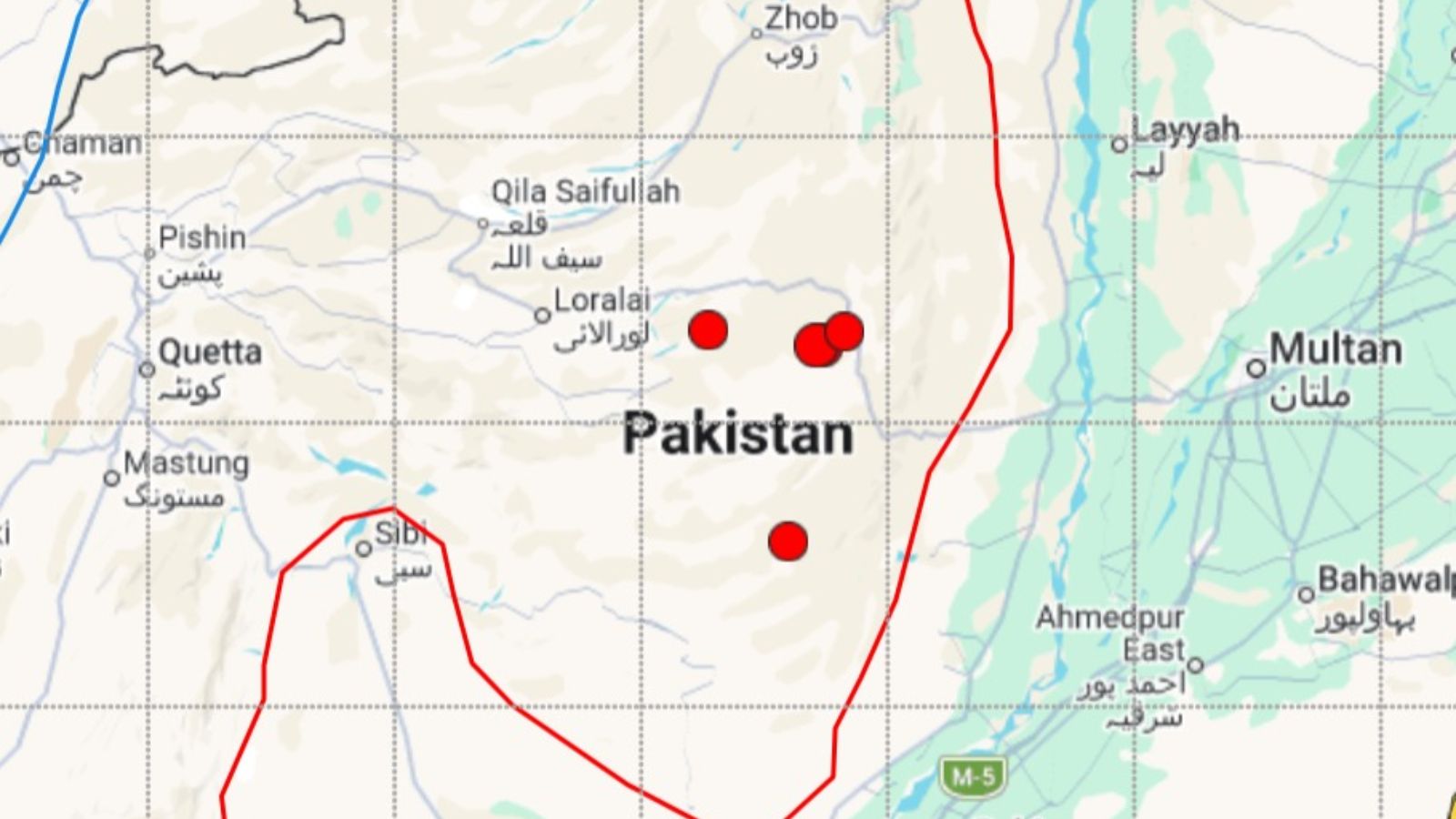
The headlines from the global wire services handled the event with their usual clinical detachment. They typed out the numbers: four quakes, a peak magnitude of 5.5, a depth of ten kilometers, an epicenter near the historic city of Bannu in the Khyber Pakhtunkhwa province. To a geologist sitting in an office in Colorado or London, a 5.5 magnitude tremor is a moderate event, a routine blip on a digital seismograph. It is a data point to be logged, categorized, and filed away.
But data points do not run into the night air with their children wrapped in blankets. Data points do not listen to the terrifying creak of sun-dried brick walls swaying in the dark, wondering if the roof over their heads will hold for another five seconds.
To understand what happened during those twenty-four hours, we have to look past the Richter scale and look at the fragile geometry of human life built right on top of the world’s most restless tectonic junction.
The Triple Junction
Pakistan is beautiful, but its beauty is born from a violent geological marriage.
The country sits directly where the Indian tectonic plate is shoving itself northward, slamming into the massive Eurasian plate at a rate of a few inches every year. Think of it as a slow-motion head-on collision between two planetary continents. The collision zone is what pushed up the Karakoram, the Hindu Kush, and the Himalayas. The mountains are stunning because the earth is screaming beneath them.
When these plates grind against each other, they do not slide smoothly. They catch. They snag on jagged underground fractures called fault lines. The plates keep pushing, but the rock stays stuck. For years, decades, or even centuries, the pressure builds. The rock bends. It stretches. It stores energy like a massive, terrifyingly taut rubber band stretched across thousands of square miles.
Eventually, the rock reaches its breaking point. It snaps.
When it snapped near Bannu, the energy released traveled through the crust as seismic waves. The first shock hit with a sharp, vertical jolt—the P-wave, compressing the ground like an accordion. Seconds later came the S-wave, the side-to-side shearing motion that does the real damage, twisting foundations and making brick walls flex until they snap.
Imagine a family in a village outside Bannu. Let us call the father Tariq. Tariq spent five years saving money to build an extra room for his sons, using local clay bricks and a heavy mud-and-timber roof to keep out the brutal summer heat. When the 5.5 magnitude quake struck, those heavy walls became a pendulum. The heavy roof, designed to protect them from the sun, suddenly threatened to crush them. Tariq did what thousands of others did across the province: he grabbed his children and ran into the open dirt yard, his heart hammering against his ribs, watching the dust rise from the mortar of his home in the moonlight.
He survived. His house stayed up. But then the clock started ticking.
The Psychological Siege of Aftershocks
The first hit is a shock. The second, third, and fourth hits are psychological warfare.
After the primary earthquake, the fault line does not instantly find peace. The surrounding rock mass is left in a state of chaotic, unstable stress. It has to settle. This settling process triggers aftershocks—smaller, unpredictable ruptures along the same fault or adjacent fragments.
For the people living through those twenty-four hours, the subsequent three tremors were not just geological adjustments. They were a continuous, sleepless siege.
Consider the anatomy of fear in a situation like this. You survive the main 5.5 jolt. You wait outside for an hour. The ground seems still. The air is quiet, save for the barking of local dogs who can hear the high-frequency vibrations long before humans can. You finally step back inside your home. You look at the thin, spiderweb crack that just appeared in your kitchen wall. You wonder if the structure is compromised.
Then the floor shuddered again. And again.
Every minor vibration, even the rumbling of a heavy truck passing on a nearby road, triggers an involuntary jolt of adrenaline. Your muscles tighten. Your eyes dart to the ceiling. You live in a suspended state of fight-or-flight because the very concept of safety has been stripped away. You cannot trust the floor. You cannot trust the walls. You cannot trust the night.
This is the hidden toll that never makes it into the international news briefs. The wire stories don't record the exhaustion of mothers sitting on string beds in the open air at three in the morning, holding crying infants, refusing to go inside because they cannot gamble their families' lives on the integrity of a cracked lintel.
The Weight of Simple Materials
The danger of an earthquake is almost never the movement of the ground itself. Earthquakes rarely kill people; buildings kill people.
In wealthier corners of the world, engineering codes require buildings to be constructed with ductile materials like steel and reinforced concrete. These structures are designed to sway, to bend, to absorb and dissipate the seismic energy without collapsing. They are expensive, high-tech cages designed to keep humans alive during the worst moments of planetary movement.
In rural Pakistan, the architecture is dictated by poverty and climate. People build with what they have. Unreinforced masonry—simple brick or stone held together with mud mortar—is the standard. It is excellent for keeping homes cool when the thermometer hits 110 degrees Fahrenheit in July. It is tragic when the ground shakes.
Unreinforced stone is brittle. It has zero tensile strength. When the earth shakes side to side, the stones slide past one another, the mortar crumbles into dust, and gravity pulls the entire mass straight down within a matter of seconds.
When you look at the map of the Bannu region, you see a landscape of tight-knit communities, agrarian valleys, and ancient trade routes. You see a place where the margin between stability and ruin is incredibly thin. A 5.5 magnitude earthquake in California might cause a few picture frames to fall off the wall and disrupt traffic on the freeway. In the rural valleys of Khyber Pakhtunkhwa, that same energy tests the absolute limit of thousands of self-built homes.
The miracle of this specific twenty-four-hour sequence is that the strongest hit stopped at 5.5. It was a severe warning shot from the planet, a reminder of the massive forces sleeping just ten kilometers beneath the farmland.
The Invisible Strains
The silence that returns after the ground stops shaking is never a true silence. It is filled with the sound of people sifting through debris, checking the structural integrity of their walls, and looking at the mountains with a new, uneasy perspective.
We live on a restless skin. The four earthquakes that rolled through Pakistan are part of an ongoing story that began fifty million years ago when the subcontinent first collided with Asia. That story will continue long after our current cities are gone. The mountains will keep growing, the faults will keep slipping, and the pressure will continue to build in the dark, silent depths of the crust.
The true narrative of those twenty-four hours belongs to the people who stood in the dark streets, looking down at their own feet, waiting for the earth to make its next move. They are the ones who bear the weight of the plates shifting. They are the ones who must rebuild, brick by single brick, knowing exactly what lies beneath them.
The tea in the small porcelain cup eventually stops rippling. The blue flowers on the rim become still again. But you do not set the cup down in quite the same way anymore. You handle it with a slight hesitation, a newfound respect for the immense, quiet power that allows us to walk upon its surface—until it decides to move.