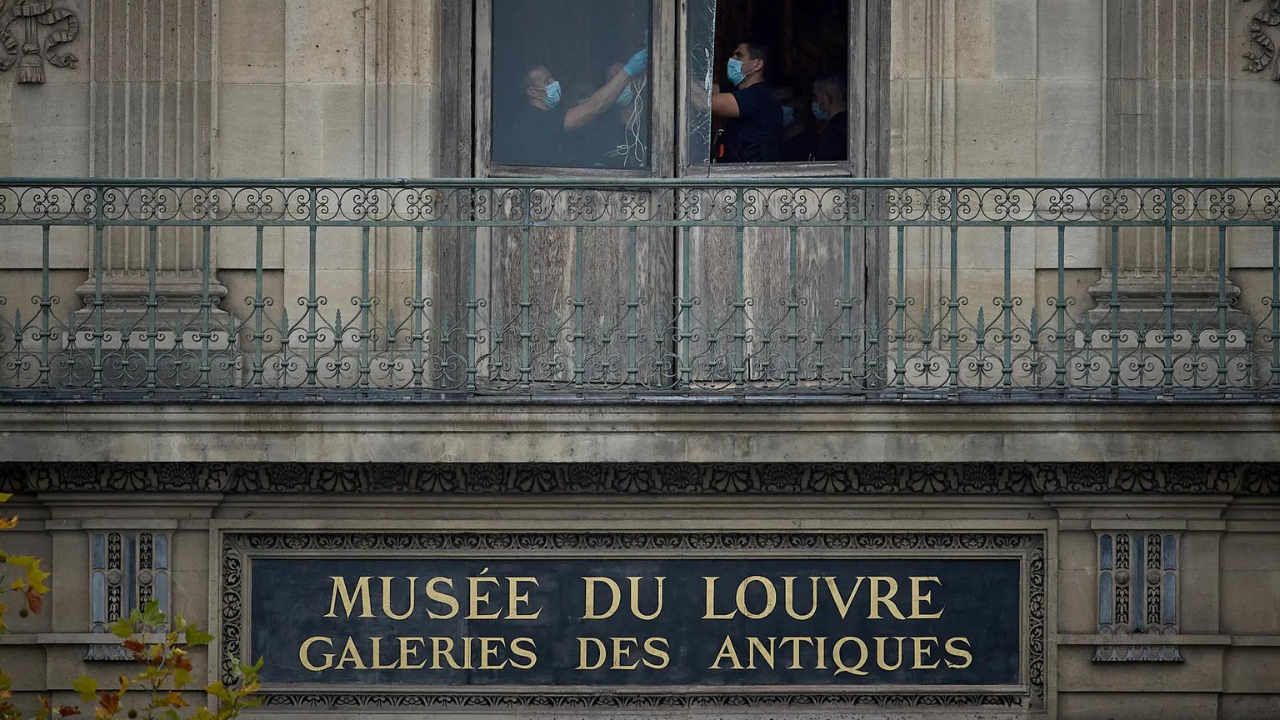
The headlines are running the exact same script they always use when a cultural institution gets cleaned out. "Jewellery likely to be worth €4m stolen from French museum, probe on." The mainstream media treats these incidents like high-stakes Hollywood thrillers, focusing entirely on the security breach, the broken glass, and the frantic police investigation.
They are asking all the wrong questions.
Everyone wants to know how the thieves bypassed the alarms. No one is asking the only question that matters to anyone who understands the realities of high-value asset protection: What is the actual liquidity of a stolen 18th-century royal tiara?
The answer is close to zero. The media’s obsession with the sticker price of museum heists obscures a brutal economic reality. A four-million-euro jewelry heist is not a masterstroke of criminal genius. It is a logistics nightmare and a massive financial miscalculation by the perpetrators.
The Myth of the Four Million Euro Payday
When an insurance adjuster or a museum curator assigns a seven-figure value to historical jewelry, they are calculating cultural value, craftsmanship, provenance, and historical significance. They are pricing an asset that is meant to be sold at Christie's or Sotheby's to a billionaire who wants bragging rights.
Criminals cannot sell provenance. They cannot put a French national treasure on eBay.
I have spent years analyzing asset vulnerability and the mechanics of illicit markets. The public imagines a shadowy billionaire sitting in a subterranean bunker, commissioning heists to complete their private collection. That is a fantasy script, not a business model. In the real world, stolen high-profile art and jewelry are incredibly difficult to liquidate.
When a thief walks out of a museum with a famous piece of jewelry, the asset instantly loses up to 90% of its value. To turn that haul into cash, the thieves generally have two options, both of which are operational failures.
Option 1: The Melt Down
The most common fate for stolen historical jewelry is the absolute destruction of its intrinsic value. Thieves rip the diamonds out of their settings and melt the gold or platinum down into generic bullion.
Look at the mechanics of this transaction:
- The Gold: Melted gold is untraceable, but you are only getting the raw commodity spot price. A historic artifact weighing a few hundred grams yields a fraction of the alleged multi-million-euro valuation.
- The Diamonds: Large, historic diamonds are mapped. Their internal flaws, color gradients, and cut profiles are registered in global databases like the Gemological Institute of America (GIA). Re-cutting a famous diamond to hide its identity reduces its carat weight significantly, destroying its market value.
- The Margin: After paying off fences, cutters, and distributors, the actual cash return on a €4,000,000 museum heist often nets out to less than €300,000 for the crew involved.
Option 2: The Underworld Collateral
If the piece is kept intact, it cannot be sold for cash. Instead, it enters the black market as collateral.
Major organized crime syndicates use stolen masterpieces and historic jewelry as chips to secure drug shipments or illegal arms deals. The asset sits in a warehouse, moving from one cartel to another, valued at a massive discount because everyone knows it is too hot to touch. The thieves did not steal wealth; they stole a high-liability barter token.
Museums Are Fighting the Wrong War
The lazy consensus in the museum security sector is that institutions need heavier doors, more motion sensors, and faster police response times. This assumes the threat can be deterred by physical friction alone.
It cannot. If a criminal group is determined enough, physical barriers only delay the inevitable.
The real vulnerability is not the hardware; it is the institutional hubris regarding asset valuation. Museums insist on displaying authentic, highly liquid-looking assets in soft-target environments. A bank vault is designed exclusively to protect capital. A museum is an inherent contradiction: a vault designed to invite the public inside.
Imagine a scenario where an institution stops treating physical possession as the sole metric of preservation. The technology exists to create flawless, molecular-level replicas of historical jewelry. The diamonds are synthetic, the gold is plated, but to the human eye behind a glass display case, the presentation is identical. The authentic pieces sit in deep underground vaults, completely disconnected from the public floor.
Purists argue this defeats the purpose of a museum. They claim the public demands the "aura" of the real object. But right now, the current strategy results in the permanent destruction of these objects when they are melted down in backroom sweatshops. Museums must choose between the vanity of displaying real gold or the actual preservation of history.
The Flawed Logic of Museum Probes
The media coverage always highlights the ongoing police "probe." Investigators will track security camera footage, analyze forensics, and interview staff. This reactive approach treats the heist as an isolated criminal act rather than a predictable result of market forces.
We see the same pattern repeat across Europe. The Green Vault heist in Dresden, the Ashmolean Museum theft in Oxford, and now the latest French incident. The investigation focuses heavily on insider threats and security lapses.
While those details matter for the police report, they miss the broader strategic failure. The security industry profits wildly by selling increasingly complex surveillance apparatuses to institutions that simply cannot afford to maintain them to military standards. A museum budget is balanced between curation, education, and security. Security will always lose that funding tug-of-war eventually.
The true solution requires changing the risk-reward calculus for the criminal. As long as the public and the criminal underworld believe these items are worth millions on the street, museums will remain targets.
Stop reporting the insurance valuation as if it represents a cash payout for the thieves. It feeds the narrative of the grand heist. Start exposing the pathetic margins of the stolen goods market. When the criminal underworld realizes that hitting a museum yields less profit than a standard commercial warehouse robbery—with ten times the law enforcement heat—the heists will stop.
Until then, museums will keep buying slightly thicker glass, thieves will keep bringing heavier sledgehammers, and the world will keep losing irreplaceable history for a few bars of melted gold.