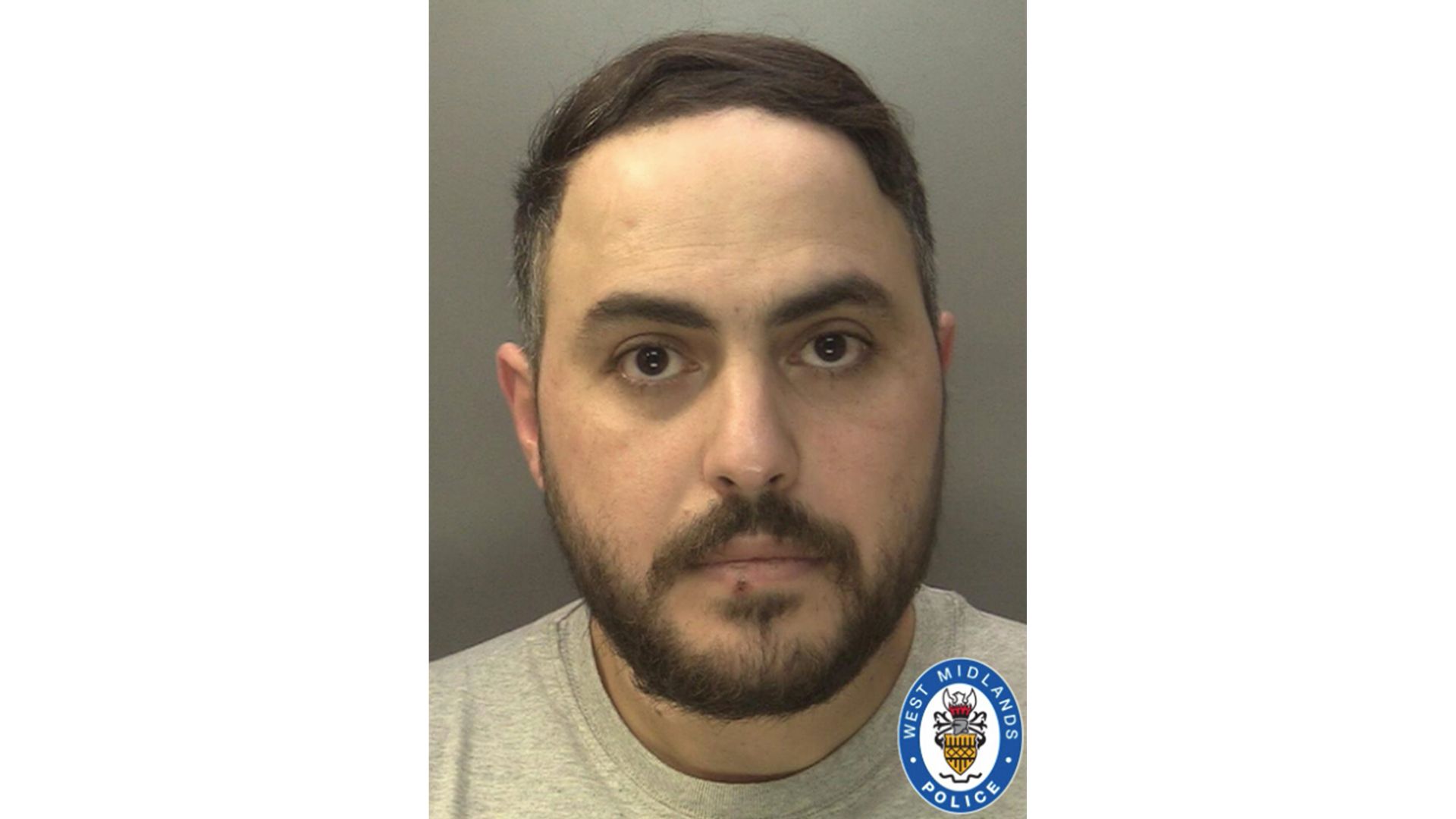
How does a man who guarded the political chief of Hamas—and whose father sits in the group's upper leadership—end up living quietly as a naturalized British citizen in suburban Birmingham?
That question exploded across Westminster in November 2026. Reporting restrictions lifted at Birmingham Crown Court, unmasking 40-year-old IT worker Mohammed Alfatih—also known as Mohammed Naim—as the central figure in a sprawling international security scandal. Convicted of attacking a bailiff with knives outside his home over unpaid parking fines, Alfatih wasn't just another local offender. German federal prosecutors want him extradited over an alleged plot to murder Jewish and Israeli targets in Europe. And the British Home Office has now stripped him of the citizenship it granted him six years earlier. You might also find this connected coverage useful: Stop Falling for Fake Cruise Ship Crash Videos Before You Embarrass Yourself.
The case lays bare a massive blind spot in how Western asylum and naturalization vetting handles ideological operatives. If you want to understand why British security officials are calling this a "staggering" failure of border control, you have to look at the timeline, the courtroom secrecy, and the specific legal mechanisms that allowed it to happen.
Who Is Mohammed Alfatih and How Did He Get Into Britain
Before he was known to neighbors in Kings Heath, Birmingham, Alfatih had deep roots inside Hamas. Born in Erlangen, Germany, he grew up in the Gaza Strip. His father is Basem Naim, a senior Hamas official who previously served as health minister in the Hamas-led administration in Gaza and remained a prominent political figure for the group. As discussed in detailed coverage by NPR, the effects are widespread.
During the early 2000s, Alfatih worked directly as a bodyguard for Ismail Haniyeh, the longtime Hamas leader who was later assassinated in Tehran in July 2024. That isn't a peripheral connection. Close-protection detail for Haniyeh placed Alfatih inside the trusted inner circle of an organization the UK has proscribed as a terrorist group in its entirety since November 2021 (having banned its military wing, the Izz ad-Din al-Qassam Brigades, back in 2001).
Yet Alfatih entered Britain in 2014. In 2015, the Home Office granted him asylum. Five years later, in 2020, he cleared the final hurdle and became a British citizen.
How did that slip past the screeners? In the mid-2010s, UK asylum assessments for applicants arriving from Gaza frequently focused on immediate humanitarian risk and claims of persecution—Alfatih later told a jury he had been shot in Gaza and tortured during a 25-day detention in Egypt in 2010. When applicants arrive without digital intelligence flags shared by foreign partners, caseworkers rely heavily on self-disclosure and fragmented regional records. Once refugee status is granted, the path to indefinite leave to remain and naturalization becomes largely administrative unless new criminal convictions surface in the UK.
Why His Identity Was Kept Secret for Over a Year
If you followed British news in late 2025 and autumn 2026, you might remember strange reports referring only to "Mr. X".
In September 2026, reports surfaced that an unnamed former bodyguard to Haniyeh had been arrested in connection with a European terror plot targeting Jews, while a London magistrate's court had issued an extraordinary order barring publication of his name. That secrecy wasn't designed to protect Alfatih's reputation. It was imposed under UK contempt of court rules to prevent prejudicing an active, separate criminal trial already underway in Birmingham.
The jury at Birmingham Crown Court heard nothing about Hamas, nothing about Ismail Haniyeh, and nothing about German arrest warrants. They were asked to judge one specific incident from October 14, 2025.
On that day, enforcement agent Kevin Bucknall arrived at Fairfield Road in Kings Heath to clamp and repossess a vehicle belonging to Alfatih's wife over more than £2,250 in unpaid parking fines. Jurors were shown video footage of Alfatih lashing out with knives at the window of the bailiff's van. Bucknall suffered a deep cut to the back of his head, required hospital treatment, and had to reverse down a one-way street to escape.
Alfatih pleaded not guilty, claiming self-defence. He testified that his past trauma left him terrified and not in his "full mind," insisting he only wanted the bailiff to move away. The jury rejected his story. On November 13, 2026, they convicted him of wounding and two counts of unlawful possession of a knife. The moment the verdict landed, the reporting restrictions fell away.
Inside the Alleged German Terror Plot
The Birmingham knife attack was what put Alfatih in custody, where UK authorities subsequently rearrested him on a European extradition warrant. The underlying allegations from Berlin are far darker than a street confrontation over parking debts.
German federal prosecutors charged seven suspected Hamas operatives over an alleged plot to carry out attacks against Jewish and Israeli targets in Germany and Austria, timed to coincide with the anniversary of the October 7, 2023 attacks in Israel. Prosecutors identified the suspected ringleader as "Mohammed A," whom UK media confirmed following the lifting of reporting restrictions to be Alfatih.
According to details cited from the investigation:
- Weapons logistics: Prosecutors allege Alfatih played a vital role in procuring, transporting, and storing firearms and ammunition intended for the cell.
- Martyrdom video: Investigators say he recorded a video in advance, appearing masked and armed in front of a Hamas flag, framing the planned strike as retaliation on behalf of the Izz ad-Din al-Qassam Brigades.
- Passport mobility: Holding a British passport gave him friction-free travel across European borders, a capability German security officials warned reflects a deliberate shift by Hamas toward activating external networks on European soil.
Ironically, British counterterrorism police opened a domestic investigation into Alfatih for suspected support of Hamas, though that separate UK probe was later dropped. Germany's case, however, remains active, and Alfatih faces extradition proceedings in London once he serves his custodial sentence for the Birmingham assault, with sentencing set for January 11, 2027.
How the UK Strips Citizenship and What Happens Next
The political fallout in Britain was immediate. Labour government sources pointed fingers directly at the previous Conservative administration, which oversaw the Home Office when Alfatih received asylum in 2015 and citizenship in 2020.
More importantly, the Home Office moved swiftly to revoke his status. Under Section 40(2) of the British Nationality Act 1981, the Home Secretary can deprive a person of British citizenship if doing so is deemed "conducive to the public good"—provided the order doesn't leave the individual stateless. Because Alfatih was born in Germany and holds Palestinian ties, legal pathways exist for deprivation without triggering international statelessness prohibitions, though appeals before the Special Immigration Appeals Commission (SIAC) often drag on for years.
In a blunt statement following the conviction, a Home Office spokesperson confirmed the revocation, stating the government makes "no apology for removing citizenship from those who pose a threat to the UK".
What most commentators miss about this case isn't just the partisan blame game between Labour and the Tories. It's the structural gap between asylum vetting and counterterrorism intelligence. Asylum officers aren't intelligence analysts. When someone claims refugee status, the legal burden favors protection unless concrete exclusion grounds under Article 1F of the Refugee Convention—such as war crimes or serious non-political crimes—are proven up front.
If you want to track how this precedent reshapes UK national security policy, watch three concrete developments over the coming months:
- The January 11 sentencing at Birmingham Crown Court, which determines how long Alfatih remains in a British prison before extradition handover.
- Westminster's extradition ruling in London, where defense lawyers are expected to challenge transfer to Germany on human rights and fair-trial grounds.
- Home Office naturalization reforms, specifically whether ministers expand mandatory security cross-checks with foreign intelligence agencies before converting indefinite leave to remain into a British passport.
For an in-depth look at the courtroom footage and the timeline leading up to the Birmingham verdict, watch Former Hamas bodyguard convicted of Birmingham knife attack, which summarizes the key evidence shown to the jury during the trial.


