The Invisible Threat In The Air You Breathe
You can step away from a foul-smelling river. You can choose not to eat fish caught during a nasty slime outbreak. You can stick to bottled water when tap quality drops. But you can't stop breathing.
For decades, public health officials framed cyanobacteria — commonly called blue-green algae — as an isolated aquatic problem. If you didn't swim in it or drink it, you were supposedly safe. That assumption was dangerously dead wrong. Don't miss our recent article on this related article.
Recent environmental monitoring in Southwest Florida reveals that cyanobacterial neurotoxins are escaping the water and hitching a ride on the breeze. Using specialized airborne detectors called ADAM (Airborne Detection for Algae Monitoring), researchers from Brain Chemistry Labs, the Calusa Waterkeeper, and partner institutions discovered toxic compounds floating through air miles away from active water blooms.
The primary culprit uncovered in airborne monitoring isn't just standard water scum. It's a cluster of dangerous compounds, including 2,4-DAB and BMAA ($\beta$-methylamino-L-alanine), neurotoxic amino acids produced by ancient cyanobacteria. These same compounds were previously found packed inside the damaged brain tissue of stranded dolphins in Florida's Indian River Lagoon. If you want more about the background of this, World Health Organization offers an in-depth breakdown.
The health implication is stark: chronic inhalation of these aerosolized toxins creates a direct, unhindered pathway into the human central nervous system, drastically elevating the long-term risk of developing Amyotrophic Lateral Sclerosis (ALS).
How Aquatic Toxins Airborne Turn Into Inhaled Hazards
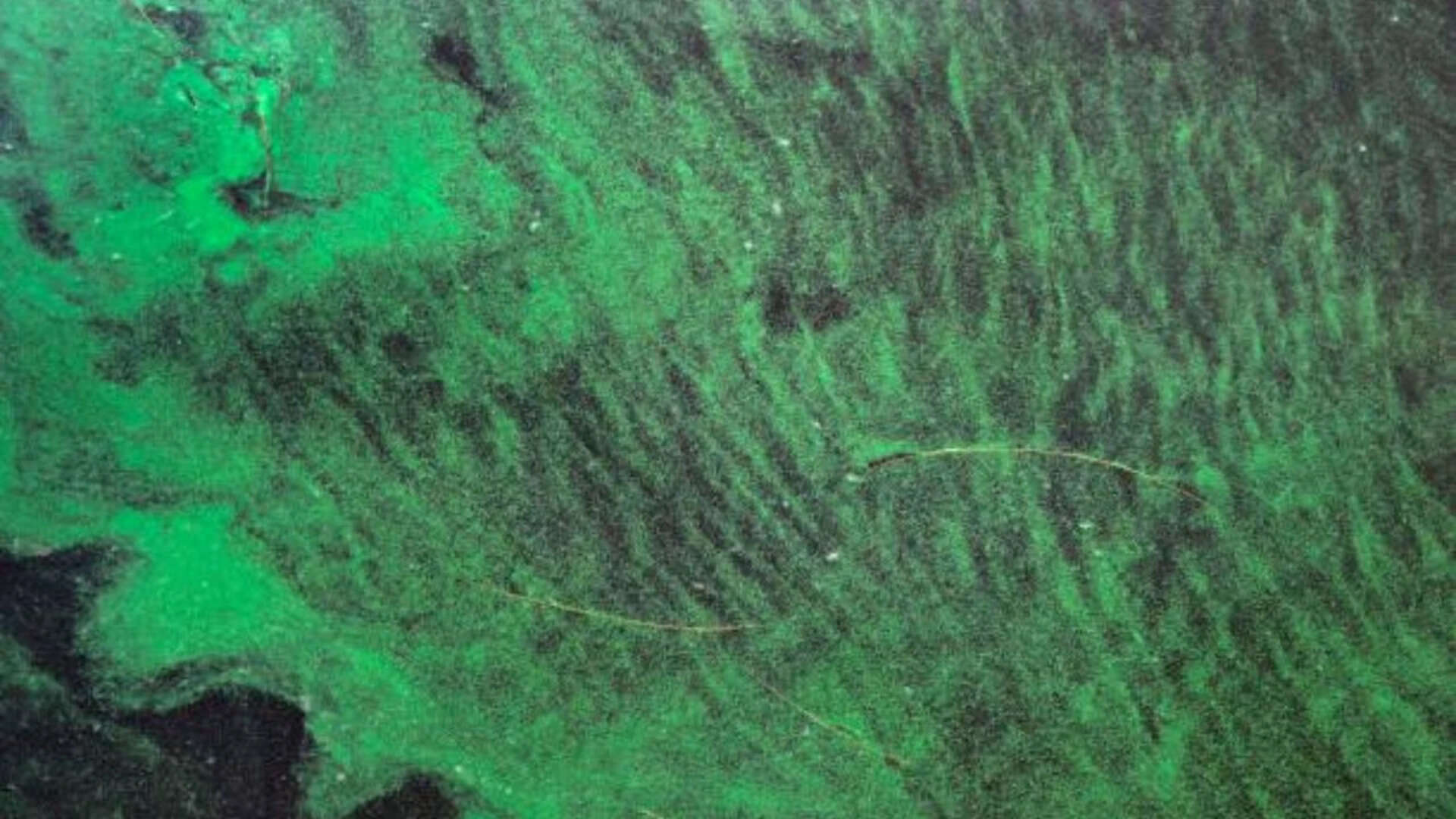
Cyanobacteria aren't actually algae. They're microscopic bacteria that rely on photosynthesis, occupying Earth's water bodies for over three billion years. When heavy agricultural runoff, industrial dumping, and untreated sewage dump mass quantities of nitrogen and phosphorus into warm, slow-moving waters, cyanobacteria populations explode into thick, green sludge.
When these vast blooms die, or when wave action, boating activity, and wind churn the water surface, bacterial cells rupture. Microscopic water droplets carrying neurotoxins become airborne aerosols.
Water Runoff (Nitrogen + Phosphorus)
       │
       ▼
Massive Cyanobacteria Bloom
       │
       ▼
Cell Disruption (Wind, Waves, Boat Wake)
       │
       ▼
Aerosolization of 2,4-DAB and BMAA
       │
       ▼
Inhalation & Direct Brain Bioaccumulation
Once suspended in air, these fine particles drift inland. You don't need to stand at the edge of a canal to inhale them. Wind currents push toxic dust and micro-droplets directly into residential neighborhood air corridors, crossing highways, backyards, and public parks.
The Neurological Connection To ALS and Brain Health
Why should a non-protein amino acid like BMAA worry you?
Inside the body, your cells rely on standard amino acids to construct vital proteins. BMAA mimics the essential amino acid L-serine. When BMAA circulates in your system, human cells inadvertently incorporate this toxic compound into newly synthesized proteins.
This leads to misfolded proteins, cellular stress, and eventual neuron death — the exact cellular hallmark of progressive neurodegenerative disorders like ALS and Alzheimer's disease.
       [ Normal Protein Synthesis ]
       L-Serine ──► Healthy Neural Protein ──► Normal Brain Function

       [ Toxic Exposure Route ]
       BMAA ──────► Misfolded Protein     ──► Cellular Stress & ALS Progression
The epidemiological evidence linking environmental cyanobacteria to neurodegenerative disease isn't theoretical. Studies led by neurologists at Dartmouth Medical School mapped ALS clusters in New England, finding that individuals living downwind or near lakes plagued by frequent cyanobacterial blooms faced a dramatically heightened risk of developing ALS.
An eerie military parallel highlights the airborne route. Brain Chemistry Labs investigated a alarming spike in ALS among Operation Desert Storm veterans. The source? Inhaling desert sand dust laced with ancient dried cyanobacteria crusts in Kuwait and Iraq. Years after deployment, inhaled aerosolized bacterial toxins triggered neurodegenerative damage.
Florida's persistent water pollution crisis is creating a similar airborne threat right in suburban backyards.
Beyond Acute Sickness To Chronic Exposure Risks
State agencies usually measure acute risks. They issue local advisories when water looks bright green or smells like sewage. But focusing on acute exposure misses the bigger, scarier picture.
Chronic, low-level inhalation doesn't instantly send you to the emergency room with gasping lungs or skin rashes. Instead, low doses of aerosolized 2,4-DAB and BMAA trickle silently into human biological pathways day after day, month after month.
This slow-drip bioaccumulation operates over decades. You might feel fine living a mile off an impacted water route for years, unaware that microscopic toxins are accumulating in your neural tissue.
┌───────────────────────────┬───────────────────────────────┬────────────────────────────────┐
│ EXPOSURE TYPE             │ SYMPTOMS                      │ LONG-TERM IMPACT               │
├───────────────────────────┼───────────────────────────────┼────────────────────────────────┤
│ Acute Exposure            │ Throat irritation, coughing,  │ Temporary respiratory distress │
│ (Direct Water/High Scum)  │ wheezing, rashes              │                                │
├───────────────────────────┼───────────────────────────────┼────────────────────────────────┤
│ Chronic Exposure          │ None initially; silent        │ Misfolded proteins, neuron     │
│ (Inhaled Air Aerosols)    │ bioaccumulation               │ death, elevated ALS risk       │
└───────────────────────────┴───────────────────────────────┴────────────────────────────────┘
The reality is simple: avoiding bad drinking water is easy. Avoiding the air blowing across your front lawn isn't.
Real-World Steps To Protect Yourself and Your Family
While state policymakers struggle to address systemic agricultural runoff and Lake Okeechobee discharges, you can take immediate action to limit airborne cyanotoxin exposure in vulnerable regions.
Practical Steps For Coastal and Water-Adjacent Residents
- Monitor Local Water Quality Reports: Don't rely solely on smell. Track waterkeeper updates and environmental monitoring networks for active cyanobacteria reports in nearby canals or lakes.
- Run HEPA Air Filtration Indoors: Standard HVAC filters aren't built for fine biological aerosols. High-grade standalone HEPA units capture microscopic particulate matter carrying cyanotoxins before you breathe it inside your home.
- Close Windows During Onshore Winds: When live blooms affect nearby estuaries or rivers, keep doors and windows shut, especially on windy days when wave action aerosolizes surface scum.
- Avoid High-Impact Water Activities: Avoid powerboating, jet-skiing, or using pressure washers near affected waterways. Mechanical agitation violently shatters cyanobacteria cells, hurling high concentrations of toxins into the air.
- Upgrade Intake Filtration on AC Systems: Use high-efficiency MERV 13+ rated air filters in home air conditioning systems to trap airborne organic dust.
The science is clear. Cyanobacteria toxins aren't trapped in the water anymore. Recognizing airborne exposure as a genuine neurological health hazard is the first step toward protecting your family and demanding systemic environmental accountability.