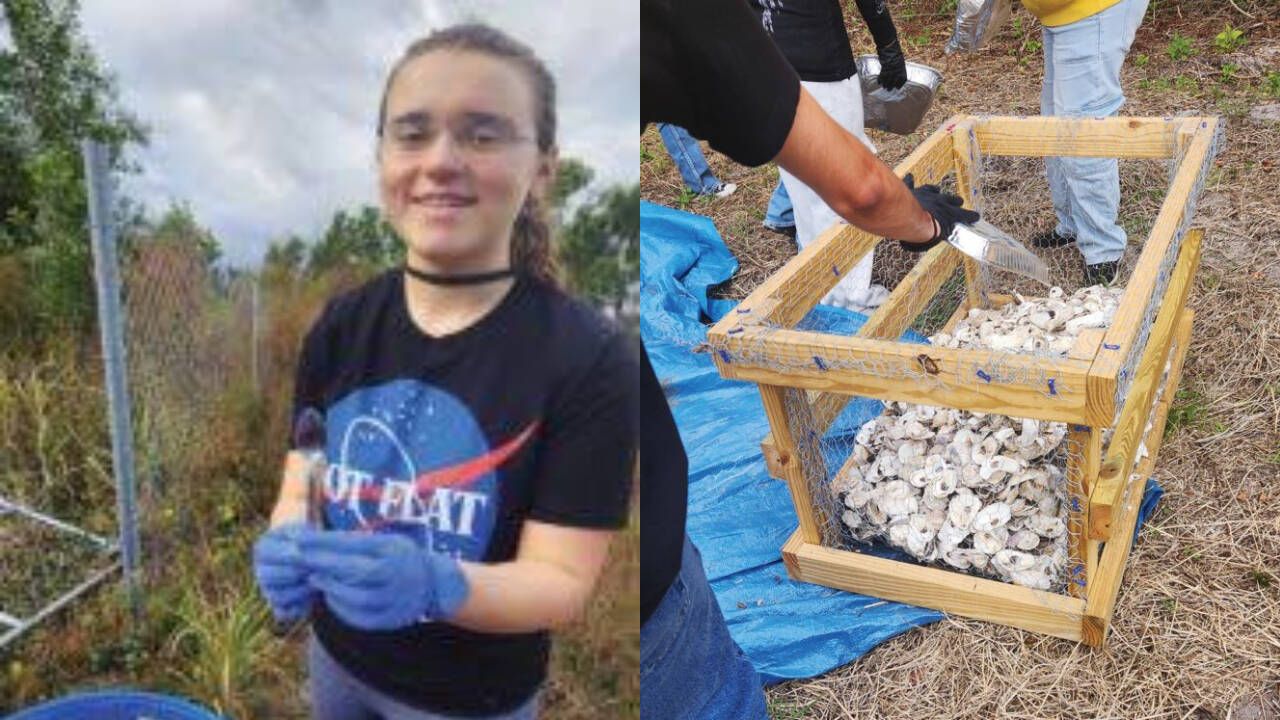
Most people toss empty oyster shells into restaurant trash cans without giving them a second thought. It looks like kitchen waste. In reality, throwing away oyster shells is like tossing out the bricks needed to keep Florida's coastline from washing into the ocean.
When a Florida student recently organized an oyster shell drive and mobilized 60 volunteers, it wasn't just a nice weekend community service project for a college application. It was a direct response to a massive ecological bottleneck. Across Florida, coastal restoration groups are desperate for fossilized and recycled shell because you simply can't build living shorelines without it. You might also find this connected article interesting: Why the Emergency App Cyber War Between Russia and Ukraine Signal a Dangerous Shift.
The Strange Reality of Oyster Shell Shortages
You'd think a state surrounded by water and famous for seafood wouldn't have an oyster shell shortage. You'd be wrong.
For decades, discarded shells from raw bars, seafood restaurants, and backyard roasts went straight to municipal landfills. Once an oyster shell gets buried under household garbage, it's useless for marine restoration. At the same time, coastal development, altered freshwater flows, and overharvesting wiped out massive percentages of historic oyster reefs in places like the Indian River Lagoon, Tampa Bay, and Apalachicola Bay. As extensively documented in recent reports by The Guardian, the results are widespread.
Oysters are weirdly picky about where they live. Baby oysters—called spat—float freely in the water column for a couple of weeks before they need to attach to a hard surface to grow. Their absolute favorite surface isn't concrete, plastic, or limestone rock. It's the calcium carbonate shell of another oyster.
Without existing shells in the water, spat drift away and die. No shells means no new reefs. That's why a single student rallying 60 volunteers to collect, clean, and bag shells hits so much harder than a generic beach cleanup. Picking up plastic wrappers stops immediate litter, sure, but collecting oyster shells creates permanent biological infrastructure.
What Actually Happens at an Oyster Shell Drive
If you've never worked an oyster shell restoration event, forget any romantic notions of standing on a breezy dock gently tossing shells into sparkling blue water. It's heavy, smelly, dirty work.
First comes the collection and curing phase. You can't take fresh shells straight from a restaurant table and dump them into a local estuary. Fresh shells carry bacteria, parasites, and hitchhiking invasive species from whatever waters those oysters originally came from—sometimes from out of state.
To make shells safe for Florida waters, volunteers and conservationists have to cure them outdoors in the sun for months. Organizations like the Coastal Conservation Association Florida and the Tampa Bay Watch typically require shells to bake in the open air for at least three to six months. Rain washes away the organic residue, and UV rays kill off pathogens.
Once the shells are sun-bleached and clean, the real physical labor begins. Mobilizing 60 people makes a massive difference here because moving tons of shell by hand is brutal on your back. Volunteers usually form assembly lines to shovel cured shells into heavy-duty mesh bags or wire cages. Each bag ends up weighing around 30 to 40 pounds.
Then those bags get hauled onto flat-bottom boats or carried out into shallow intertidal zones at low tide. Volunteers stack them like sandbags along eroding shorelines or sunken reef footprints. Within months, wild oyster larvae latch onto the bagged shells, cement themselves together, and start growing into a self-sustaining reef.
Why 60 Volunteers Can Outperform Expensive Seawalls
Coastal property owners spend tens of thousands of dollars building vertical concrete seawalls to protect their yards from boat wakes and storm surge. Honestly, concrete seawalls often create more problems than they solve.
When a wave hits a flat concrete wall, the energy doesn't disappear. It bounces downward, scouring away the sand at the base of the wall, and shoots sideways onto neighboring properties. Eventually, the wall undermines itself and collapses, all while destroying the shallow habitat that juvenile fish, crabs, and wading birds need to survive.
Oyster reefs do the exact opposite. A living oyster reef acts like a natural, self-repairing speed bump.
- Wave energy reduction: Dense oyster beds break up incoming waves before they ever reach the marsh grass or shoreline behind them, cutting wave energy dramatically during routine boat traffic and tropical storms.
- Water filtration: A single adult eastern oyster (Crassostrea virginica) filters up to 50 gallons of water per day, pulling algae, sediment, and excess nutrients out of murky estuaries.
- Self-repair: Unlike concrete, which cracks and degrades over time, a healthy oyster reef grows taller and thicker every year, even keeping pace with gradual sea-level rise if water quality stays decent.
When 60 volunteers spend a Saturday bagging shells, they're building structures that get stronger over time instead of weaker. You can't say that about almost anything humans build near saltwater.
Common Mistakes in Grassroots Shell Recycling
Student-led environmental drives sometimes fizzle out because organizers underestimate the logistics. Anyone looking to replicate what this Florida student pulled off needs to avoid a few classic traps.
The biggest mistake is collecting shells without an approved curing site. You can't pile three tons of rotting seafood waste behind a high school gymnasium or in a suburban driveway. Within forty-eight hours in the Florida heat, the smell will trigger code enforcement complaints from three blocks away, and raccoons will drag shells across the neighborhood. Successful drives partner early with county environmental departments, local parks, or established nonprofits that already have permitted, fenced-off curing yards.
Another pitfall is mixing trash with the shell. Restaurant staff are busy, and during a Friday night dinner rush, lemon wedges, cocktail forks, plastic ramekins, and oyster shucking gloves end up in the shell buckets. If volunteers don't sort that debris out before bagging, you end up sinking plastic trash into the estuary. Good drive organizers set up sorting tables with heavy-duty gloves before anything touches a mesh bag.
Finally, you have to match the material to the local hydrology. Loose shells work fine in quiet, low-energy creeks, while high-traffic waterways require bagged shells or engineered reef modules so boat wakes don't scatter the pile before baby oysters can cement it together.
The Bigger Picture for Student-Led Conservation
There's a growing fatigue around symbolic youth activism—rallies that generate headlines for a day and leave nothing behind once the cameras leave. Tangible, muddy, local restoration projects cut right through that noise.
In Florida, coastal counties from Escambia in the Panhandle down to Brevard and Lee counties have built entire shell-recycling networks around local partnerships. The University of Florida IFAS Extension and groups like the Marine Discovery Center in New Smyrna Beach rely heavily on community labor to keep these pipelines moving. Still, municipal budgets and nonprofit staff can only stretch so far.
When a student steps up, recruits 60 peers, coordinates with local restaurants or agencies, and moves thousands of pounds of calcium carbonate back toward the water, it proves that local conservation doesn't have to wait for a multi-million-dollar state grant.
If you live anywhere near the coast and want to make a dent in local water quality, skip the generic awareness campaigns. Call your nearest estuary program, ask where their shell curing pile is located, grab a pair of thick leather gloves, and show up ready to shovel.