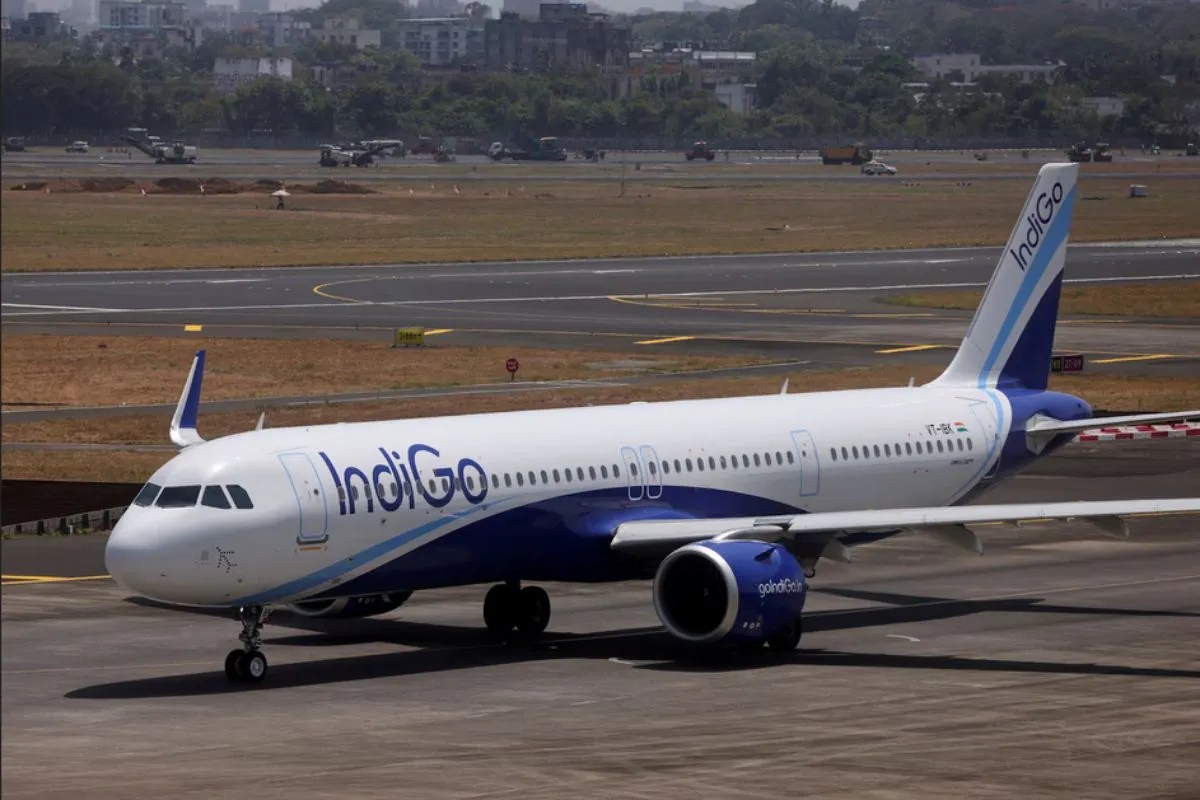
Geopolitical escalation in the Middle East—specifically the heightened military friction between Iran and the United States—transforms commercial airspace from a predictable utility into a highly volatile operational variable. When regional tensions spike, commercial air carriers face immediate, compounding pressures across safety, fuel logistics, and network scheduling. The recent travel advisory issued by IndiGo regarding flights to Middle Eastern destinations serves as a case study for a broader systemic reality: airline operational continuity during geopolitical crises is governed by a strict optimization problem balancing passenger safety against severe economic penalties.
Understanding the true impact of these disruptions requires moving past basic news headlines and analyzing the structural frameworks that airlines use to navigate airspace contagion. For a different view, check out: this related article.
The Tri-Border Airspace Bottleneck
The airspace linking Europe, Central Asia, and the Indian subcontinent forms a critical choke point for global aviation. When specific Flight Information Regions (FIRs)—such as Tehran (OIIC) or Baghdad (ORBB)—become high-risk zones, carriers cannot simply shift paths incrementally. They must fundamentally re-architect their network geometry.
This operational shift operates under three core constraints: Similar insight on this trend has been provided by Travel + Leisure.
- Sovereign Transit Rights and Bilateral Agreements: Airlines cannot fly over a nation without pre-existing overflight permits (Chicago Convention Framework). Rapidly rerouting around Iranian airspace requires immediate diplomatic and regulatory clearance from adjacent states like Saudi Arabia, Turkey, or Oman.
- The Single-Corridor Funnel Effect: When Iranian or Iraqi airspace experiences closures or severe risk escalation, traffic shifts entirely to narrow alternative corridors. This creates unprecedented traffic density over Saudi Arabia and Egypt, resulting in air traffic control (ATC) holding patterns and ground-delay programs thousands of miles away from the conflict zone.
- Extended Twin-Engine Operational Performance Standards (ETOPS): For twin-engine aircraft typical of mid-to-long-haul fleets (such as Airbus A320neo or Boeing 737 MAX variants frequently used on routes between India and the Gulf), routing changes must strictly adhere to maximum diversion times from suitable alternate airports. If safe alternate airports along a new path are closed due to military activity, the entire route becomes legally unflyable.
The Cost Function of Geopolitical Re-Routing
An airline's decision to issue a travel advisory or alter a flight path triggers a cascading sequence of financial penalties. Vague references to "increased costs" fail to capture the precise variables driving airline balance sheets during a regional conflict.
The economic burden of avoiding contested airspace is defined by three primary variables.
The Fuel Consumption Multiplier
Bypassing Iranian airspace on flights connecting South Asia to the Middle East or Europe routinely adds between 30 to 90 minutes of flight time. Jet fuel consumption is non-linear; it increases sharply during the initial climb phase and remains highly sensitive to cruise altitude density. For a standard narrow-body aircraft, an additional hour of flight time requires roughly 2,400 to 3,000 kilograms of incremental fuel. Because aircraft must carry this extra weight from takeoff, they burn more fuel simply to transport the safety-buffer fuel—a phenomenon known as the fuel tankering penalty.
Crew Block-Time Depreciation
Commercial aviation crews operate under strict legal limits governing Flight Duty Period (FDP) and Flight Time Limitations (FTL). When flight paths are elongated systematically:
- Turnaround schedules at destination hubs break down because crews hit their maximum legal duty limits mid-rotation.
- Airlines are forced to stage reserve crews at outstations, exponentially increasing crew lodging, transport, and scheduling overhead.
- The utilization rate of the aircraft itself drops, meaning a hull that previously generated revenue across four sectors a day can now only complete three.
Insurance Risk Premium Surcharges
Aviation hull and war risk insurance policies operate on dynamic geographic tiers. The moment an airspace is classified as a Level 3 or Level 4 risk by international bodies or domestic regulators (such as the Directorate General of Civil Aviation in India or the Federal Aviation Administration in the United States), underwriters activate exclusionary clauses. To maintain coverage while operating near or into these zones, airlines must pay steep "breach premiums" for each individual flight, driving up the marginal cost per seat-kilometer.
The Hierarchy of Airspace Risk Assessment
Airlines do not rely on media reports to issue travel advisories; they use a structured matrix of state directives, military notifications, and open-source intelligence. The decision-making architecture flows through a distinct hierarchy of risk indicators.
[Level 1: Sovereign NOTAMs]
       │
       ▼
[Level 2: Conflict Zone Intelligence (e.g., RiskAware, SafeAirspace)]
       │
       ▼
[Level 3: State Regulator Directives (e.g., DGCA, FAA, EASA)]
       │
       ▼
[Level 4: Internal Airline Security & Performance Assessment]
Notice to Air Missions (NOTAMs) issued by sovereign civil aviation authorities provide the baseline technical data regarding GPS jamming, missile activity, or temporary airspace closures. However, these are often reactive. To stay ahead of kinetic events, airlines cross-reference NOTAMs with specialized defense intelligence providers that track mobile surface-to-air missile (SAM) deployments and electronic warfare activity.
The primary operational challenge is GPS spoofing and jamming, which has proliferated significantly across the Middle East. Modern commercial aircraft rely on Global Navigation Satellite Systems (GNSS) integrated with Flight Management Systems (FMS). When electronic warfare units jam these signals, aircraft must revert to older Inertial Reference Systems (IRS) or ground-based VOR/DME navigation beacons. If an airline's fleet lacks highly calibrated, redundant IRS units, operating in these regions becomes an unacceptable safety failure, forcing proactive cancellations.
Passenger Mitigation Logic and Asymmetric Network Risk
For the consumer, an advisory from a carrier like IndiGo is an explicit warning of impending structural delays and potential cancellations. When an airline issues an advisory urging passengers to monitor flight statuses and arrive early, it signals that the carrier's hub-and-spoke efficiency is degrading.
In high-density low-cost carrier (LCC) models, aircraft turn times—the duration an aircraft spends parked at the gate between arrival and departure—are optimized down to 30 to 45 minutes. A minor 20-minute delay caused by ATC re-routing on an inbound leg from the Middle East ripples across the airline's entire domestic network for the remainder of the operating day. Consequently, a passenger flying a domestic route completely unrelated to the Middle East can still face a cancellation due to the downstream compounding effects of the initial international disruption.
Furthermore, passengers navigating these disruptions must understand the limitations of carrier liability. International conventions, including the Montreal Convention, distinguish between operational failures within an airline's control (e.g., mechanical breakdowns) and extraordinary circumstances outside their control (e.g., military conflict, airspace closures). When advisories are issued due to geopolitical escalation, standard passenger compensation mandates for delays or cancellations are legally waived. The burden shifts to travel insurance structures and flexible rebooking policies implemented by the carrier to preserve brand equity.
Tactical Response Blueprint for Disruptive Environments
To insulate operations from severe financial and reputational damage during periods of US-Iran or wider Middle Eastern volatility, network planning teams must move from a reactive posture to predictive scheduling adjustments.
- Dynamic Payload Restrictions: Airlines must systematically reduce passenger or cargo capacity on affected routes to accommodate the higher fuel loads required for extended, circuitous routings without exceeding Maximum Takeoff Weight (MTOW) limits.
- Asymmetric Scheduling Buffers: Block times for routes passing adjacent to contested zones must be permanently adjusted outward by 15-20% in the scheduling software rather than relying on tactical, ad-hoc changes by dispatchers during active flights.
- Hub Dispersal Strategy: Carriers heavily reliant on point-to-point transit through the Middle East must establish wet-lease agreements or interline partnerships to reroute premium passenger volumes through unaffected geographic corridors if localized escalations close primary destination airports.
The immediate imperative for operators navigating the current Middle East risk vector is clear: stop treating airspace availability as a constant. Fleet allocation models must immediately factor in a permanent 12% inflation in block-hour costs for all West Asia sectors, while customer service engines must automate the transition of affected passenger segments to secondary hubs before regional ATC congestion reaches a paralysis point.