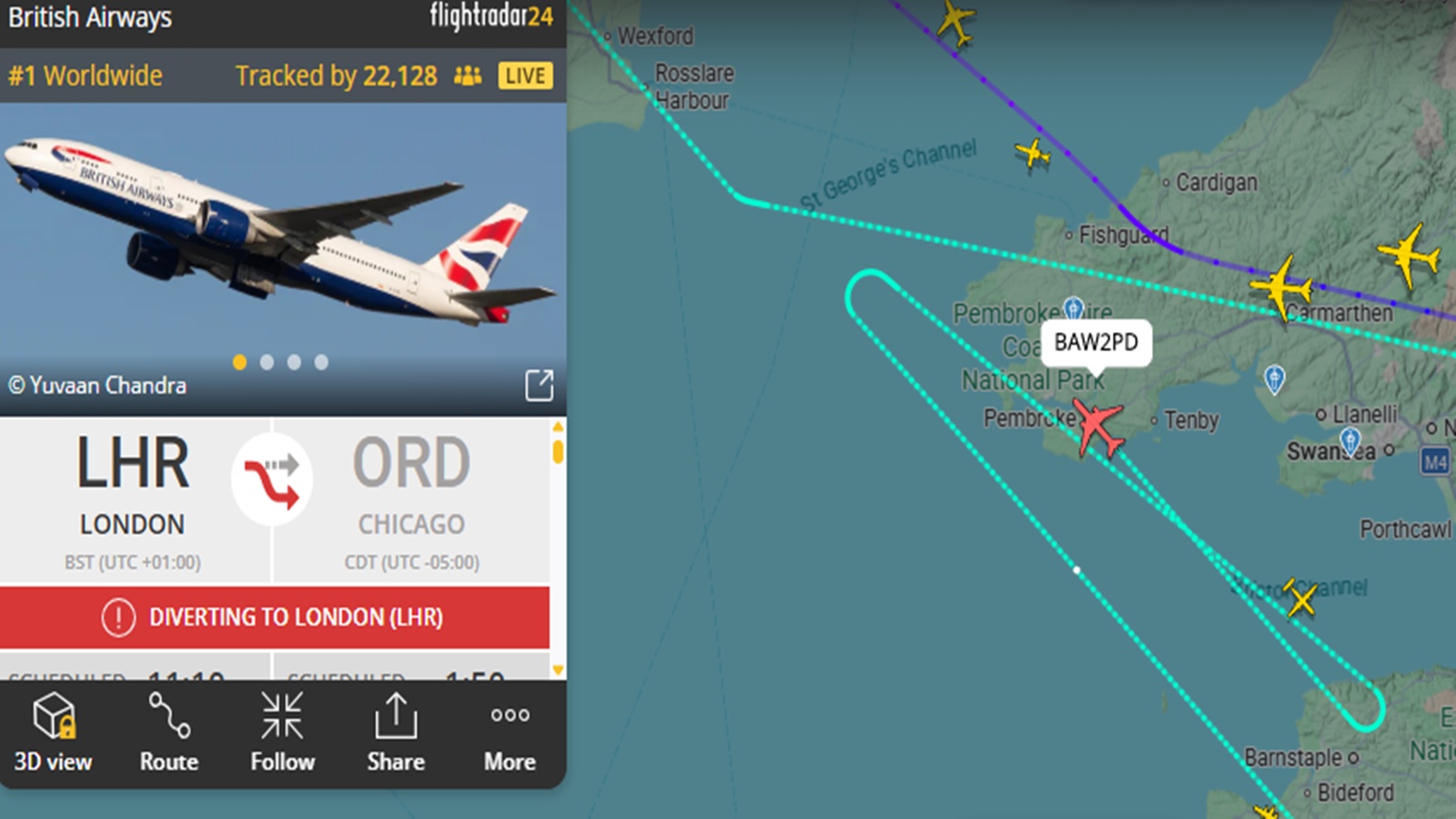
The cabin air pressure changes before you understand why. It is not a violent jolt or a cinematic explosion. It is a subtle, heavy pressing against the eardrums, the kind you feel when an elevator drops too fast in a skyscraper, except there is no floor coming to catch you.
Outside the heavy triple-pane windows of British Airways Flight 295, the Atlantic Ocean is an invisible, ink-black abyss.
Five Miles Down in Three Minutes
travel
news
Cabin pressure is a quiet agreement.
When you slide your seatbelt into its buckle thirty-five thousand feet above the freezing Atlantic, you are trusting a thin aluminum cylinder and a complex choreography of physics to keep your lungs full of oxygen. You trust it because you have to. You lean your forehead against the cold plastic of the window, watch the white expanse of clouds drift past like torn cotton, and let the white noise of the engines lull you into complacency.
Then, the world drops out from under you.
Consider a hypothetical traveler named Arthur, seated in row 24, halfway across a British Airways flight from London to Chicago. He is reading a paperback thriller, his thumb hooked over the corner of the page. His coffee sits on the tray table, a dark, still pool.
Without warning, gravity lets go.
The coffee climbs the cup. Arthur’s stomach stays three feet above where his body suddenly finds itself. A sharp, chemical reek fills the cabin—the acrid tang of deployment. Above every row, oxygen masks drop like sterile yellow fruit from the ceiling. They dangle, hissing.
Drop.
Twenty-eight thousand feet. In a matter of minutes.
It sounds like a movie script. It is not. It is the raw, unvarnished reality of British Airways Flight 295, or any flight where the invisible shield protecting human beings from the vacuum of the upper stratosphere suddenly falters.
The Physics of the Abyss
We forget how hostile the sky actually is. At thirty-five thousand feet, the air outside your window is a lethal cocktail of minus-sixty-degree temperatures and an atmospheric pressure so low that human blood boils at body temperature. Your consciousness has roughly fifteen to twenty seconds of useful life left if the cabin depressurizes. Hypoxia creeps in like a velvet fog. First, euphoria. Then, confusion. Then, the dark.
When an airliner experiences a rapid depressurization event, the flight crew does not have the luxury of panic. They have seconds.
The protocol is as brutal as it is efficient. Push the nose down. Dive.
To an observer on the ground, or on a radar screen, a twenty-eight-thousand-foot drop looks like a catastrophe. It looks like a death spiral. But in the cockpit, a rapid descent is a rescue mission. The pilots are literally chasing the breathable air, plunging the aircraft downward through the atmosphere until they punch through the invisible threshold into a layer where human lungs can work without mechanical assistance. Ten thousand feet. That is the magic number. That is where the air is thick enough to breathe again.
Imagine the cockpit during those three minutes. The symphony of warning chimes. The yoke pulled forward, hard. The G-forces pinning arms to armrests. The Captain and First Officer working in a synchronized, silent language forged through thousands of hours of simulator drills. They do not have time to be scared. Fear is a luxury for after the wheels are safely on the tarmac.
Inside the Cabin
Back in row 24, Arthur grabs a yellow rubber cup.
The instructions are printed on the card in the seatback pocket, but nobody reads those. Adrenaline takes over. He pulls the elastic band over his head, the rubber snapping sharply against his skin. The bag doesn't inflate fully—a detail that terrifies passengers who think it means the system is broken, though the metal pinholes are letting in ambient air just as they are designed to do.
Across the aisle, a child is crying, a high, piercing sound muffled by yellow latex. A mother’s knuckles are white as she holds her own mask in place with one hand and secures her child's with the other.
In moments like these, modern civilization strips away. The digital screens flashing flight maps go dark or irrelevant. The luxury of the meal service, the choice of chicken or pasta, the hum of the entertainment system—all of it dissolves into the immediate, animal necessity of breathing.
We measure air travel by statistics. We talk about millions of flight hours, accident rates per departure, and redundant hydraulic systems. We are comforted by numbers because numbers are clean. They fit into spreadsheets. But aviation is ultimately a human endeavor. It is heavy metal hurled through the stratosphere by the sheer force of human will and engineering precision, populated by ordinary people who just want to land in time for dinner, or catch a grandchild's birthday, or make a morning meeting.
When a flight declares an emergency and plunges nearly six miles in a vertical blink, those statistics stop being numbers on a page. They become a heartbeat hammering against a ribs cage. They become the smell of ozone and the sight of strangers looking at each other with wide, dilated eyes, sharing a sudden, profound intimacy.
The Return to Earth
The descent levels off.
The violent buffet of the plunge smooths out into a steady, controlled glide. The engines spool down from their frantic, high-pitched whine to a more familiar, throaty rumble.
The captain's voice crackles over the intercom. It is steady, measured, almost impossibly calm—the voice of a man who has just wrestled a falling star and won. He tells them they have diverted. He tells them emergency services will meet them on the tarmac. He tells them, with quiet British understatement, that everything is under control.
Arthur pulls the yellow mask away from his face. The elastic leaves a red welt across the bridge of his nose. He takes a breath of cabin air—ordinary, recycled, heavy air—and realizes his hands are shaking.
He looks out the window again. The clouds are still there, indifferent to the drama that just unfolded five miles above the earth. But the world looks different now. Sharper. Brighter.
The plane banks, turning toward the nearest runway, dropping slowly through the lower layers of the sky. The lights of the ground begin to bloom below like scattered gold leaf against velvet. They are going to land. They are going to step out into the cool night air. The coffee on the tray table is spilled, a dark stain drying on the plastic, but Arthur is alive, breathing the heavy air of the lower world, carrying a story he will never quite be able to explain to anyone who wasn't there.


