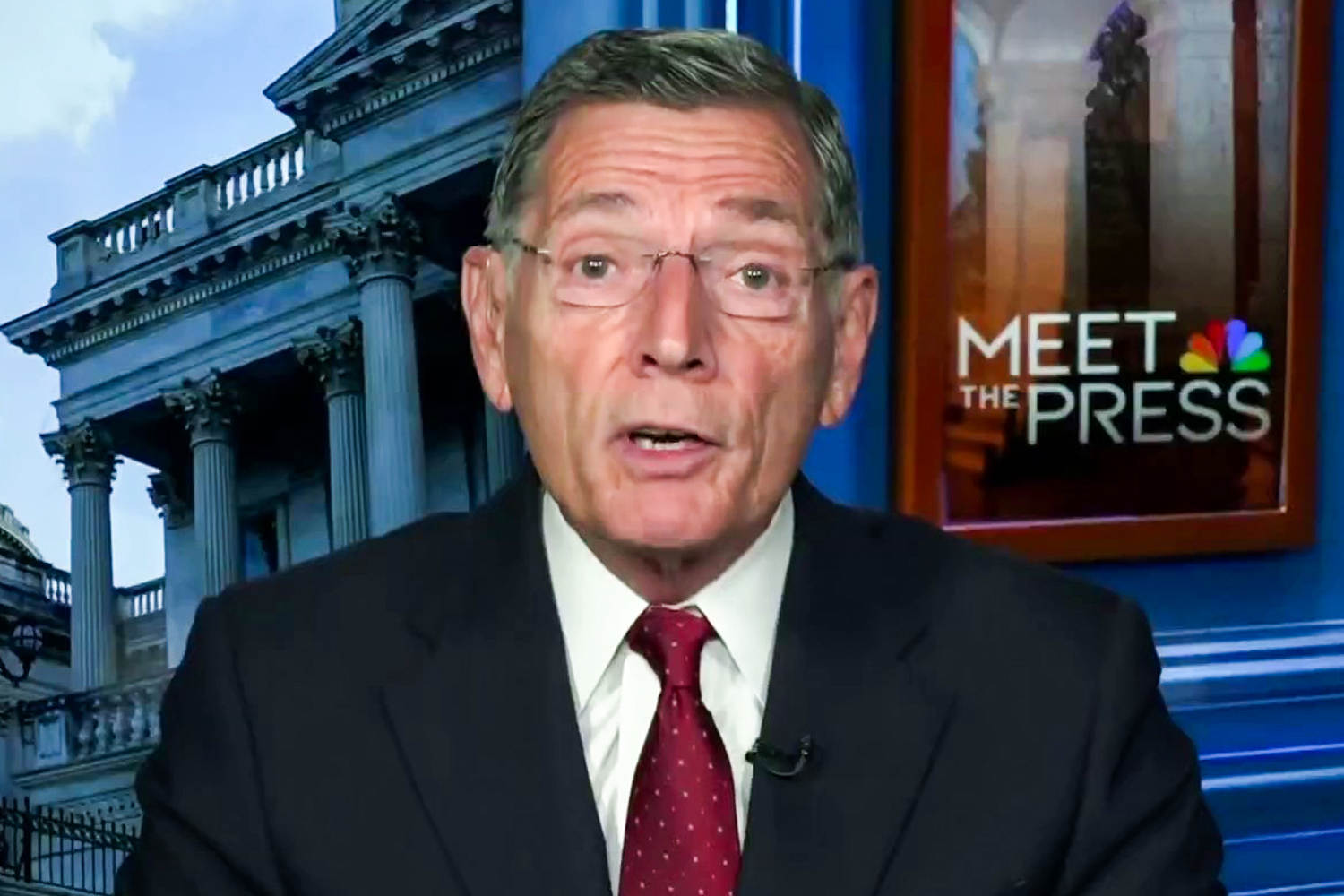
When Senator John Barrasso argued in media appearances that President Donald Trump does not violate the Constitution by revoking White House press credentials, he tapped into a recurring constitutional debate over executive authority and press freedom. Critics immediately countered that booting reporters from the briefing room tramples the First Amendment. Both sides are arguing over the surface symptom while missing the actual legal mechanics that govern the White House press corps.
The constitutional reality of White House press access sits in a complex intersection between executive discretion, First Amendment viewpoint discrimination, and Fifth Amendment due process. Understanding why courts rule the way they do—and why legacy media organizations repeatedly stumble when they treat a White House press pass as an absolute constitutional entitlement—requires looking past political talking points and examining established federal case law.
The Myth of the Constitutional Right to a Hard Pass
A widespread misconception in political commentary is that the First Amendment guarantees accredited journalists physical entry into the White House complex. Under established constitutional doctrine, it does not.
In Branzburg v. Hayes (1972), the U.S. Supreme Court established a foundational principle regarding press access: the First Amendment does not guarantee the press a constitutional right of special access to information not available to the general public. News organizations have no inherent constitutional claim to enter restricted government spaces, sit in the James S. Brady Press Briefing Room, or board Air Force One.
The White House is both the private residence of the First Family and the secure operational headquarters of the Executive Branch. Because of national security requirements and physical space limitations, the executive branch has broad authority to restrict access. If a president decided tomorrow to close the briefing room entirely and communicate exclusively through written statements or digital broadcasts, no court would compel the administration to reopen the doors.
This legal baseline is the core pillar of Senator Barrasso's argument. When defenders of the administration state that the Constitution does not mandate press access to the White House, they are accurately citing the baseline rule that no individual reporter possesses an affirmative constitutional right to demand entry.
Where Executive Discretion Hits a Constitutional Wall
However, stopping the analysis at "there is no right of access" leaves out the second half of constitutional jurisprudence. Once the government voluntarily opens a forum or establishes a credentialing system for journalists, its discretion is no longer absolute.
The controlling precedent in this area is Sherrill v. Knight (1977), decided by the U.S. Court of Appeals for the D.C. Circuit. In that case, Robert Sherrill, a correspondent for The Nation, was denied a White House press pass by the Secret Service without explanation. The D.C. Circuit ruled that while the White House is not required to grant press passes at all, once it establishes a press facility and opens it to journalists, arbitrary or content-based exclusions violate the First and Fifth Amendments.
Specifically, Sherrill v. Knight established two strict constitutional guardrails:
- First Amendment Protection Against Viewpoint Discrimination: The government cannot deny or revoke a press pass based on the content of a journalist's reporting or their political viewpoint. Even in a nonpublic forum, viewpoint discrimination is presumptively unconstitutional.
- Fifth Amendment Due Process Requirements: Because a White House press pass carries significant professional value and implicates First Amendment interests, the government cannot revoke it arbitrarily. The administration must publish explicit, meaningful standards governing the issuance and revocation of passes, provide notice of the factual bases for a denial, and offer the journalist an opportunity to rebut those findings.
Why Modern Disputes Rarely Reach a Definitive Supreme Court Ruling
If Sherrill v. Knight sets clear rules, why do disputes over press access—from the Jim Acosta litigation in 2018 to disputes involving Brian Karem, Simon Ateba, and major wire services—continue to generate fierce legal battles without a definitive Supreme Court resolution?
The answer lies in how modern administrations and courts handle procedural remedies and forum definitions.
During the 2018 legal battle between CNN and the Trump administration over correspondent Jim Acosta's "hard pass," U.S. District Judge Timothy Kelly—a Trump appointee—granted a temporary restraining order restoring Acosta's credentials. Notably, Judge Kelly did not rule on the First Amendment viewpoint discrimination claim. Instead, he grounded his decision entirely in the Fifth Amendment's Due Process Clause, finding that the White House failed to provide adequate notice and a fair opportunity to respond before revoking the pass.
Following that ruling, the White House instituted formal written rules governing conduct at press briefings, including limits on follow-up questions and physical microphone handling. By codifying neutral, behavior-based standards, the executive branch shifted the legal terrain from arbitrary exclusion to enforcement of decorum rules—a distinction that courts treat with much greater deference.
Similarly, in Karem v. Trump (2020), the D.C. Circuit upheld a preliminary injunction restoring reporter Brian Karem's press pass because the White House had not clearly articulated standards for punishing conduct at a Rose Garden event prior to suspending him. Again, the legal vulnerability for the administration was procedural due process, not a lack of constitutional authority to maintain order.
The Wire Service and Pool Access Complication
The debate becomes even more nuanced when an administration restricts access not for a single unruly reporter, but for an entire news organization or wire service, such as disputes involving the Associated Press over editorial style guidelines or pool rotation spots.
The White House Correspondents' Association (WHCA) has historically managed the rotating "pool" of reporters who cover the president in tight spaces like the Oval Office or Air Force One. However, the WHCA is a private organization of journalists, not a constitutional body. Its control over pool assignments exists entirely by custom and mutual agreement with the White House Press Office.
When an administration takes direct control over pool selection or excludes a specific outlet from smaller press pools while allowing them into general briefings, the legal analysis shifts:
- Viewpoint vs. Editorial Standards: If an administration excludes an outlet explicitly because it dislikes the outlet's editorial choices or political framing, plaintiffs have a strong claim of unconstitutional viewpoint discrimination under Sherrill and Supreme Court precedents like Rosenberger v. Rector and Visitors of the University of Virginia.
- Resource Allocation and Limited Space: Conversely, when space is genuinely limited—such as aboard Air Force One or inside the Oval Office—the government has wide latitude to select a small subset of outlets, provided the selection criteria are not overtly punitive toward protected speech. Courts are deeply reluctant to micromanage which specific reporters get seats on a presidential plane.
What Both Sides Get Wrong About Press Freedom
Public commentary on White House press bans routinely suffers from two competing exaggerations.
On one side, political defenders of executive bans often imply that because the president is the head of the executive branch, the White House press room is akin to a private living room where guests can be dismissed at whim for unfriendly coverage. That view ignores nearly five decades of D.C. Circuit precedent holding that public press facilities cannot be administered as ideological filter mechanisms.
On the other side, media commentators frequently frame every change to briefing room protocol, seating charts, or pool rotations as an existential assault on the First Amendment. That framing conflates traditional journalistic privilege with constitutional law.
Consider the structural realities that legacy media outlets often overlook:
- Access is not independence: The First Amendment protects the right to publish without prior restraint (New York Times Co. v. United States) and shields journalists from government censorship. It does not guarantee proximity to power. Some of the most consequential investigative journalism in American history occurred without briefing room seats or off-the-record access to administration officials.
- The Briefing Room is a managed communications platform: Modern White House press briefings are heavily scripted media events where officials deliver talking points and reporters perform for television cameras. Treating attendance at those briefings as the ultimate measure of press freedom overstates their journalistic utility while understating the leverage independent reporting holds outside the gates.
- Over-reliance on judicial intervention carries risks: Every time news organizations sue the executive branch to enforce access norms, they invite federal courts to draw formal legal boundaries around what were previously flexible customs. Judicial rulings that uphold content-neutral restrictions on press credentials can end up cementing executive power to regulate journalistic conduct in ways that persist across future administrations of both parties.
The Actual Constitutional Balance
When evaluating claims like Senator Barrasso's, the accurate legal answer is neither a blanket "yes" nor an unqualified "no."
The president possesses the constitutional authority to control access to the White House, set content-neutral rules of decorum, abolish press briefings altogether, and restructure how press pools operate. Exercising those powers does not violate the Constitution.
At the same time, so long as the White House operates an accredited press corps and invites journalists onto the grounds to cover the presidency, the First and Fifth Amendments prohibit the government from stripping credentials as punishment for critical reporting or doing so without basic procedural fairness. The Constitution does not guarantee a seat in the front row, but it forbids the government from using the doorway to enforce ideological conformity.