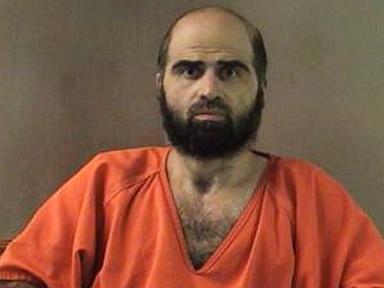
The machinery of military justice moves with a calculated, glacial deliberation, yet the moments preceding an execution expose deep fractures in institutional competence. When the United States military approaches the ultimate punishment, the process is weighed down by decades of legal precedent, administrative friction, and intense public scrutiny. The case involving the Fort Hood shooter highlights this friction, revealing that even when a capital sentence is finalized, the path to execution is fraught with procedural ambiguities that trouble legal scholars and military observers alike.
In November 2009, Major Nidal Hasan opened fire at the Soldier Readiness Processing Center at Fort Hood, Texas, killing thirteen people and wounding more than thirty others. The attack remains one of the deadliest mass shootings on a domestic military installation in American history. Years of military court proceedings followed, culminating in a death sentence handed down by a military jury in August 2013. Since that verdict, the case has wound through the labyrinthine appellate structure unique to the Uniform Code of Military Justice.
Articles of military law dictate a multi-tiered review process before any service member faces execution. Unlike the civilian federal system, where a defendant exhausts appeals through district courts, circuit courts, and ultimately the Supreme Court, military defendants navigate a specialized appellate track. This track includes the Army Court of Criminal Appeals and the United States Court of Appeals for the Armed Forces. Only after these bodies affirm the conviction and sentence does the case reach the desk of the President of the United States, who must personally authorize a military execution.
This bureaucratic architecture creates a unique set of vulnerabilities. Administrative delays are not merely a byproduct of judicial caution; they are systemic features of an apparatus that rarely exercises its ultimate power. The military has not executed a service member since 1961, when Army Private John A. Bennett was hanged at the United States Disciplinary Barracks at Fort Leavenworth, Kansas. This sixty-plus-year hiatus hangs over every stage of modern military capital litigation. Attorneys operating within this space navigate uncharted territory, where institutional memory regarding the logistics of execution is entirely absent.
Procedural questions linger long after the initial appeals fail. Questions of jurisdiction, competency, and the precise mechanical execution of the sentence create unprecedented legal hurdles. For instance, federal regulations require the use of lethal injection for federal and military executions, yet the logistics of sourcing lethal substances, training personnel, and maintaining secrecy within a military installation present formidable operational challenges. The Department of Defense must coordinate with federal agencies, yet the distinct legal status of military prisoners introduces jurisdictional friction that civilian prisons never encounter.
Critics of the military justice system argue that these prolonged delays undermine the very concept of retributive justice. Victims and their families endure decades of legal limbo as briefs are filed, reviewed, denied, and re-filed. The psychological toll on the survivors of the Fort Hood shooting is immeasurable, compounded by administrative updates that read like academic exercises rather than steps toward closure. Every motion filed by defense counsel introduces another cycle of public anxiety and institutional soul-searching.
Conversely, defense attorneys and civil liberties organizations point out that the absence of prior executions in modern history necessitates extreme caution. The finality of capital punishment requires absolute fidelity to constitutional protections. If the military apparatus stumbles in executing a high-profile prisoner, the legitimacy of the entire military justice system faces severe collateral damage. Errors in procedure, perceived bias, or constitutional shortcuts would invite immediate federal intervention and erode public trust in military tribunals.
The intersection of military command authority and judicial independence further complicates the narrative. Under the Uniform Code of Military Justice, the convening authority holds significant power over the trajectory of a case, yet capital cases are stripped of much of this local discretion as they ascend the appellate ladder. The tension between maintaining good order and discipline within the ranks and upholding constitutional due process rights creates an uncomfortable duality. The military is fundamentally an instrument of national defense, not a penal institution, yet it is tasked with maintaining a functional, albeit rarely used, death row.
As the administrative steps grind forward, the underlying questions remain unresolved. The Fort Hood shooter's case serves as a stress test for a system unaccustomed to the demands of capital punishment in the twenty-first century. It exposes the friction between civilian legal standards and military necessity, forcing an institution designed for combat to grapple with the morbid logistics of state-sanctioned death. The institutional hesitation is palpable, visible in every delayed filing and every unanswered administrative memo.
The ultimate execution, should it occur, will not mark a neat conclusion to the tragedy of 2009. Instead, it will serve as a permanent historical marker for a system that stumbled through its own rules, weighed down by the gravity of an authority it is structurally unequipped to exercise routinely. The procedure itself remains the story—a slow-moving testament to the profound difficulty of applying capital punishment within the rigid, bureaucratic confines of the armed forces.