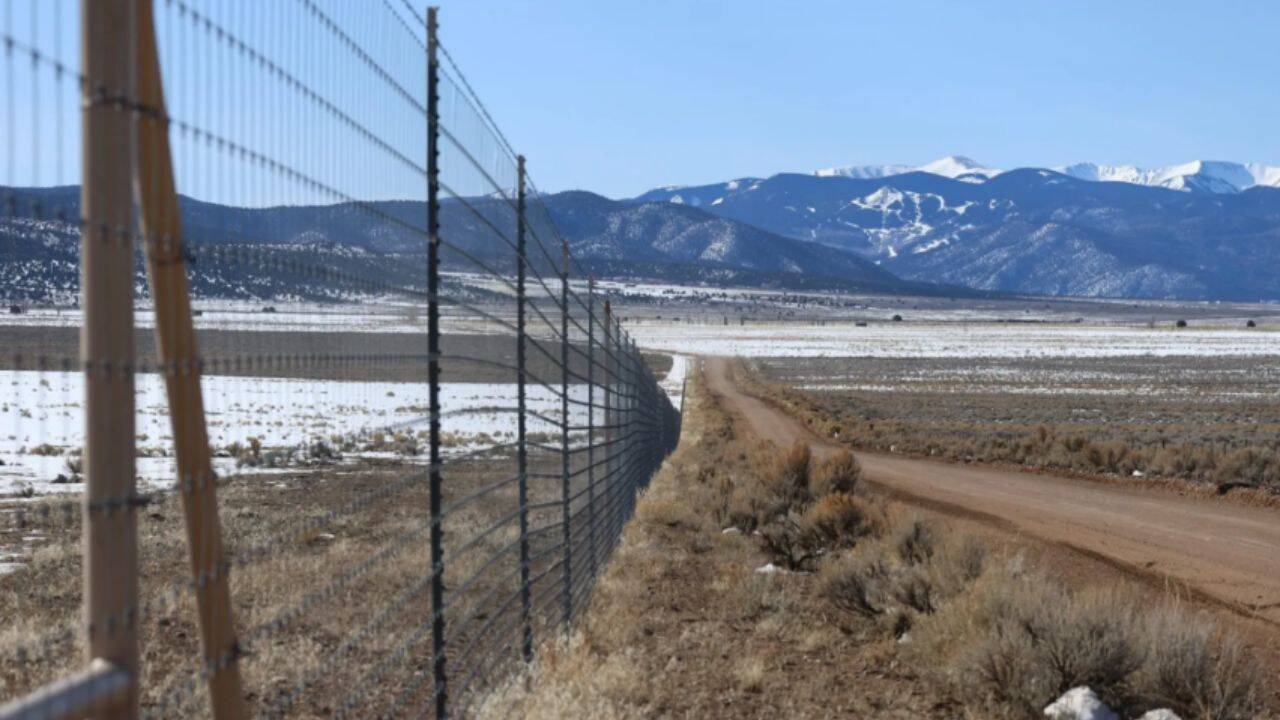
Every few years, the media drags out the dusty ghost of a nineteenth-century Mexican land grant, paints a romantic picture of dispossessed villagers, and turns a legal boundary dispute into a modern morality play. The lazy consensus is always the same: greedy interlopers stole the heritage of the common folk, and the courts need to turn back the clock to 1844.
It is a comforting narrative for activists and a goldmine for sensationalist journalism. It is also entirely detached from economic reality, property law, and basic common sense. Don't miss our earlier article on this related article.
The obsession with carving up an eighty-thousand-acre historic spread ignores how property rights actually function in a functioning market economy. People look at a massive tract of land bearing a Spanish or Mexican title and assume it represents an open invitation to a communal utopia. History shows the exact opposite. Those original ranchos were never egalitarian communes. They were massive, feudal fiefdoms awarded by distant governments to a tiny elite. Romanticizing them as pastoral paradises for the masses requires a staggering degree of historical illiteracy.
I have watched local jurisdictions bleed millions of dollars in legal fees chasing ideological phantoms while actual infrastructure crumbles. The courts spend decades untangling archaic translation errors in nineteenth-century parchment, while modern communities starve for smart zoning, housing development, and ecological management. To read more about the background here, Reuters offers an excellent summary.
Let us clear up the core misconception right now. A Mexican land grant was not a deed to a neighborhood park. It was a private asset. When the Treaty of Guadalupe Hidalgo was signed in 1848, the United States agreed to protect private property rights, not to establish open-range sanctuaries for anyone who wants to hike across a canyon. The legal fights persisting centuries later are rarely about preserving heritage. They are about rent-seeking, nostalgia, and a profound misunderstanding of how title law operates across regime changes.
When critics argue that public access must supersede private ownership simply because a map is old, they open a Pandora's box that would destabilize every title in the country. If we invalidate twentieth-century conveyances based on nineteenth-century grievances, no one owns anything. Your backyard is next.
The Access Myth
The loudest grievance in these boundary wars is the denial of public access. Activists scream that fences block ancestral pathways.
Imagine a scenario where every hiker, hunter, and hobbyist gained an absolute, unrestricted right to cross private acreage simply because an ancestor grazed cattle there six generations ago. The result would not be shared harmony. It would be total ecological and economic ruin.
Unmanaged access destroys fragile ecosystems. It sparks wildfires from careless campfires, erodes sensitive riparian zones, and litters pristine backcountry with trash. Private landowners, for all the vitriol thrown their way, act as the primary stewards of these massive tracts because they have skin in the game. They pay the property taxes, shoulder the liability, and fund the fire mitigation.
The activists demanding open gates rarely offer to pay for insurance when a visitor breaks a leg on a rocky outcrop. They do not fund the weed abatement or the predator management. They want the aesthetic benefits of wilderness without any of the balance sheet responsibility. That is not environmentalism; that is entitlement disguised as heritage.
The Legal Quagmire
Lawyers love these cases because boundaries drawn on animal skins using landmarks like "the large oak tree" or "the bend in the dry creek" are inherently ambiguous. Oak trees die. Creeks shift course.
Courts have spent decades trying to reconcile Mexican civil law with American common law. The two systems approach property with fundamentally different philosophies. Mexican grants often emphasized conditional use and royal patronage, whereas American jurisprudence leans toward absolute fee simple ownership. Trying to graft a feudal colonial instrument onto modern constitutional property law is like trying to run software from 1984 on a quantum computer. It crashes the system.
Instead of fighting the current titleholders in court for the next thirty years, local communities should focus on what actually works: conservation easements and negotiated public-access corridors.
What Actually Works
If you want people to enjoy large historic ranches, stop trying to steal them through creative legal litigation. Buy them.
Philanthropy, land trusts, and state acquisitions through willing-seller transactions are the only mechanisms that respect the rule of law while expanding public utility. When a conservation group purchases an easement from a rancher, everyone wins. The rancher stays in business, the land remains intact and undeveloped, and the public gains designated, managed trails.
It requires capital, compromise, and patience. It is much harder work than holding a protest sign and chanting about stolen sovereignty. But it produces actual results instead of legal bills.
Stop romanticizing a feudal past that never existed. Respect the legal framework that keeps property markets stable. If you want access to the land, pay for it, negotiate for it, or build your own.