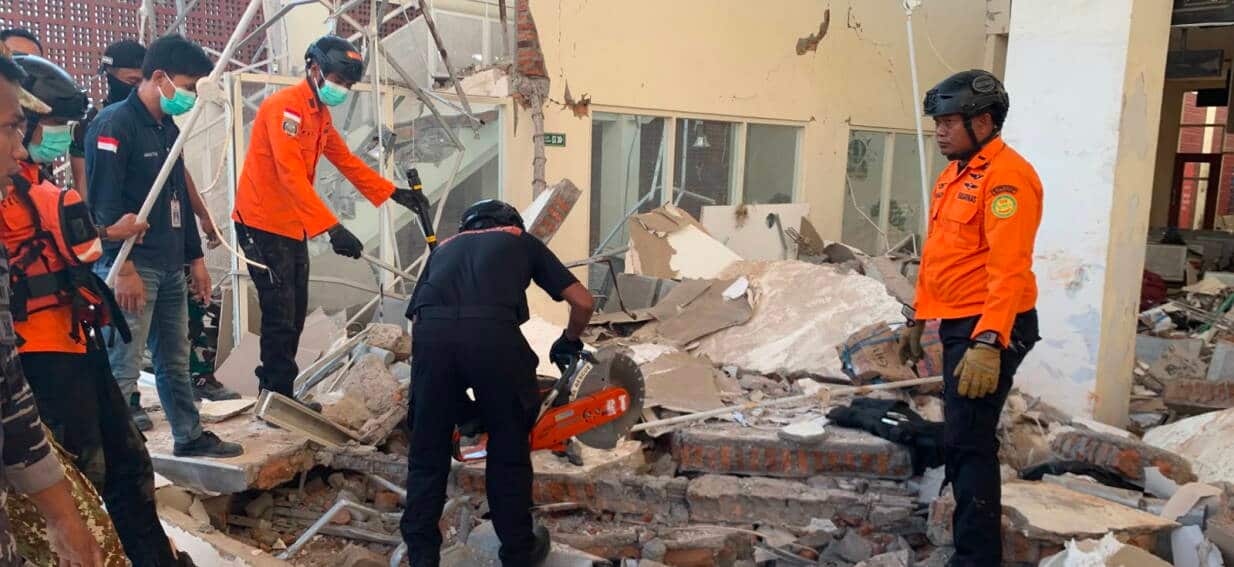
The ground does not care about building codes, municipal budgets, or political campaign promises. When an Indonesian earthquake hits, it exposes every shortcut taken during construction and every bureaucratic failure buried beneath decades of rapid development. Dozens of people are dead, hundreds more are injured, and rescue crews are racing against time through fractured concrete and mudslides. The standard news cycle treats these disasters as sudden acts of God. They are not. They are predictable collisions between relentless tectonic pressure and systemic human vulnerability.
Indonesia sits squarely on the Pacific Ring of Fire. This is a horseshoe-shaped basin of seismic violence where tectonic plates grind past each other with terrifying force. The Indonesian archipelago experiences thousands of earthquakes every year. Most pass unnoticed, registered only by sensitive seismographs operated by meteorology agencies. But when a shallow rupture occurs beneath a densely populated island, the statistics shift from numbers on a spreadsheet to mass graves and overwhelmed emergency wards.
Understanding why these events exact such a heavy human toll requires looking beyond the Richter scale magnitude. The real metric of catastrophe is construction quality.
The Anatomy of Structural Collapse
Concrete crumbles easily when mixed with too much sand and too little steel. Walk through expanding neighborhoods in West Java or rural pockets of Sumatra, and you will see buildings rising at breakneck speed. Masonry walls carry the weight of heavy concrete roofs without adequate vertical columns or ring beams. When lateral seismic waves rip through the earth, these unreinforced structures turn into dust within seconds.
Contractors often cut corners to save money. Local oversight bodies are notoriously understaffed and susceptible to corruption. The result is a built environment that acts as an accomplice to the disaster.
Rescue workers digging through the ruins of collapsed schools and houses are fighting a war on two fronts. They face massive slabs of concrete that require heavy machinery to lift, yet the roads leading to remote villages are often blocked by triggered landslides. Heavy equipment cannot reach the epicenter quickly enough. First responders rely on bare hands, hydraulic jacks, and rescue dogs during the golden hours when survival rates are highest.
Every minute wasted navigating broken infrastructure is measured in lives lost.
Why Early Warnings Fail to Stop the Carnage
Indonesia has invested heavily in tsunami warning systems and seismic sensors following the devastating Indian Ocean disaster of 2004. Sirens stand tall along vulnerable coastlines. Data streams into monitoring centers in Jakarta within seconds of a rupture.
Technology alone cannot save a population that lacks a culture of preparedness.
Early warning systems lose their value if the alert does not translate into immediate action. Sirens often fail due to lack of maintenance, vandalism, or power outages triggered by the initial tremor. Even when a siren wails, citizens frequently hesitate. They check social media, look around to see what neighbors are doing, or wait for official confirmation. In a shallow earthquake, seconds mean the difference between evacuating a collapsing room and being crushed beneath it.
School earthquake drills are mandatory on paper. In practice, they are treated as bureaucratic checkboxes rather than vital survival training. Children memorize evacuation routes once a year, but teachers receive minimal hands-on instruction on how to manage panic during a high-magnitude shake.
The Economic Aftermath of Seismic Shocks
Disaster reporting usually ends once the search and rescue phase concludes and international aid packages are announced. The real crisis begins a week later.
Survivors are crammed into temporary tarpaulin camps with limited sanitation and clean water. Disease outbreaks become a secondary threat. Cholera, dengue, and respiratory infections sweep through crowded settlements where infrastructure has been wiped out. Farmers lose their entire crop yields, and fishermen find their boats smashed against rocky shores. The macroeconomic impact ripples through national inflation rates and diverts crucial funds away from education and healthcare into endless cycles of reconstruction.
Insurance penetration remains remarkably low across Indonesia. Most working-class families do not have property insurance. A single earthquake completely wipes out generational wealth. A family that spent twenty years building a modest home finds themselves reduced to absolute poverty overnight. They must borrow money from predatory informal lenders just to buy corrugated iron sheets for a temporary shelter.
Rebuilding Better or Repeating History
Reconstruction projects frequently prioritize speed over safety. Government officials anxious to project competence push for rapid rebuilding programs. Damaged roads are repaved, and collapsed administrative offices are rebuilt on the exact same unstable fault lines using the exact same substandard methods.
This cycle repeats itself every few years. A major tremor hits. The world watches in horror for a week. Aid flows in. Politicians promise sweeping reforms. The cameras leave. Construction standards slip back to their old habits.
Breaking this loop requires enforcing strict seismic building codes across every village, not just in affluent Jakarta high-rises. It demands independent inspectors who cannot be bribed with a handful of cash. It requires treating disaster resilience as a core pillar of national defense rather than an afterthought managed by underfunded regional agencies.
The earth beneath Indonesia will not stop moving. The tectonic plates will continue their slow, grinding march. Whether the next tremor results in a manageable emergency or a national tragedy depends entirely on whether the lessons written in blood today are remembered tomorrow.


