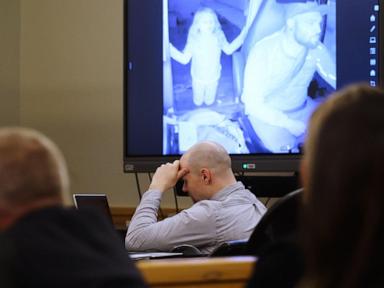
The death penalty handed down to Tanner Horner for the 2022 kidnapping and murder of seven-year-old Athena Strand marks the end of a harrowing legal chapter in Wise County, Texas. But while the jury’s decision to sentence the former FedEx driver to death provides a definitive legal resolution, it leaves a massive, systemic void in the conversation regarding corporate accountability and the subcontracting model that placed a predator on a rural driveway.
Athena Strand vanished from her home in Paradise, Texas, on November 30, 2022. The investigation quickly shifted from a missing person search to a homicide inquiry after Horner, who was delivering packages for a FedEx contractor, confessed to hitting the girl with his van and then killing her to prevent her from telling her father. The case has become a flashpoint for critics of the "last mile" delivery system, a complex web of third-party logistics that allows global brands to distance themselves from the people wearing their uniforms.
The Illusion of Direct Employment
Most consumers believe that when a person in a branded uniform pulls into their driveway, that person is an employee of the company named on the truck. In the case of FedEx Ground, this is rarely true. The company operates through a network of thousands of independent businesses known as Contracted Service Providers. These small-to-mid-sized companies own the trucks, pay the fuel, and—most importantly—hire the drivers.
This structure is designed for efficiency and legal insulation. By offloading the operational burden to contractors, the parent corporation can scale rapidly without the overhead of a massive workforce. However, this buffer also creates a fractured chain of command. When Horner stepped out of that van, he was technically working for Big Topspin, a company contracted by FedEx. This distinction is not just a matter of paperwork. It dictates the rigor of background checks, the quality of training, and the level of direct supervision.
The prosecution in the Horner case detailed a chillingly opportunistic crime. Horner admitted that he didn't mean to hit the child with his vehicle, but once the accident occurred, his panic transitioned into a calculated effort to eliminate a witness. The reality is that the logistics industry has spent years optimizing for speed and cost while the human element—the safety of the neighborhoods these drivers enter—has been treated as a secondary metric.
Background Checks and the Gap in Vetting
In the aftermath of the murder, the Strand family filed a lawsuit against FedEx Ground and Big Topspin, alleging that the companies failed to properly vet Horner. The lawsuit argued that a more thorough investigation into Horner’s history and psychological profile might have flagged him as a risk.
The industry standard for background checks often relies on criminal databases that only capture past convictions. They rarely account for behavioral red flags or unstable employment histories that don't result in a police report. In a high-turnover industry like delivery services, where companies are desperate to fill seats to meet seasonal demands, the pressure to clear drivers quickly is immense.
The Pressure of the Route
A delivery driver is managed by an algorithm. Every minute is tracked, every stop is timed, and any deviation from the route is flagged. This environment creates a unique type of psychological pressure. Drivers are often pushed to work long hours under intense scrutiny, navigating private property and interacting with vulnerable populations without any meaningful oversight once they leave the terminal.
When you combine a high-pressure environment with a vetting process that prioritizes "clearing" a candidate over truly "knowing" them, the risk profile of the entire operation shifts. Horner had no prior criminal record that would have disqualified him under current industry standards. This is the most uncomfortable truth of the case: under the existing system, Horner was a "qualified" hire.
The Legal Shield of Independent Contracting
The death penalty verdict for Horner focuses on individual culpability. It satisfies the state's requirement for justice against the perpetrator. However, the civil litigation surrounding the case seeks to pierce the corporate veil that protects parent companies from the actions of their contractors.
Historically, courts have been hesitant to hold companies like FedEx liable for the torts of independent contractors. The legal doctrine of respondeat superior—let the master answer—usually applies to employees, not third-party vendors. Companies argue they don't have "control" over how a contractor manages its staff, which allows them to claim they are not responsible when something goes wrong.
This legal strategy is the backbone of the modern gig and logistics economy. It allows for a brand to exist in the mind of the consumer while the actual work is performed by a revolving door of low-wage subcontractors. The Strand case challenges this by arguing that because FedEx controls the branding, the uniforms, and the delivery technology, they exercise "de facto" control over the driver, regardless of what the contract says.
A Failure of Public Trust
The delivery van has replaced the milkman and the mail carrier as the most frequent visitor to the American home. There is an implicit trust involved when a homeowner allows a branded vehicle onto their property. That trust was shattered in Paradise, Texas.
Communities often view these drivers as part of the local infrastructure. In rural areas, where homes are isolated and law enforcement is miles away, the presence of a stranger in a familiar uniform is accepted without question. The Horner case demonstrates that the "uniform" is a mask that can be worn by anyone who passes a basic screening and is willing to work for the prevailing market rate.
The sentencing of Horner to death will likely be appealed, a process that can take a decade or more in Texas. While the legal system grinds through those motions, the delivery industry continues to operate under the same fundamental model. The "Amazon-ification" of logistics has only increased the demand for more drivers and faster turns, further straining the already thin margins of the contractors responsible for hiring.
The Economics of Avoidance
If companies were forced to hire all drivers as direct employees, costs would skyrocket. Benefits, liability insurance, and more intensive HR departments would cut into the massive profits generated by the e-commerce boom. The current model isn't an accident; it is a financial necessity for the scale at which these companies operate.
This creates a moral hazard. If the financial penalty for a systemic failure—like the death of a child—is seen as a "cost of doing business" or is mitigated by insurance and legal insulation, there is little incentive to overhaul the vetting process. The death penalty for Horner addresses the crime, but it does nothing to address the environment that allowed him to be there.
The Wise County jury spent days listening to the graphic details of Athena’s final moments. They saw photos of the "You are Special" box she had received—the very package Horner was delivering when he took her life. That box, a symbol of a routine consumer transaction, became the catalyst for a nightmare.
The Limits of Individual Justice
We often mistake a high-profile conviction for a solution. When a "monster" is sent to death row, society feels a sense of collective relief. We tell ourselves that the threat has been removed. But Tanner Horner was not a ghost; he was a functional part of a global supply chain.
The focus on his personal depravity, while necessary for the criminal trial, obscures the structural negligence. The "why" of Athena Strand's death isn't just found in the dark impulses of one man; it’s found in a business model that prioritizes the delivery of a cardboard box over the safety of the driveway it lands on.
If the industry does not move toward a model of total accountability—where the brand on the truck is legally and morally responsible for the person behind the wheel—then the next tragedy is simply a matter of statistical probability. Background checks must evolve into comprehensive behavioral assessments. The legal walls between contractors and parent companies must be dismantled in cases of gross negligence.
Until then, every delivery remains a gamble. The sentencing of Tanner Horner is a closed book on a single man, but the system that put him in that van is still driving through every neighborhood in the country.