The dust in the Pompeii archives doesn't just sit; it clings. It smells of old stone and the metallic tang of volcanic sulfur that seems to have soaked into the very bedrock of Italy. Standing in the shadow of Mount Vesuvius, you can’t help but feel like a trespasser in a giant, open-air morgue. For centuries, we have looked at the plaster casts of the fallen—those haunting, hollow shells of people caught in their final, desperate seconds—and seen only statues. We saw the shape of their agony, but never the color of their eyes or the set of their jaw.
They were anonymous ghosts. Until now.
Archaeologists have spent decades cataloging the "Man of the House of Menander," a victim found in one of the city's most opulent villas. To the scholars, he was a data point. To the tourists, he was a macabre photo opportunity. But to a team of researchers armed with neural networks and 3D scanners, he became a person again. By feeding skeletal measurements, bone density data, and historical DNA markers into advanced reconstruction software, they didn't just guess what he looked like. They invited him back.
The Anatomy of a Ghost
The process of bringing a Roman back to life is less like a Hollywood special effect and more like a high-stakes forensic interrogation. It starts with the skull. The underlying structure of the brow ridge tells you about the intensity of the eyes. The wear on the teeth hints at a diet of coarse grains and olives. The attachment points of the jaw muscles reveal the strength of a man who likely spent his days shouting over the din of a crowded marketplace or whispering in the quiet peristyles of a Roman garden.
Imagine this man—let’s call him Marcus—waking up on that final morning in 79 AD. He wouldn't have known the mountain was a volcano. To him, it was just a lush, green backdrop to his vineyards. He probably worried about the rising cost of garum or a leak in his roof. He had a face that his wife touched, a face his children recognized from across a room. When the ash began to fall, that identity was erased, replaced by a grey, stony mask.
The AI doesn't just "draw" a face. It calculates the depth of tissue based on thousands of data points from modern Mediterranean populations. It layers the masseter muscles, the delicate skin around the eyelids, and the specific thinning of hair that comes with middle age in the Roman heat.
The result is jarring.
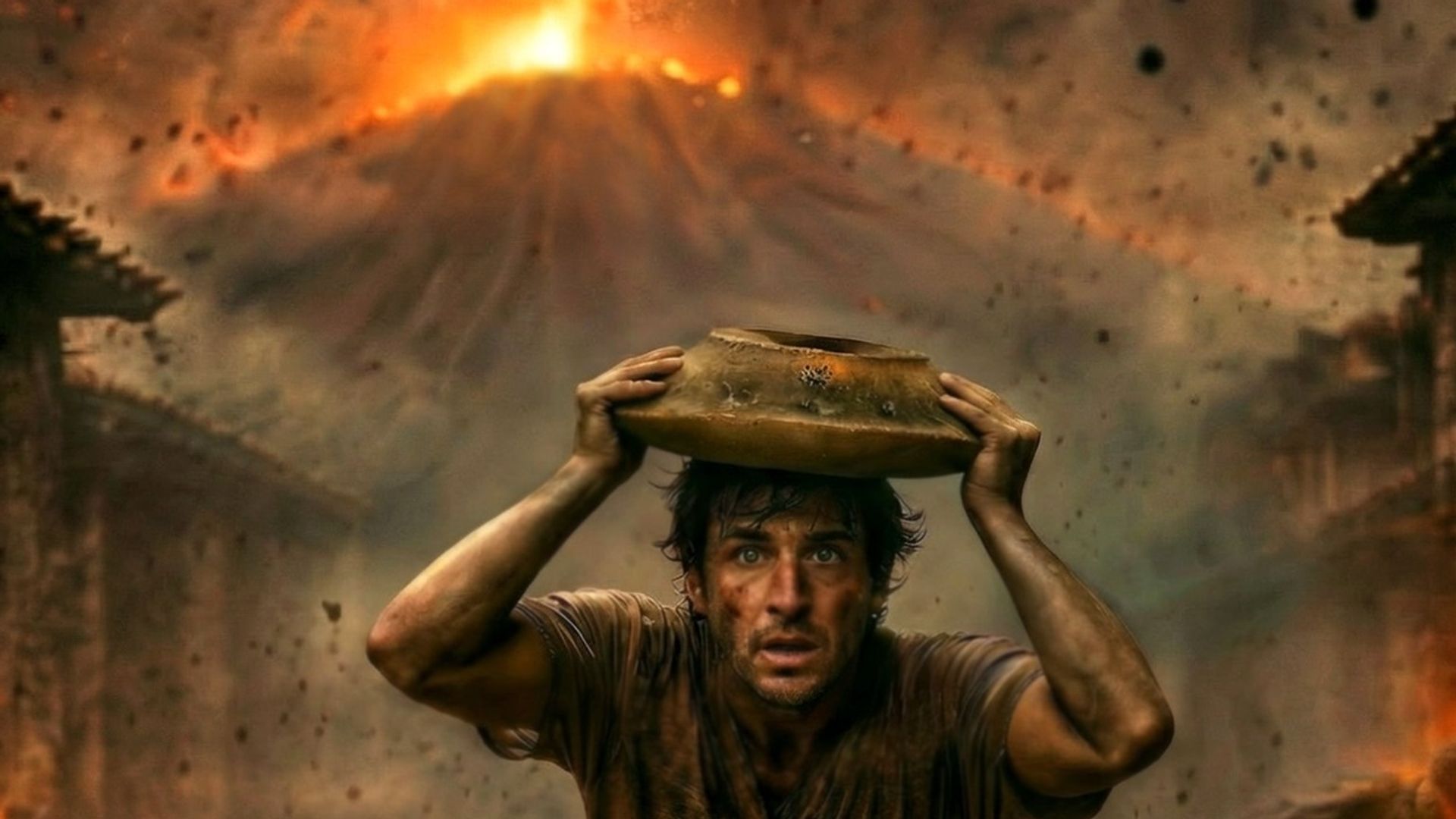
When the first rendered image flickered onto the screen, the room went silent. This wasn't a marble bust from a museum. This was a man you might see waiting for a bus in Naples today. He had a slightly crooked nose, perhaps from a childhood fall. His skin was weathered by the Tyrrhenian sun. There was a weariness in his expression that felt deeply, uncomfortably familiar.
Why We Look Back
Critics often ask why we spend millions of dollars and thousands of processor hours trying to see the dead. Does it change the history books? Not really. We already knew they died. We already knew how.
But there is a profound difference between knowing a fact and meeting a gaze.
When we look at a skeletal remain, we are shielded by the distance of time. We are looking at "specimens." When the AI renders the subtle moisture in a man's tear duct or the fine lines of a life lived in the sun, that shield shatters. We are forced to reckon with the reality that Pompeii wasn't a "site." It was a neighborhood.
The stakes of this technology are invisible but massive. It changes how we value human life in the present by proving how much of it persists after we are gone. If we can see the face of a man who died twenty centuries ago, we can no longer pretend that the people of the past were a different species. They felt the same cold. They harbored the same fears.
This isn't just about Pompeii. The same technology is being used to identify "John Does" in cold cases and to help families find closure after modern disasters. The neural networks are learning the universal language of the human face. They are teaching us that the bridge between "then" and "now" is much shorter than we thought.
The Weight of the Gaze
There is a specific kind of vertigo that comes from looking into the reconstructed eyes of a disaster victim. You find yourself searching for a signal. You want him to tell you something about the end. Was it quick? Was he afraid?
The data suggests the heat was so intense that death was nearly instantaneous for many, a thermal shock that turned the blood to steam. It is a brutal, clinical reality. Yet, looking at his reconstructed face—the slight furrow of his brow—you don't see a "thermal shock victim." You see a man who was perhaps looking toward the door, wondering if he had time to grab his sandals.
We often think of progress as a forward-moving arrow, a constant push into the unknown. But sometimes, the most significant leaps in technology allow us to move backward. We are using the most complex tools ever devised by the human mind to perform an act of simple, primal empathy. We are reaching into the ash to pull someone out.
The Man of the House of Menander doesn't have a voice. He won't tell us where the lost scrolls are hidden or explain the nuances of local politics. He offers something more haunting. He offers a mirror.
As the AI continues to refine these images, the "ghosts" of Pompeii are becoming neighbors. We see the teenagers who were holding hands. We see the elderly woman who couldn't run. We see the servants and the masters, stripped of their status and left only with their features.
The ash preserved the shape of their death, but the code is preserving the essence of their life.
The next time you look at a map of the ancient world, or a photo of a ruined villa, remember the man with the crooked nose. He isn't a statue. He isn't a cast. He is a person who has been waiting two thousand years for someone to finally look him in the eye and recognize him.
The mountain took his breath. The ash took his body. But the silicon and the sensor have given him back his name, even if we only know it in the way his eyes catch the light. He is no longer a relic of the Roman Empire. He is a man.
He is here.