The wind in southern Alberta does not just blow. It interrogates. It sweeps down from the jagged limestone peaks of the Rockies, flattening the rye grass, rattling the aluminum siding of grain elevators, and whipping flags into a frenzy that sounds like distant gunfire.
On a Saturday morning in July, that wind carried the scent of diesel exhaust, mini-donuts, and an unspoken, heavy tension.
Main Street was lined three-deep with lawn chairs. Red plastic ones, faded blue canvas ones, and the old-school interwoven webbing varieties that leave grid marks on the backs of your thighs. For decades, this annual summer parade followed a predictable choreography. First came the Mounties in their scarlet tunics, horses perfectly spaced. Then the vintage tractors, sputtering and coughing blue smoke. Finally, the local minor hockey teams, throwing hard candy into the dirt.
But this year, the air felt different. The local conversation had shifted from the price of canola or the lack of rain to something deeper, sharper, and far more precarious.
Two Colors on the Same Pole
Consider a man named Arthur. He is hypothetical, but anyone who has spent ten minutes in a rural Alberta diner knows him. He wears a stained seed cap, his knuckles are permanently scarred from fixing rusted combines, and his eyes are the color of a winter sky over a frozen slough. Arthur remembers 1980. He remembers the National Energy Program, the bankruptcies, the neighbors who walked away from their homesteads and left the keys in the mailbox.
To Arthur, alienation is not a political theory. It is a scar.
Sitting next to him on the curb is his granddaughter, Sarah. She is twenty-four, works at a local accounting firm, and worries about the future of the planet. She loves the vastness of the prairie, the way the light turns golden just before the sun drops behind the mountains. But she also loves her country. She sees the world through a lens of global connection, not historic grievances.
As the parade marshals began moving the floats into position, the visual battle lines were drawn.
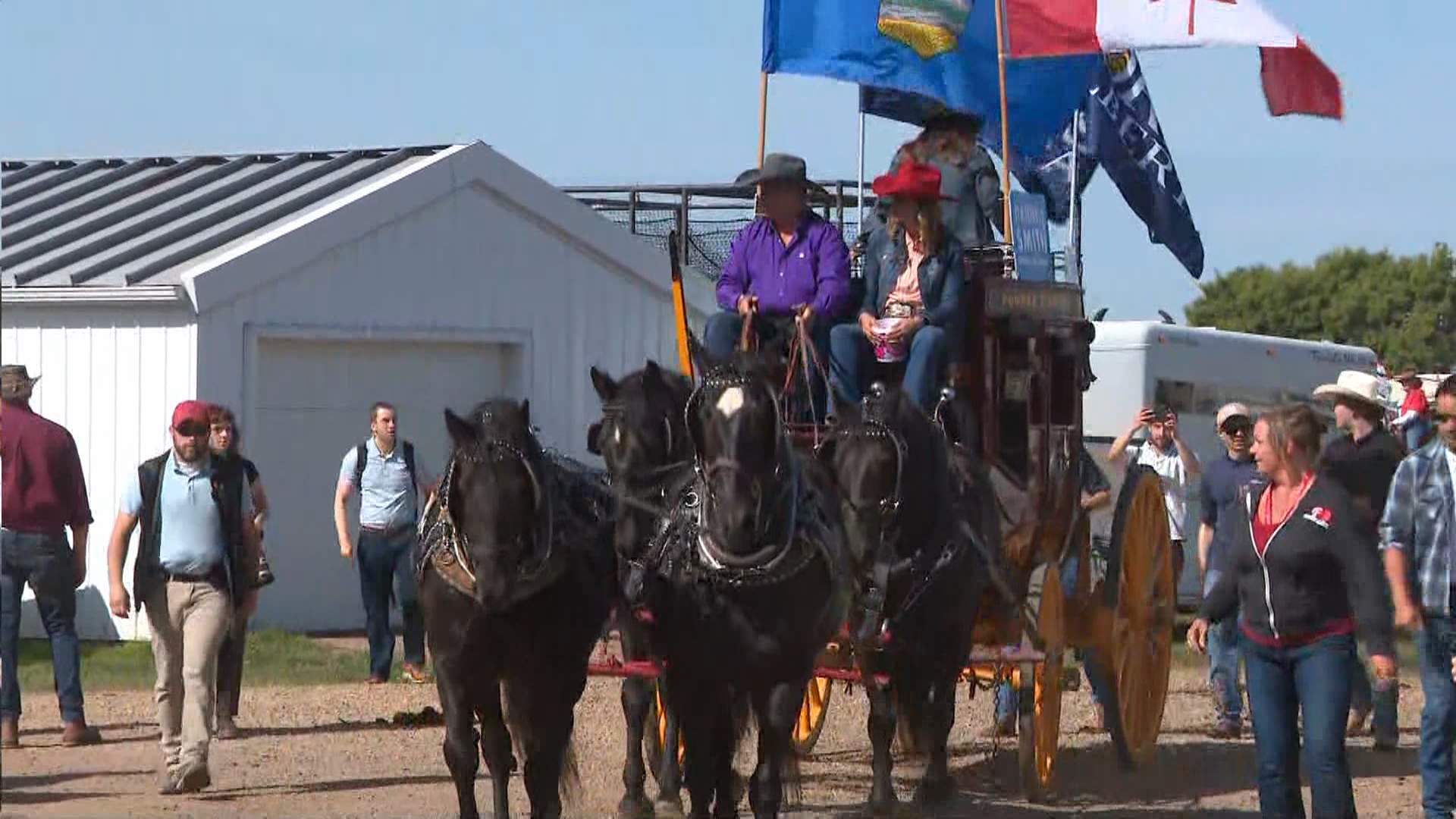
Flying from the back of a pristine, lifted dual-wheel pickup truck was the Canadian flag. The maple leaf. Crisp, red, and bold. Right behind it, mounted to the rusty bumper of a vintage John Deere tractor, was the Alberta provincial flag. The blue field, the golden wheat, the distant mountains under a vast sky.
In previous years, these two symbols coexisted peacefully, layered together like blankets against a cold night. Today, they felt like competing claims to the same dirt.
The debate over western separatism is often covered by national media as a series of shouting matches in legislatures or dry policy papers detailing equalization formulas and constitutional law. The talking heads talk about billions of dollars shifting across provincial borders, pipelines stalled in courtrooms, and federal overreach.
They miss the human reality entirely.
The real friction is not in the halls of Parliament. It is at the kitchen table. It is between a grandfather who feels abandoned by the nation he helped build and a granddaughter who fears her home is turning inward, bitter and isolated.
The Weight of the Blue Field
The tractor carrying the provincial flag rumbled past Arthur and Sarah. The driver, a middle-aged man with a stern jaw, nodded at Arthur. Arthur nodded back, a slow, deliberate movement of his chin.
"They don't understand us out East," Arthur muttered, his voice barely carrying over the roar of the diesel engine. "Never have. They want our resources, but they don't want our people."
Sarah sighed, pulling her sunglasses down. "Grandpa, leaving Canada doesn't solve anything. It just isolates us. We're stronger together, even when it's frustrating."
"Easy to say when you didn't see the banks take the farm in eighty-two," Arthur replied.
This exchange is happening in a thousand different ways across the province. It is an argument born of a profound sense of cultural invisibility. For many in the rural West, the federal government feels like a distant, unsympathetic landlord who collects the rent but refuses to fix the plumbing. The push for autonomy, or even outright independence, is not driven by a hatred of Canada, but by a desperate desire to be heard by a system that feels designed to ignore them.
But the logistics of separation are terrifyingly complex. How do you divide a modern G7 nation? What happens to the currency? The national debt? The indigenous treaties that form the legal bedrock of the land?
When you strip away the fiery rhetoric of political rallies, the hard math of independence looks incredibly grim. A landlocked nation state carved out of Western Canada would face immense economic hurdles, potential trade blockades, and a currency of uncertain value.
The dream of absolute freedom often collides directly with the cold wall of global economics.
The Ghost in the Parade
As the local marching band passed by, playing a slightly out-of-tune rendition of a classic folk song, the crowd clapped along. But the enthusiasm was muted. People were watching each other. They were looking at who cheered for which flag.
In a small town, anonymity is a luxury no one possesses. You know your mechanic’s politics. You know your grocer’s views on federal carbon taxes. When a community becomes polarized, the social fabric begins to fray in ways that are incredibly difficult to repair.
The underlying issue is a breakdown of trust.
When a population believes that the democratic process no longer represents their interests, they stop looking for compromises. They start looking for exits. The Alberta flag flying so prominently in the parade was not just a symbol of provincial pride. For many in the crowd, it was a warning flare.
Consider what happens next if the divide continues to widen. The anger does not simply vanish. It hardens into identity. It becomes a core belief passed down to the next generation, a permanent sense of victimhood that distorts every political discussion and paralyzes necessary national progress.
The parade eventually wound down. The final horses trotted past, leaving steaming piles on the asphalt. The pickup trucks turned the corner at the end of Main Street, their flags still snapping violently in the relentless western wind.
The crowd began to disperse. People folded up their lawn chairs, shook out their blankets, and walked back toward their vehicles in small, quiet groups. The political debate had not been resolved. No one had changed their mind. The maple leaf and the wild rose were still locked in their uneasy dance.
Arthur stood up slowly, leaning heavily on his cane. He looked down the empty street, where a few stray pieces of candy wrappers tumbled across the gravel. Sarah reached out, taking his arm to steady him on the uneven curb.
They walked together toward the truck. Two people, two vastly different visions of the future, bound by blood and the shared, unyielding soil beneath their boots.