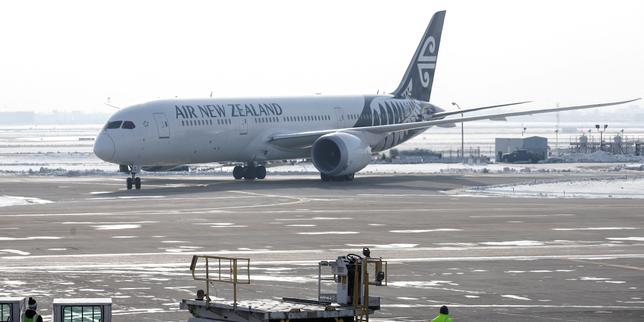
Boeing just scored its biggest regulatory win in years, but don’t assume the aviation giant is completely out of the woods yet.
The Federal Aviation Administration (FAA) announced it will allow Boeing to resume issuing its own airworthiness certificates for newly built 737 Max and 787 Dreamliner jets. Starting July 20, 2026, the plane maker regains the authority to sign off on individual aircraft before they roll out to airline customers.
If you've been following the rolling crises at Boeing, you know this is a massive shift. The government pulled Boeing’s self-certification privileges for the 737 Max back in 2019 following two tragic crashes. The 787 Dreamliner lost its self-certification status in 2022 after persistent manufacturing defects came to light. For years, federal inspectors had to personally review and sign off on every single jetliner coming off the assembly line.
This decision changes that setup, but it isn’t a blank check. It is a calculated regulatory pivot based on eight months of parallel inspections.
The data that changed the FAA's mind
Regulators don’t hand over safety keys based on promises. The FAA based this decision on a strict, alternating review process that started in September 2025.
For nearly a year, Boeing safety teams and FAA inspectors took weekly turns running final airworthiness checks on new planes. The goal was simple: see if Boeing’s internal quality controls caught the same issues that government inspectors caught.
According to the FAA, the data showed that both sides were finding identical results. Boeing's quality consistency finally reached a baseline that satisfied the regulator. FAA Administrator Bryan Bedford noted that the step forward is only happening because the agency is confident it can be done safely.
This tells us that Boeing’s internal manufacturing fixes are sticking, at least when it comes to the final assembly stages.
What this means for airline deliveries
If you are a traveler, this news won't affect your flight schedules tomorrow. It doesn't ground or clear any existing fleet. What it does change is the speed at which airlines can get their hands on new jets.
The previous system, where the FAA and Boeing swapped inspection duties every week, created a natural bottleneck. Government inspectors are thorough, but their presence added layers of administrative back-and-forth that slowed delivery pipelines. Airlines have been screaming for aircraft for quarters to meet summer travel demand.
By taking back control of the final signature, Boeing can streamline its delivery preparation. The company can align its factory output directly with its delivery schedules rather than waiting around for federal calendars to clear.
The cap on 737 Max production has also been quietly rising. After the Alaska Airlines door plug blowout in January 2024, the FAA capped production at 38 jets a month. That limit has been bumped up to 47 planes per month this summer. Combined with the restored certification power, Boeing is finally positioned to clear out its backlog of built aircraft.
Trust, but verify on the factory floor
Let's clear up a major misconception. The FAA is not packing up its bags and leaving Renton or North Charleston. This is a reallocation of regulatory resources, not a retreat.
When the FAA spent its days signing off on final airworthiness papers, inspectors were essentially acting as the final line of defense at the very end of the line. Now that an independent group of Boeing employees handles those final signatures on behalf of the regulator, FAA inspectors can move backwards into the manufacturing process.
The agency plans to use this freed-up inspector time to run surprise audits and look for deep-seated defects earlier in the production cycle. Catching a misaligned shim or a drilled hole issue while the plane is still an empty shell is much safer—and cheaper—than finding it during the pre-flight checklist.
Boeing's safety culture remains under an intense microscope. The FAA will actively monitor the company's internal Safety Management System to make sure production pressures don't override quality controls again.
The immediate next steps for the aviation sector
Aviation executives and supply chain partners should prepare for several shifts over the next few months.
First, look for an uptick in delivery volume. Airlines that have been waiting on delayed 737 Max or 787 airframes will likely see their delivery dates stabilize as Boeing cuts down the time between final assembly and delivery day.
Second, expect the FAA to maintain a highly visible presence. The agency is swapping a bureaucratic role for an investigative one. Factories will face more rigorous middle-of-the-line spot checks, meaning suppliers must ensure their component quality is flawless before parts ever reach Boeing's main facilities.
Ultimately, this move helps fix Boeing’s cash flow and delivery issues, but the real test is just beginning. The plane maker has the power to certify its own aircraft again, meaning it also bears sole responsibility if something goes wrong.


:max_bytes(150000):strip_icc():focal(999x0:1001x2)/taylor-swift-albums-1-93026ca98408417097660e117a10a6a9.jpg)