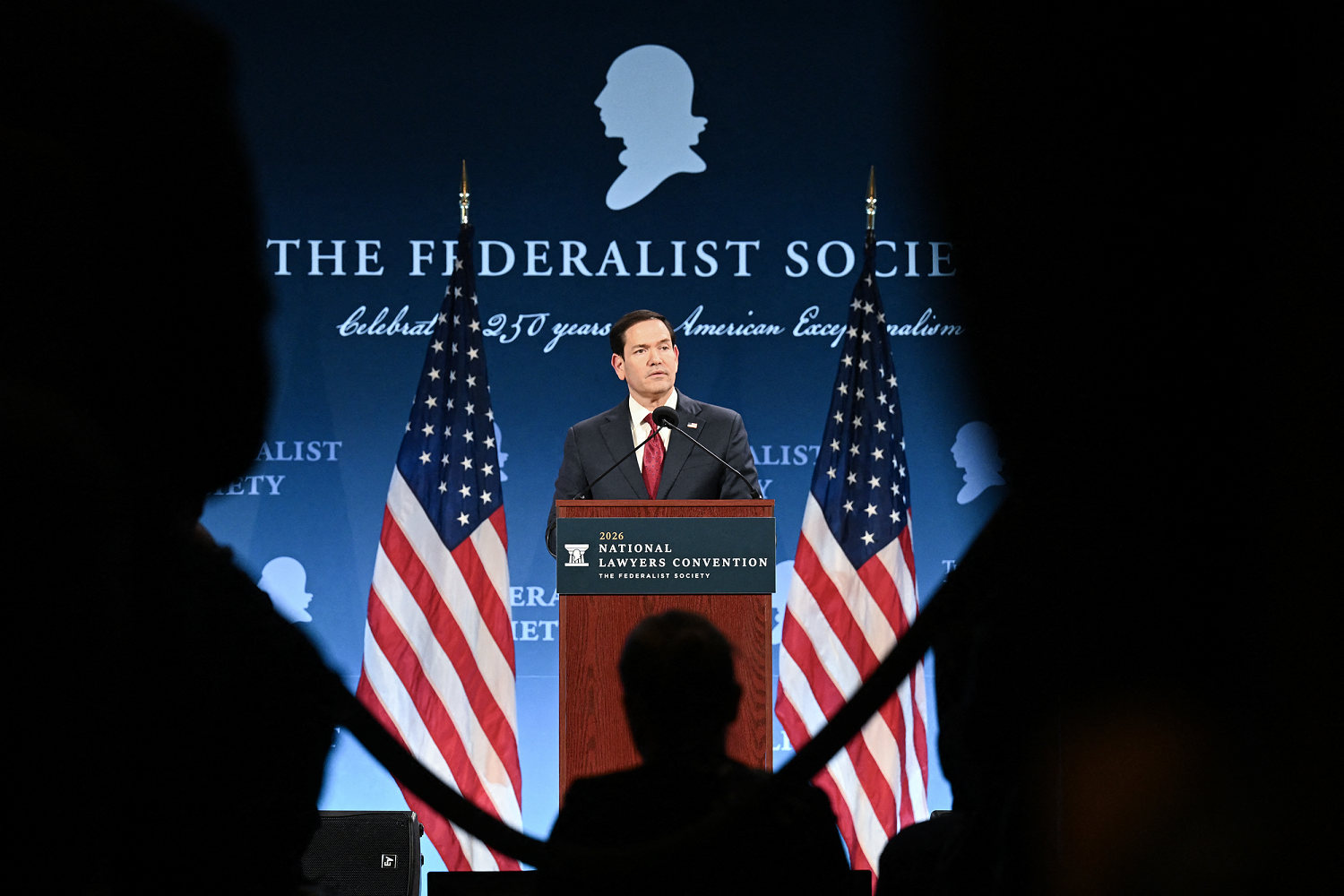
"This is not a safety issue to the American people and not a 9/11."
Those words from Homeland Security Secretary Markwayne Mullin landed on a Friday afternoon—November 13, 2026—while thousands of passengers sat frozen on tarmacs and in terminal concourses across the United States. Any time the Federal Aviation Administration orders a nationwide ground stop, memory snaps straight back to September 11, 2001. Planes stop moving. Rumors fly faster than jets. People reach for their phones and ask the worst possible question. You might also find this related story insightful: They Toppled a Minister in the Heat of July. Now Comes the Cold..
Here is the plain truth: the November 13 FAA ground stop was a telecommunications and network-upgrade failure, not a terrorist attack or a coordinated strike. Still, the mixed messaging in those first tense hours—Mullin telling the public "this is not a 9/11" while also saying officials weren't ruling anything out during an active probe—fueled plenty of anxiety. President Donald Trump was briefed on the disruption, and Transportation Secretary Sean Duffy stepped forward to explain that a communications problem had hit regional air traffic control centers.
That distinction matters. Saying "not 9/11" is accurate when talking about hostile intent, yet calling it "not a safety issue" can sound jarring when planes are held on the ground for safety reasons. Let's separate the panic from the plumbing, look at what actually broke, and see what travelers and aviation leaders are dealing with now. As discussed in detailed reports by BBC News, the results are significant.
What Actually Triggered the FAA Ground Stop
When flights ground to a halt nationwide, people assume the entire sky went blind. That isn't how it played out.
According to the FAA's ground stop Q&A, the disruption began around 3:30 p.m. ET on November 13 and lasted roughly four hours and 25 minutes before air traffic began resuming that evening. Certain radio frequencies and radar feeds stayed working, and around 3,500 aircraft landed safely while controllers and pilots followed standard procedures. It was not a total blackout of every radar screen or radio channel.
Instead, the trouble started inside the network plumbing during modernization work. Contractor L3Harris, which has handled legacy telecom services for the FAA for more than two decades, was moving parts of the system from older copper and time-division multiplexing setups toward fiber and IP-based networking. Officials pointed to a newly installed router at a site in El Dorado, Arkansas—with an Amarillo radar location also cited in FAA reporting—as a source of flooding traffic.
Roughly 1,000 connection attempts every four to five seconds hit the network, straining older equipment and causing signal instability across regional air traffic control centers. To stay ahead of unpredictable signal quality, the FAA halted departures nationwide. Even flights coming from Europe through Eurocontrol member states faced temporary holds toward the U.S. while engineers worked to stabilize the network.
Blame Shifting Between Washington and Tech Vendors
If you watched the fallout over the next several days, you probably noticed how quickly finger-pointing started. Honestly, that's pretty standard whenever a high-profile system hiccups, though it rarely makes the fix any faster.
Hewlett Packard Enterprise CEO Antonio Neri pushed back on calling the device a standard router, describing it as an HPE Juniper Circuit to Packet platform that operated as configured, and noted that multicasting—a feature enabled on the device—wasn't needed for that specific use case while L3Harris operated and managed the network. The FAA paused further installations of those routers and disabled the relevant broadcasting/multicasting function across more than 60 other units as a precaution.
Meanwhile, political friction flared in Washington. Duffy criticized past administrations for passing along aging infrastructure and resisted apologizing personally, while FAA Administrator Bryan Bedford struck a more accountable tone on agency responsibility even as investigations continued. Homeland Security Secretary Markwayne Mullin also faced sharp questioning in a House hearing over administration messaging and travel during the broader wave of flight disruptions.
Why "Not 9/11" Still Felt Like a Big Deal
A lot of commentators brush off tech glitches once planes start taking off again. That's a mistake.
Ground stops of this scale are rare. Only twice before—after the September 11, 2001 attacks and during the January 2023 NOTAM pilot-alert outage—had the U.S. seen a comparable nationwide halt. Having a third major nationwide ground stop on November 13, 2026, followed by heavy delays and thousands of cancellations over subsequent days, shows how fragile a massive air network can be when legacy gear meets modern upgrades.
Look at the real-world math of aviation. Even a four-and-a-half-hour pause doesn't end at 8:15 p.m. Aircraft end up at the wrong airports. Flight crews hit legal duty-hour limits. Bags get stranded. A single afternoon outage ripples across hubs for days. And when that happens right around Thanksgiving travel—with major hubs like Chicago O'Hare and Atlanta Hartsfield-Jackson already dealing with weather, equipment issues, and controller staffing strain—passengers feel every single kink in the chain.
What Officials Actually Knew Versus What They Said
Let's be fair and clear about what the evidence showed. Officials said they had no indication of a cyberattack or state-sponsored strike. At the same time, early public statements mixed reassurance with caution ("not ruling anything out" while investigating).
In real-world crisis response, leaders try to prevent panic while avoiding premature promises before engineers finish checking logs. Sometimes that balance works. Sometimes it makes people wonder whether officials know more than they're saying. Here, the technical explanation—network flooding during an upgrade from legacy lines—matches what engineers were actively isolating and disabling.
Fixing Old Pipes Without Breaking the Sky
Upgrading air traffic infrastructure is kinda like remodeling a kitchen while hosting a dinner party for five hundred guests. You can't just turn off the stove for a month.
President Trump called for broader, non-piecemeal upgrades after weighing in on the outage, pointing to funding already approved while arguing against slow, piecemeal fixes. Delta CEO Ed Bastian likewise argued that the disruption should push stronger infrastructure investment rather than erode trust in flying.
Still, money alone doesn't untangle decades of legacy wiring overnight. Replacing old copper circuits with fiber, migrating protocols, and keeping thousands of daily flights moving safely requires careful change control, thorough testing, and plenty of air traffic controllers. Doing upgrade work during peak afternoon traffic instead of quieter windows is another practical question the FAA itself had to address in its public Q&A.
Practical Steps When a Ground Stop Hits Your Trip
You can't control a router flood in Arkansas or a ground stop at O'Hare. You can control how fast you move when the board turns red.
- Check official FAA status before heading to the airport. Look directly at nasstatus.faa.gov alongside your airline app so you know whether a ground delay or ground stop is active.
- Book or rebook through the airline app first, not the customer-service line. During a nationwide stop or multi-day recovery, phone wait times explode; self-service rebooking and credit/refund tools often update faster.
- Avoid tight connections on high-volume days. Give yourself extra buffer time during peak holiday weeks and keep essentials—medication, chargers, a change of clothes—in your carry-on in case your plane stays put.
- Know your rights when flights cancel. Even when a technical outage isn't a safety catastrophe in the air, a canceled flight entitles you to a refund if you choose not to travel, or rebooking options depending on carrier policies.
The November 13 outage wasn't 9/11. Calling it that would distort history and scare people for the wrong reason. Treating it as "nothing to worry about" misses the real lesson too: modernizing critical national airspace takes steady engineering, honest communication, and real discipline so the fix doesn't cause the next stall.