The Peace-Time Bureaucracy Fallacy
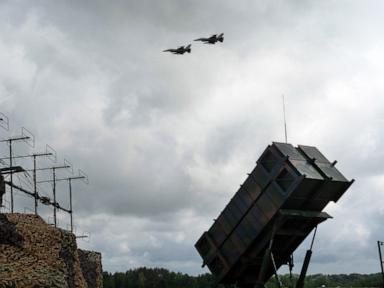
The military-industrial commentariat is having a collective meltdown over Donald Trump’s announcement at the NATO summit in Ankara. The president declared that the United States will grant Ukraine a license to manufacture its own Patriot missile interceptors. Within hours, the consensus solidified: "It will take years."
Analysts point to Germany, where a 2022 agreement to build PAC-2 GEM-T interceptors won't see its first delivery until 2027. They cite the extreme complexity of solid rocket motors, the classified nature of Boeing-built radar seekers, and the lack of pristine, clean-room infrastructure in a war zone. For a different perspective, check out: this related article.
This analysis is lazy, institutional thinking at its worst. It treats a nation fighting an existential war like a sleepy European bureaucracy filing environmental impact reports.
Ukraine is not Germany. Berlin operates on peacetime budgets, union-mandated work weeks, and multi-year procurement cycles. Kyiv operates on survival. If you think licensing Patriot production to Ukraine means building a five-billion-dollar, state-of-the-art factory from scratch in the middle of Kyiv, you fundamentally misunderstand how modern wartime manufacturing works. Further coverage on the subject has been published by The New York Times.
The FrankenSAM Blueprint Proves the Timeline is a Myth
I have watched Western defense contractors spend three years debating a wiring schematic change that a Ukrainian field engineer fixed with a soldering iron in three hours. The assumption that advanced military tech cannot be distributed or accelerated is repeatedly disproven by recent history.
Consider the FrankenSAM program. When Ukraine ran low on Soviet-era air defense ammunition, Western experts said integrating American RIM-7 Sea Sparrow missiles onto Soviet Buk launchers would take years of engineering reviews, software rewrites, and structural certification.
It took a few months.
They did the same with AIM-9M Sidewinders and older radar systems. They bypassed the traditional engineering pipelines because the alternative was destruction.
Wartime localization does not start with building raw components. Ukraine will not be smelting their own specialized alloys or growing their own semiconductor crystals for PAC-3 MSE seekers on day one.
The initial phase of licensed production is always completely focused on Final Assembly and Checkout (FACO).
Imagine a scenario where Lockheed Martin and RTX ship knocked-down kits—component bundles containing the seeker, the warhead, and the guidance system—to decentralized, underground facilities in Ukraine or Poland. Local technicians, who are already world-class experts at maintaining and repairing battle-damaged Patriot batteries, will handle the integration, assembly, testing, and fueling.
This drastically shrinks the timeline from half a decade to less than twelve months.
The White House Has Corporate Leverage
The second pillar of the "it will take years" argument is corporate resistance. Commentators note that Trump admitted he hadn't even informed Lockheed Martin or RTX before making the announcement in Turkey. Analysts assume these defense giants will drag their feet to protect their intellectual property and proprietary manufacturing techniques.
This ignores the reality of how the defense industry operates. The United States government is not just a customer; it is the regulator, the financier, and the ultimate arbiter of these companies' survival.
The White House holds massive leverage through the Defense Production Act and Foreign Military Sales (FMS) approvals. When a president tells a defense contractor that they are going to transfer a assembly license to an ally, the company does not negotiate. They send their engineers to the airport.
Furthermore, Lockheed and RTX are currently facing a massive backlog. Lockheed is trying to scale PAC-3 production to 2,000 missiles annually, but their domestic supply chains are choked by labor shortages and American regulatory overhead. Offloading final assembly and integration to a highly skilled, low-cost, and desperate Ukrainian workforce frees up domestic capacity for the Pentagon's own depleted stockpiles. It is a commercial win cloaked in geopolitical necessity.
The Distributed Factory Model
The most common objection is security. "How do you protect a Patriot missile factory from Russian ballistic strikes?"
You do not build a factory. You build a network.
Ukraine has spent the last four years mastering the art of the distributed workshop. They produce thousands of long-range strike drones and armored vehicles every month across hundreds of hidden, underground, or highly mobile sites. A single missile assembly line can be broken down into discrete modules:
- Module A handles wire harness integration in a reinforced basement.
- Module B tests guidance software in a repurposed civilian facility.
- Module C mates the solid rocket motor to the fuselage in a deep bunker.
A Russian reconnaissance satellite cannot target a factory that does not exist in one piece. This distributed manufacturing approach is inefficient in peacetime, but it is incredibly resilient under bombardment. The experts arguing that Ukraine lacks the "infrastructure" are looking for massive, centralized aerospace plants that belong in the twentieth century.
The Real Chokepoints Are Outside Ukraine
If you want to criticize the plan, look at the actual bottlenecks instead of repeating platitudes about technological complexity. The true risks to this plan do not lie within Ukraine's borders or their technical competence.
The vulnerability is the global supply chain for sub-components.
The solid rocket motors require specialized chemicals and propellants that are currently in short supply globally. The active electronically scanned array (AESA) components and high-frequency seekers rely on a tight network of suppliers in the United States and Japan. If Washington cannot resolve the domestic supply bottlenecks for these core sub-assemblies, it will not matter if Ukraine has the license or not. They cannot assemble kits that do not ship.
Acknowledging this limitation is vital. It means the success of the initiative hinges entirely on the administration's willingness to break through domestic red tape and force American suppliers to prioritize these component kits.
Stop Applying Peacetime Metrics to Total War
The conventional wisdom that Ukraine cannot produce Patriot interceptors in the near term is based on a fundamental misunderstanding of tech transfers during a conflict. It relies on the assumption that rules, procedures, and timelines established during peacetime procurement are immutable laws of nature.
They are not. They are bureaucratic choices.
When the alternative to rapid deployment is the systematic destruction of your energy grid and your cities, you find ways to compress five years of engineering bureaucracy into weeks of practical execution. Ukraine has the talent, the motive, and now the political clearance. The defense establishment needs to stop quoting peacetime manuals and start preparing for a highly accelerated, distributed assembly model that will shock the traditionalists.