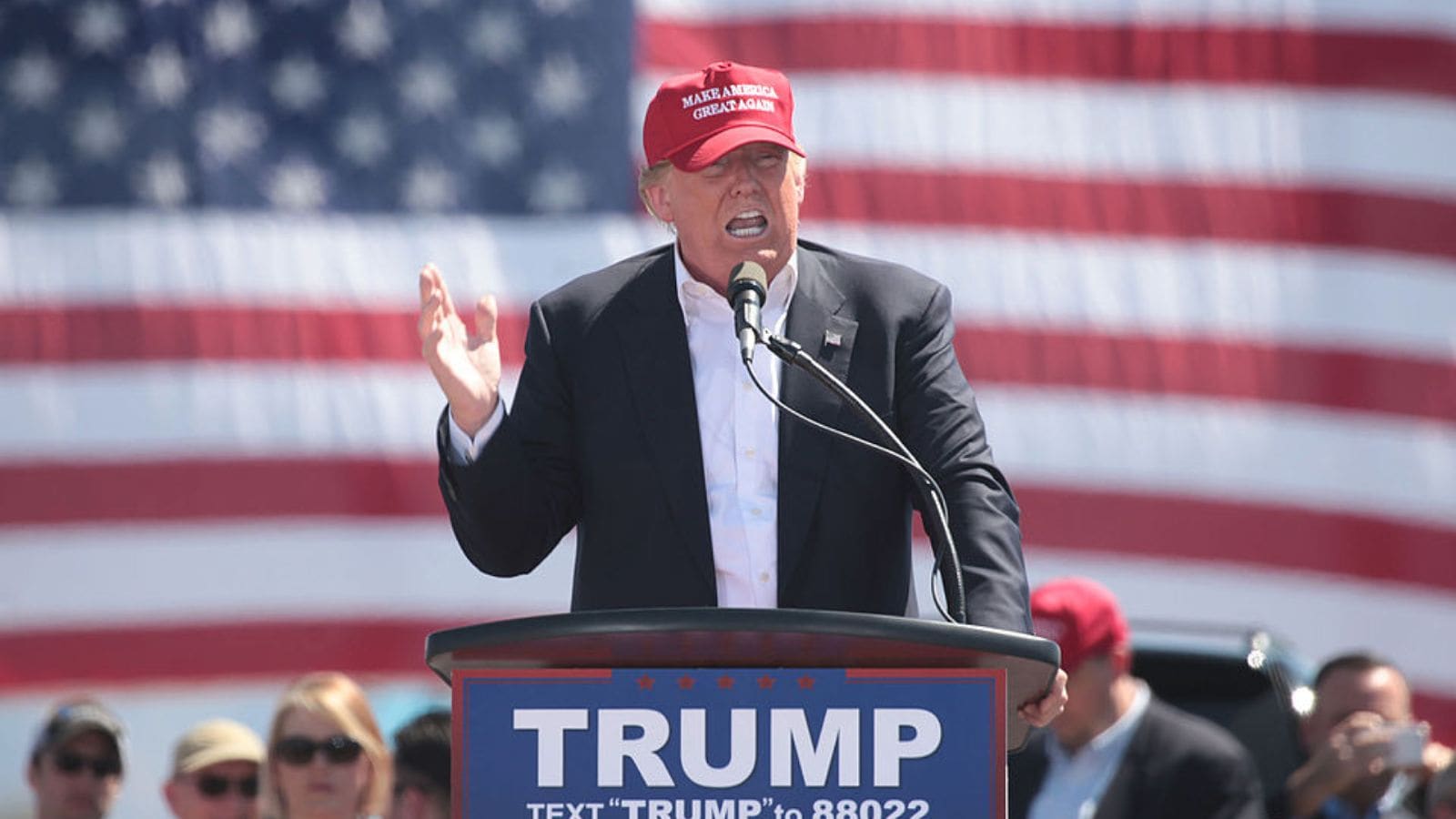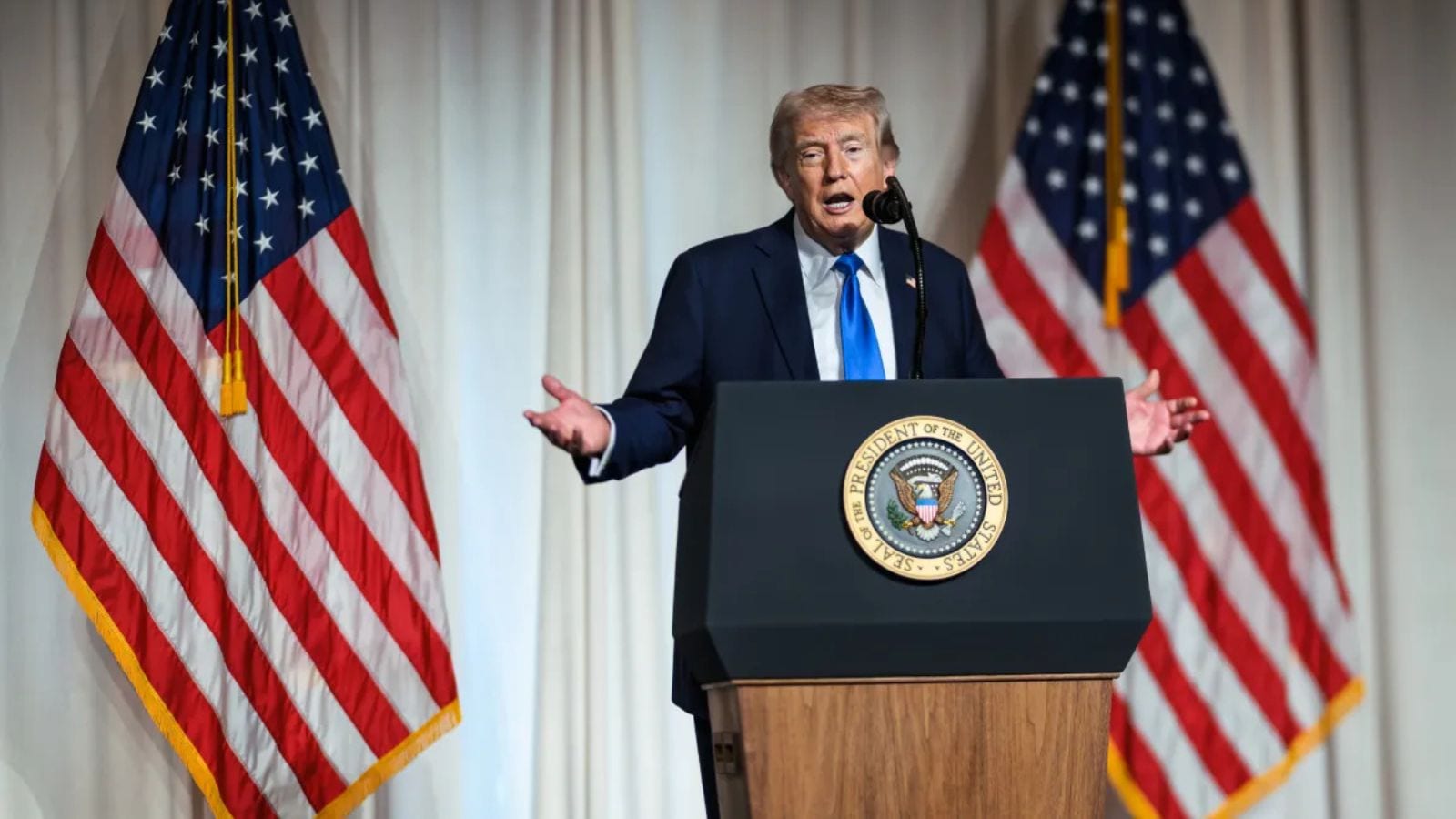
Every week, a fresh parade of solemn pundits hops onto podcasts and television specials to hyperventilate about the death of the American constitutional order. The narrative is as comforting as it is intellectually bankrupt: Donald Trump, operating as an anomalous wrecking ball, has supposedly unbound the executive branch, transforming a cooperative republic into an imperial throne.
This lazy consensus lets everyone avoid the hard truth. Trump did not invent the imperial presidency. He merely inherited a heavily weaponized, bloated machine built by decades of bipartisan cowardice, and he stopped pretending it was bound by gentlemen's agreements. For a different view, read: this related article.
If you want to understand why executive overreach feels terrifying right now, stop blaming one man's psychology and look at the structural decay that preceded him.
The Myth of the Golden Age of Checks and Balances
The standard media critique rests on a historical fairy tale. Pundits love to invoke a pristine era when Congress zealously guarded its legislative turf and the judiciary acted as an unyielding constitutional umpire. Related reporting on the subject has been provided by NBC News.
It is a fantasy.
The expansion of executive power did not begin when a populist orange-haired outsider took the oath. It accelerated in 1950 when Harry Truman committed American troops to Korea without congressional authorization, establishing the modern template for undeclared, executive-led military action. It expanded through the Cold War, institutionalized itself during the war on terror, and hit hyper-drive when Barack Obama famously operationalized his "phone and a pen" doctrine after facing a gridlocked legislature.
Arthur Schlesinger Jr. wrote the definitive book on The Imperial Presidency back in 1973, long before Trump ever descended a golden escalator. Schlesinger was talking about Richard Nixon, Lyndon Johnson, and the steady accumulation of unchecked war powers.
What we are witnessing today is not a sudden constitutional coup. It is the natural, inevitable maturity of a system where Congress willingly outsourced its hardest decisions to the executive branch because cowardly politicians preferred fundraising over voting on hard choices.
The Congressional Abdication Machine
Blaming the president for expanding power misses the core economic and political incentive structure in Washington. Congress does not want power. Power requires accountability.
Imagine a scenario where the legislative branch suddenly reclaims its constitutional authority, defunds unlegislated executive mandates, and forces every major trade, immigration, and regulatory shift through grueling floor votes. Lawmakers would actually have to take stances on contentious issues, risk primary challengers from their flanks, and do real work.
They refuse to do it.
For decades, both parties discovered that it is much easier to let the White House rule by executive order and administrative fiat. That way, a senator can scream into a microphone about border security or economic inequality while quietly voting to fund whatever emergency measure keeps the government running.
When commentators act shocked that a president uses Schedule F or sweeps aside bureaucratic resistance, they are ignoring how deeply the administrative state was designed to be commanded by whoever sits behind the Resolute Desk. The civil service was never a neutral, angelic priesthood; it was an unaccountable proxy army. When a president seizes direct control of it, he is simply exposing the reality that the executive branch has functioned as a fourth branch of government for half a century.
The Judiciary is Not Saving You
Another favorite crutch of establishment analysis is the pious belief that the courts will swoop in to restore balance. Watch how quickly that illusion shatters.
The Supreme Court did not create an imperial presidency out of thin air when it ruled on presidential immunity. It acknowledged a reality that legal scholars have danced around for generations: the executive branch cannot function if every policy decision is subject to retroactive criminal prosecution by political enemies.
You cannot have a unitary executive that handles global nuclear deterrence, economic sanctions, and mass deportations while simultaneously worrying about a local prosecutor indicting cabinet officials for policy implementation. The court didn't invent executive dominance; it merely put a legal label on a functioning reality.
When lower courts block administrative actions today, it looks like checks and balances in action. But it is usually just partisan forum shopping. Judges appointed by one party routinely enjoin policies of the opposing party, turning the federal judiciary into a high-stakes arena of political trench warfare. That is not constitutional purity. That is institutional decay wearing a black robe.
The Real Problem With Unbound Power
The danger of a powerful executive is not that it violates some sacred parchment. The danger is incompetence disguised as strength.
When power becomes hyper-concentrated in the White House, the quality of governance drops through the floor. Instead of robust debate involving hundreds of legislators, policy gets driven by whoever spent the last twenty minutes whispering in the president's ear before a social media post goes live.
We have traded a grinding, deliberative legislative process for a volatile cycle of executive whiplash. Every four to eight years, the entire apparatus of the federal government reverses direction on a dime. Foreign allies cannot trust long-term commitments. Domestic industries cannot plan capital investments because a single signature can upend supply chains overnight.
This is no way to run a global superpower. But it is the system we bought and paid for through our collective refusal to hold Congress accountable for its own constitutional laziness.
Stop waiting for a bipartisan savior to restore a mythical balance that never truly existed. The imperial presidency is here because it is convenient, efficient for partisans, and enabled by a legislature that abdicated its duty a generation ago. Until voters start punishing lawmakers for giving away their power instead of blaming the executive for taking it, the throne will only get bigger.