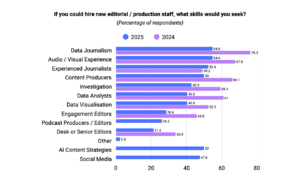
The industry loves a comfortable narrative. Drop a glossy white paper like the 2025 State of Asian Newsrooms report on any media executive’s desk, and you can set your watch for the response: wide-eyed panic over algorithms, hand-wringing about revenue models, and a desperate chorus chanting that generative tools will save an industry already bleeding out.
Forget the polite consensus. Most legacy publishing strategies across the continent are burning cash to chase phantoms, while the actual mechanics of audience survival are ignored.
I have watched traditional media corporations set millions of dollars on fire trying to buy digital transformation off the shelf. They hire consultants who have never written a headline, buy expensive workflow engines that reporters actively sabotage, and celebrate cosmetic pivots that leave their actual balance sheets in ruin.
Let us dismantle the core falsehoods driving contemporary media strategy.
The Myth of the Tech-First Silver Bullet
The lazy consensus claims that Asian newsrooms are falling behind because they lack advanced technical infrastructure or automated newsrooms. Look closer at the data, and you find a completely different reality. The bottleneck has never been code or compute. It is editorial courage.
Publishers spend endless hours obsessing over automated translation, headline-testing scripts, and algorithmic content delivery. Meanwhile, they alienate the very people who actually buy subscriptions: human beings who want original reporting, not sanitized text blocks generated by a language model trained on scraped press releases.
When a regional publication automates its way into algorithmic efficiency, it usually optimizes away its own unique value proposition. Imagine a scenario where every major daily in a competitive market deploys the exact same automated content-generation stack. Every feed turns into a homogenized echo chamber. The output looks clean, but nobody cares.
True differentiation does not come from doing the same thing faster using software. It comes from doing what machines cannot replicate: walking into a municipal building, looking a corrupt bureaucrat in the eye, and publishing documents they want buried.
Staffing Pressures are Self-Inflicted Wounds
Every annual industry report weeps about shrinking headcounts and talent drain. Newsroom executives love to blame external market forces, platform monopolies, and changing consumer habits for their personnel crises.
Let us call this what it is: passing the buck.
Talent is not leaving journalism because writing is suddenly unpopular. Young, sharp minds are fleeing traditional newsrooms because the management structure resembles a feudal estate. They are tired of working fifty-hour weeks for sub-market wages while upper management collects bonuses for launching failing video strategies.
When traditional publishers cry about talent shortages, they usually mean they cannot find cheap entry-level reporters willing to churn out ten rewritten aggregation pieces a day. Good journalists are out there, but they are building independent substacks, producing investigative podcasts, or working for nimbler digital startups that do not treat human capital like disposable printer ink.
If your newsroom cannot retain top-tier investigative talent, your problem is not a talent crisis. Your problem is a leadership crisis.
The Revenue Trap
Let us address the monetization panic. Publishers across the region are caught in a fatal loop between programmatic ad rates dropping off a cliff and paywalls that leak like screen doors on submarines.
The standard advice from industry analysts is to diversify revenue streams by launching events, e-commerce, and branded content studios. This sounds sophisticated in a boardroom presentation, but for most newsrooms, it is a fatal distraction. When a newsroom becomes a third-rate event planner or a glorified corporate PR shop, its credibility erodes.
Readers are not stupid. They can smell compromised editorial integrity from a mile away. If your investigative desk pulls punches on a major conglomerate because your commercial side is pitching them event sponsorships, your subscriber base will abandon you. And they should.
Sustainable revenue does not come from begging for platform handouts or putting up paywalls while offering commodity news anyone can read for free on social media. It comes from exclusive, high-impact journalism that people cannot get anywhere else. If you do not report anything worth paying for, no paywall architecture on earth will save your P&L statement.
Stop Chasing Trends and Fix the Core Product
The fixation on future-proofing has become an excuse to avoid hard choices today. Newsrooms spend months debating how to package short-form video for platforms that throttle referral traffic, while their core product—the actual written report—gets thinner, sloppier, and more derivative.
Let us look at what actually works. The publications thriving in this environment are not the ones with the slickest mobile apps or the most aggressive algorithmic distribution pipelines. They are the ones that ruthlessly trimmed administrative bloat, reinvested every possible dollar back into reporting muscle, and treated their audience with respect rather than as data points to be monetized by programmatic ad networks.
Stop trying to turn your newsroom into a tech company. You will lose every time against actual tech companies. Lean into the friction. Do the hard reporting that algorithms cannot touch, pay your staff like they matter, and stop pretending that a new workflow framework can compensate for a lack of editorial spine.
The industry does not need another roadmap for the future. It needs the guts to stop lying to itself about the present.