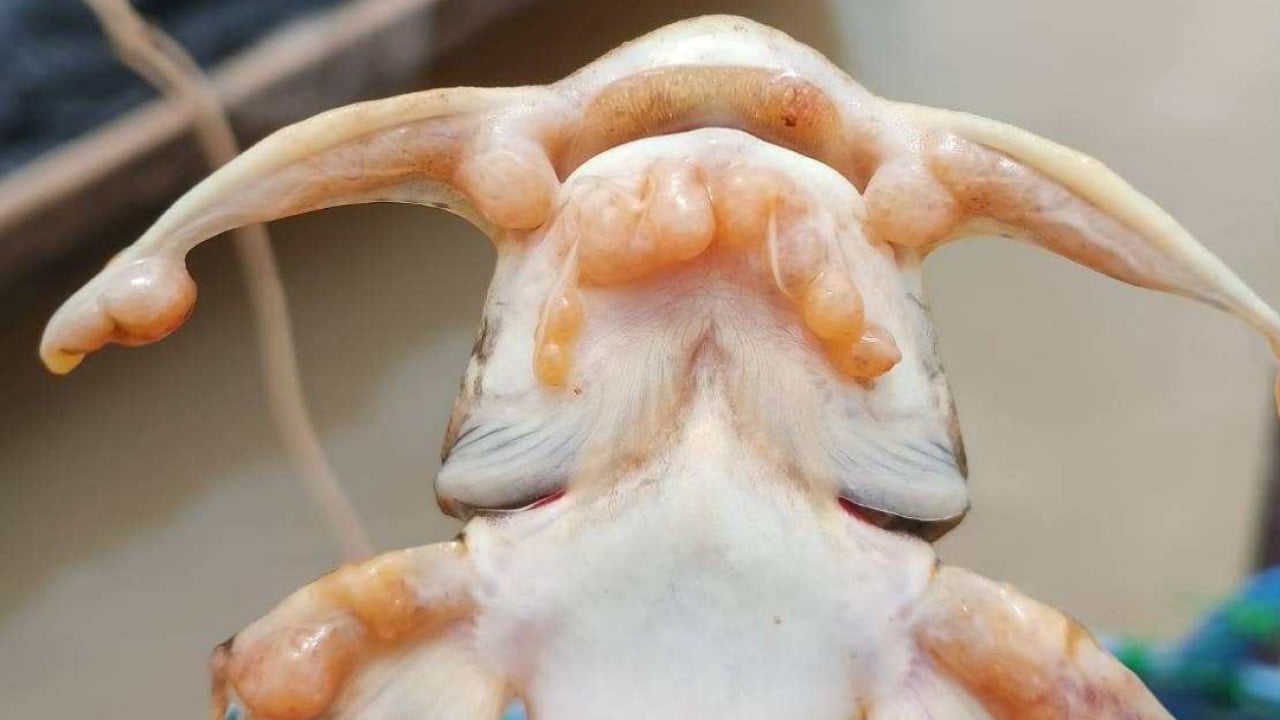
Fish don't normally rot while they're still swimming. Yet in Thailand's Chiang Rai province, fishermen pulling nets out of the Mekong River began finding catches covered in deep, bleeding ulcers, missing scales, and decaying patches of flesh. Locals quickly nicknamed them "zombie fish," and the internet did what it always does when a spooky wildlife headline drops. People panicked about nuclear waste, secret chemical dumps, and apocalyptic heavy metal poisoning.
Here's the reality. Those ulcerated fish aren't coming back from the dead, and the viral headlines oversimplify a much uglier, slower-moving environmental crisis. While heavy metals like arsenic, lead, and mercury are absolutely part of the story along the Mekong basin, blaming a single toxic spill misses the actual mechanism killing these fish. It's a combination of chronic industrial runoff, severe water-level manipulation from upstream dams, and opportunistic pathogens thriving in stressed ecosystems.
If you care about Southeast Asian ecology, regional food security, or how river systems collapse in real time, you need to look past the clickbait nickname. Let's break down what's actually happening beneath the surface of the Mekong.
Why Fishers Are Calling Them Zombie Fish
The name stuck because the visual is genuinely disturbing. When Thai villagers along the Chiang Khong district and neighboring stretches of the Mekong hauled in their traps, they found bottom-dwelling species—particularly catfish and carp—with necrotic lesions eating through their skin down to the muscle tissue. Some fish had eroded fins. Others had cloudy, sunken eyes or raw red sores along their flanks.
Despite looking half-eaten, the fish were still alive.
Local fishing communities immediately flagged the catch to Thai fisheries officials and environmental groups like the Rak Chiang Khong Conservation Group. Word spread fast across Thai social media before jumping into international news feeds. Suddenly, "zombie fish" became shorthand for an ecological emergency on one of the world's most vital waterways.
I've followed Mekong basin environmental reporting for years, and the pattern is always the same. Locals notice physical deformities first because their livelihoods depend on inspecting every single fish that comes out of the water. By the time mainstream media picks up a catchy nickname, the biological stress on the river has usually been building for months or even years.
The Heavy Metal Connection in the Mekong River
So where do heavy metals fit into this? They act as the silent setup man.
The Mekong River doesn't just flow peacefully through pristine jungle anymore. Starting as the Lancang River on the Tibetan Plateau, it winds through China, Myanmar, Laos, Thailand, Cambodia, and Vietnam. Along that 4,350-kilometer stretch, rapid industrialization, unregulated gold and rare-earth mining, agricultural pesticide runoff, and coal-fired power plants all dump trace pollutants into the watershed.
Heavy metals don't break down. Once arsenic, mercury, cadmium, or lead enters the river sediment, it stays there. Bottom-feeding fish—the exact species showing up with the worst "zombie" lesions—root around in that contaminated mud every day. Over time, these toxins bioaccumulate in their organs and tissues.
Here is how heavy metal exposure translates into rotting flesh on a living fish:
- Immune system collapse. Chronic exposure to low-to-moderate levels of arsenic and lead suppresses a fish's white blood cell count and strips away its protective outer mucus layer. That slime coat is a fish's primary barrier against the outside world.
- Opportunistic infections take over. Once that mucus barrier fails, common waterborne bacteria like Aeromonas hydrophila and fungi like Aphanomyces invadans (which causes Epizootic Ulcerative Syndrome) invade the skin.
- Tissue necrosis. The bacteria and fungi literally digest the living tissue while the fish swims, creating the open, rotting wounds that earned them their viral nickname.
Notice the distinction. Heavy metals rarely melt a fish's skin off on contact unless someone dumps raw industrial acid directly into a pond. Instead, heavy metals weaken the host until everyday river bacteria eat it alive.
What Most Coverage Misses About Upstream Dams and Mining
If you only read articles focused on heavy metals, you're missing half the picture. You can't talk about sick fish in northern Thailand without talking about water flow and upstream mining in Myanmar and Laos.
First, look at the tributaries. Several rivers feeding into the Mekong near the Golden Triangle—specifically the Kok River and Sai River flowing down from Shan State in Myanmar—have seen an explosion of poorly regulated mining operations. Environmental monitors and Thai authorities have repeatedly raised alarms over elevated arsenic and turbidity levels washing down from these cross-border mining zones straight into Chiang Rai's waterways. When heavy rains hit, mining tailings wash into the tributaries, spiking toxicity levels downstream.
Second, look at the hydropower dams. China operates a cascade of massive dams on the upper Mekong, and Laos has built several major mainstream dams as well. These dams trap nutrient-rich sediment and drastically alter the river's natural flood-pulse cycle.
Normally, the Mekong swells massively during the monsoon season and drops during the dry season. Dams flatten that curve or cause unnatural, rapid water fluctuations depending on electricity demand. For fish, erratic water levels and sudden temperature shifts cause extreme physiological stress. Stressed fish produce high levels of cortisol. High cortisol, just like in humans, tanks their immune response.
Put those factors together. You have fish trapped in unnatural water flows, choked by sediment changes, poisoned slowly by mining runoff, and exposed to warmer water temperatures that help bacteria multiply faster. Honestly, it's a miracle more fish aren't turning up with ulcers.
Is It Safe to Eat Fish From the Mekong Right Now
This is the real question behind almost every search on this topic. Roughly 60 million people in the Lower Mekong Basin rely on the river for food and income. Telling people "just don't eat the fish" isn't a realistic option when river catch is the primary source of protein for millions of families.
If you live in the region or are traveling through northern Thailand and Laos, you need practical risk management rather than blind panic.
First, never eat a fish displaying visible lesions, cloudy eyes, eroded fins, or abnormal slime coatings. Even if cooking kills the surface bacteria causing Epizootic Ulcerative Syndrome, an ulcerated fish is a biological red flag that its immune system has failed—meaning its internal organs likely carry higher concentrations of environmental toxins.
Second, pay attention to species and size. Heavy metals biomagnify as you move up the food chain. Large predatory fish and older bottom-dwellers accumulate significantly higher levels of mercury and lead than small, short-lived mid-water species.
Third, avoid eating fish organs, especially the liver and kidneys, as well as the head and skin. Heavy metals concentrate heavily in filtration organs rather than clean muscle fillets. Removing the skin and trimming away fatty belly tissue also reduces exposure to fat-soluble pollutants like agricultural pesticides.
How Thai Authorities and Researchers Are Responding
When the images of ulcerated fish went viral, Thailand's Department of Fisheries and the Pollution Control Department stepped in to collect water, sediment, and tissue samples along the affected stretches of Chiang Rai.
Testing river water for heavy metals is notoriously tricky, though. Water flows past. If a mining operation releases contaminated wastewater on a Tuesday, a water sample taken on Friday might look relatively clean while the heavy metals have already settled into the riverbed mud or absorbed into local wildlife. That's why fisheries biologists focus heavily on tissue biopsies and sediment core testing rather than just dipping a test strip into the current.
Local conservation networks haven't waited around for slow bureaucratic lab results. Groups like Rak Chiang Khong have spent decades documenting river changes, pressuring Bangkok to enforce stricter transboundary environmental agreements, and pushing the Mekong River Commission (MRC) to hold upstream developers accountable.
The problem is jurisdiction. The Mekong River Commission includes Thailand, Laos, Cambodia, and Vietnam, while China and Myanmar sit outside it as "dialogue partners." When toxic runoff originates in an unregulated mine in Myanmar or water levels drop because of a dam in Yunnan, Thai officials have zero direct enforcement power across the border. They can test the fish, issue health advisories, and lodge diplomatic complaints, but they can't shut down the source upstream.
Why This Matters Far Beyond Thailand
It's easy to read a story about weird-looking fish in a distant river and scroll past. That's a mistake. The Mekong is the world's largest inland fishery, accounting for roughly 15 to 20 percent of the global freshwater fish catch. When the Mekong's aquatic ecosystem starts showing visible signs of systemic breakdown, it threatens regional food stability across mainland Southeast Asia.
More broadly, "zombie fish" are an early warning system for how modern rivers fail. We rarely see dramatic, Hollywood-style environmental collapses anymore. Instead, we see death by a thousand cuts—a dam here, an unregulated gold mine there, agricultural runoff everywhere, and rising water temperatures tying it all together. The wildlife doesn't vanish overnight; it gets sick, deformed, and weak first.
If you want to keep track of what happens next on the Mekong, skip the sensationalist tabloids and follow the actual data coming out of regional watchdogs. Check the water quality reports published by the Mekong River Commission, follow independent cross-border environmental journalism from outlets like Mongabay, and pay attention to updates from Thailand's Pollution Control Department whenever heavy monsoon rains hit the Golden Triangle. Watching the water quality trends in the Kok and Sai tributaries will tell you far more about the river's future than another viral photo of a sick catfish ever will.