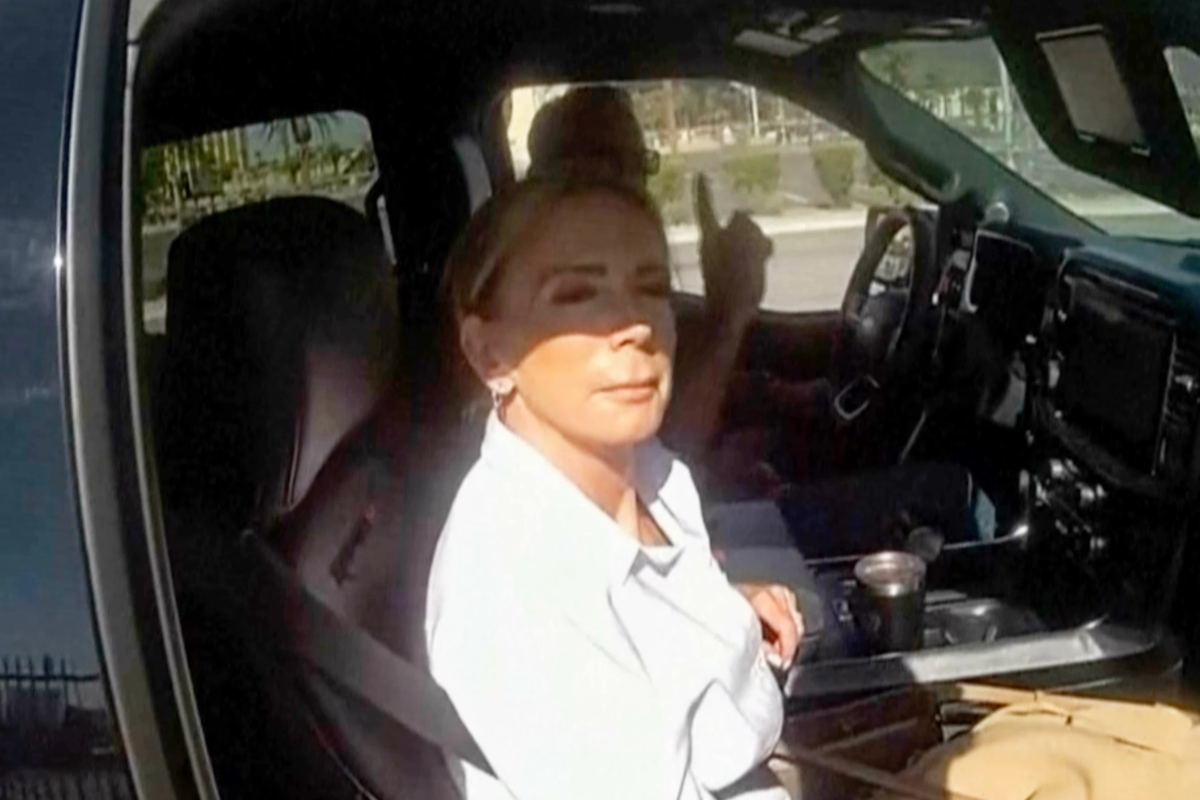
The internet is currently having a collective meltdown over a piece of bodycam footage.
The narrative is already set in stone: Nevada Governor Joe Lombardo got pulled over by a Las Vegas Metropolitan Police Department officer, drop-shipped his own name to escape a $305 ticket, groaned "come on, man," and drove away Scott-free. The comment sections are a toxic waste dump of predictable outrage. "Rules for thee, but not for me" is the rallying cry.
It is a beautiful, simple story of political corruption.
It is also completely wrong.
The manufactured outrage surrounding this 30-second interaction is a masterclass in civic naivety. The critics, the editorial boards, and the partisan finger-pointers are reacting to a fantasy version of how law enforcement operates. They are ignoring the institutional reality, the psychology of traffic stops, and the undeniable mechanics of professional discretion.
Let’s dismantle the outrage and look at what actually happened on that Las Vegas street.
The Illusion of the "Corrupt" Name Drop
The central thesis of the public flogging is that Lombardo weaponized his identity to bully an underling.
The Transcript:
Officer: "Sergeant Pacheco, Metro Police. The reason I’m stopping you is for the—"
Lombardo: "I’m Joe Lombardo."
Officer: "I’m aware."
Watch the tape. Lombardo didn’t pull out a laminated gubernatorial pass. He didn't demand the officer's badge number. He blurted out his name because the entire interaction was already swimming in a pool of profound absurdity.
To understand why, you have to look at who Lombardo is to that officer. Joe Lombardo isn't just the current Governor of Nevada. He was the elected Sheriff of Clark County—the head of the very department that pulled him over—for eight years.
Imagine pulling over your old CEO. The guy who literally ran your entire company, whose face was on every bulletin board for nearly a decade, and who now happens to be the governor of your state.
Are you going to pretend you don't know him?
Lombardo’s "I’m Joe Lombardo" wasn’t a demand for immunity. It was a verbal popped bubble. It was an acknowledgment of the giant pink elephant sitting in the cab of that truck. The officer's immediate "I’m aware" proves that the charade was already over before the window even rolled down.
The Myth of Uniform Enforcement
The loudest critics are screaming for "equal application of the law." They want a world where every single traffic infraction results in a carbon-copy fine, regardless of who is behind the wheel.
This world does not exist. It has never existed. And frankly, you do not want to live in it.
Police officers are not automated ticketing machines. They are vested with a massive tool called officer discretion.
Every single day, thousands of drivers are let off with warnings for running red lights, speeding, or failing to signal. The decision to write a ticket or issue a verbal warning is based on a chaotic cocktail of variables:
- The driver's attitude.
- Road conditions.
- Prior driving record.
- The officer's mood.
- Institutional affinity.
To pretend that Lombardo is the only person to ever get a break on a right turn on red is pure intellectual dishonesty.
| Factor | The Outrage Narrative | The Street Reality |
|---|---|---|
| The Stop | A brave cop holding a corrupt politician accountable. | A routine stop that instantly became an administrative nightmare. |
| The "Name Drop" | A corrupt power play to escape a ticket. | A blunt acknowledgment of an already awkward reality. |
| The Outcome | Proof of systemic corruption and elite privilege. | A standard application of police discretion applied to a former boss. |
The Sheriff Paradox: Why No Ticket Was Ever Going to Happen
Let’s talk about the unspoken rules of law enforcement culture.
Policing is built on rigid hierarchies and intense institutional loyalty. You do not ticket your former Sheriff. You do not ticket your current Governor.
If Sergeant Pacheco had written that ticket, it wouldn’t have been a triumph of justice. It would have been an act of performative insubordination. The blowback within the department for writing up the former top cop over a minor, non-accident traffic infraction would have been immediate, silent, and devastating to that officer's career trajectory.
The officer knew this. Lombardo knew this.
When Lombardo said "Come on, man," he wasn't threatening the officer. He was expressing the universal frustration of a guy who used to run the department wondering why one of his former sergeants was wasting time playing traffic cop with him on a Tuesday afternoon. It was a plea to skip the theater and get to the inevitable conclusion: "You're good to go, sir."
The Real Danger of the Outrage Machine
By focusing our collective anger on a minor traffic stop, we ignore the actual issues of power and governance.
We live in an era where politicians commit actual, catastrophic ethics violations. They engage in insider trading. They accept massive, dark-money campaign contributions. They redirect public funds to corporate donors.
Yet, the internet gets most fired up when a governor gets let off a $305 traffic ticket.
This is cheap anger. It requires zero critical thinking. It allows people to feel a surge of moral superiority without having to understand complex policy or systemic issues. It is junk-food journalism.
If you want to hold Joe Lombardo accountable, do it at the ballot box over his education policies, his vetoes, or his economic plans. Don't do it because a cop decided not to give his former boss a ticket for failing to come to a complete stop before making a right turn.
Stop expecting politicians to be saints, and stop expecting police officers to act like unfeeling robots. The traffic stop was awkward, sure. But corrupt? Not even close. It was just another day in the messy, human, compromise-filled reality of the real world.
Stop crying about it.