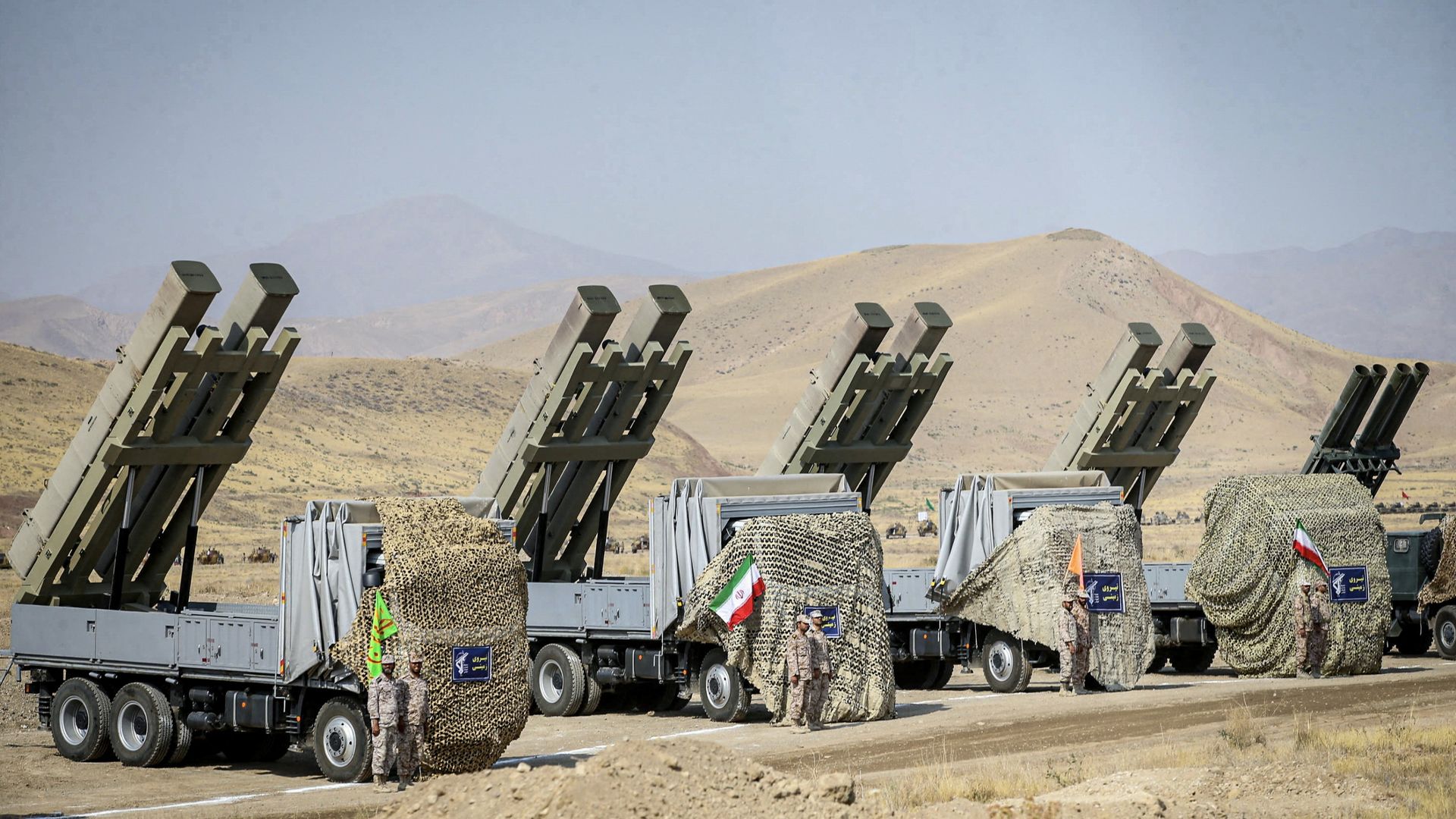
The headlines write themselves on a loop. Tehran issues a stern warning. State media broadcasts footage of underground missile silos. Analysts on cable news furrow their brows, dissecting every translated syllable for hidden meaning, treating diplomatic saber-rattling like tea leaves that can predict tomorrow's market crash or military mobilization.
It is theater. Expensive, high-stakes theater designed for domestic consumption and foreign distraction.
Every time Washington signals a potential shift in posture or hints at resuming kinetic pressure, the knee-jerk reaction in foreign policy circles is to treat the Islamic Republic's response as an existential calculation. We assume rational deterrence models apply cleanly. We assume their threats of retaliation are blueprints rather than bargaining positions.
I have spent decades watching defense contractors and intelligence desks misread this exact dynamic. We look at the flash and miss the fuse. The lazy consensus says that a warned adversary is a constrained adversary, that a public threat acts as a brake on escalation. History demonstrates the exact opposite. When a regime starts shouting from the rooftops about impending action, it usually means their internal calculus has nothing to do with external foes and everything to do with keeping the palace secure from within.
Let us dismantle the core misconception driving the current news cycle: the idea that public warnings from Tehran signal operational readiness.
In actual security architecture, when a state prepares to strike or absorb a blow, silence is the doctrine. Silence preserves surprise. Silence protects telemetry. When military commanders want actual deterrence, they move assets quietly, harden communications, and let whispers do the heavy lifting. Megaphone diplomacy is not a precursor to conflict; it is a substitute for it. It is what happens when economic strangulation and internal friction leave a government with few functional levers outside of rhetoric.
To understand why Washington's rumored posture shifts matter—and why Tehran's warnings are fundamentally a smoke screen—we have to look past the missile parades.
The real friction point is not about what happens in the Strait of Hormuz or proxy networks across the Levant. Those are proxy battlegrounds, symptoms of a deeper structural rot. The real vulnerability for Tehran is financial oxygen. Decades of sanctions have not produced a popular revolution, but they have hollowed out the state's capacity to subsidize its own patronage networks. When the currency loses its moorings and domestic strikes shift from sporadic outbursts to persistent background noise, the ruling class stops worrying about foreign adversaries. They start worrying about the guy with the assault rifle standing outside the central bank.
When American planners hint at ramping up pressure, they are not dusting off invasion plans. That playbook belongs in a museum. Instead, the real mechanism of modern statecraft is invisible. It lives in algorithmic trade surveillance, enforcement of secondary sanctions on ghost fleets, and digital infrastructure disruption. You do not telegraph a cyber offensive or a financial choke-point squeeze with a press conference. You just flip a switch and let the target figure out why their shipping manifests are suddenly routing through empty ports.
This is where the conventional analysis collapses entirely.
Commentators love to frame geopolitics as a chess match between two rational players moving grand pieces across a board. That model is a fantasy. Foreign policy is closer to a multi-player knife fight in a dark room, where half the participants are stabbing their own allies to stay upright. Tehran's fiery rhetoric is aimed inward, designed to manufacture external unity while the domestic plumbing rusts through.
Admitting the limits of our own intelligence is a good place to start fixing how we cover these crises. I have seen intelligence assessments cost corporations billions because analysts mistook political theater for strategic intent. We build complex risk models around public threats while ignoring the mundane, grinding reality of logistical decay.
If you want to know what happens next, stop listening to the state television broadcasts out of West Asia. Stop trying to parse whether a diplomatic warning is a yellow light or a red one. Look at inflation rates, fuel subsidies, and internal security deployments. Those are the metrics that dictate survival. Everything else is just noise meant to keep you staring at the wrong horizon.