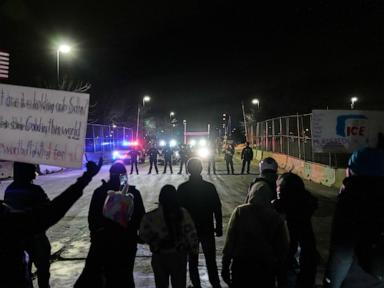
Whenever documents drop showing law enforcement tracking progressive groups and labor unions, the immediate reaction follows a predictable, exhausted script. Civil liberties advocates clutch their pearls. Op-eds warn of an authoritarian creep strangling dissent. Social media fills with breathless comparisons to the dark days of COINTELPRO, painting modern activists as the helpless victims of an overreaching police state.
It is a comfortable narrative. It is also fundamentally lazy.
Strip away the righteous outrage and look at the actual mechanics of state monitoring, and a much sharper, more uncomfortable reality emerges. The state is not tracking these groups because it fears their revolutionary potential. It is tracking them because modern intelligence gathering is automated, bureaucratic, and utterly indiscriminate. Activists love to imagine themselves as the vanguard of a radical shift, targeted because they hold the levers of real power. But treating every routine fusion center brief or keyword scraper as a targeted assassination of political free speech misdiagnoses the disease.
You are not being watched because you are dangerous. You are being watched because you are noisy.
The Myth of the Sophisticated Threat
The lazy consensus relies on a grand conspiracy theory: that intelligence analysts sit in dark rooms plotting how to crush the labor movement or neutralize climate organizers. Having spent years watching how government agencies operate from the inside, I can tell you the truth is far more mundane and far more depressing.
It is run by interns, contractors, and mid-level bureaucrats drowning in open-source data.
When a joint terrorism task force or a state fusion center flags a progressive coalition or a union rally, it rarely starts with a directive from a high-ranking official saying, "Go get those socialists." It starts with an algorithm sweeping up public Facebook events, hashtag volumes, and permit filings. A database flags a spike in keyword mentions. A bored analyst copies and pastes it into a weekly threat assessment report to justify their budget.
By framing this as a targeted ideological war, critics grant the state an aura of omnipotence it has not earned. They mistake administrative incompetence and digital dragnet vacuuming for targeted political suppression. This matters because when you misidentify the problem, your solution is always wrong. Fighting algorithmic dragnet collection by shouting about fascism misses the technical reality that the machinery does not care what your politics are. It only cares about volume, metadata, and geographical clusters.
Unions, Activism, and the Bureaucratic Grind
Labor unions and progressive organizations love to wrap themselves in the mantle of historical resistance. They invoke the memory of union organizers being beaten by Pinkertons, drawing a direct line from the bloody battles of the early twentieth century to a suburban permit protest outside a state capitol.
Let us be brutally honest. A modern labor rally featuring permit negotiations with local police departments, pre-approved march routes, and live-streamed TikToks is not an underground insurgency. It is a managed event.
When intelligence agencies monitor these spaces, they are not looking for revolutionary blueprints. They are looking for logistics. They want to know crowd sizes, traffic disruptions, and whether a splinter faction might break off from the permitted route to spray paint a municipal building. Conflating municipal traffic management and crowd control intelligence with targeted political persecution is a marketing strategy for fundraising emails, not an accurate read of state capabilities.
The uncomfortable truth is that unions and activist groups generate massive digital exhaust. They coordinate on public platforms, organize via mass emails, and broadcast their locations to anyone with an internet connection. If you broadcast your entire operational footprint across commercial networks that sell data to data brokers who then license it to law enforcement, you do not have a privacy crisis. You have a literacy crisis.
The Real Danger Is Not Surveillance, It Is Irrelevance
Focusing purely on the fact that the state is watching creates a paralyzing victim mentality. It suggests that any political action is futile because Big Brother is tracking every flyer distribution and banner drop.
That is false, and worse, it is an excuse.
The state does not need to suppress progressive movements when those movements spend all their energy tilting at administrative windmills. While organizers spend months drafting outraged press releases about routine intelligence gathering, actual structural power is shifting elsewhere. Tech monopolies write the rules of digital assembly. Private data conglomerates map human behavior with a granularity the FBI could only dream of in the 1970s.
When you scream about a local police department reading your public tweets, you are shouting at a security guard while the bank vault is being emptied out the back.
Real security in the digital age does not come from begging the state to stop looking. It comes from accepting that transparency is the default state of modern public organizing and building operational resilience anyway. It means moving away from commercial platforms that monetize dissent. It means treating digital hygiene as a core competency rather than an afterthought for tech-phobic organizers who still think a password written on a sticky note is secure.
Stop demanding that the government be polite. Start operating as if you have zero privacy, because you do. The moment progressive movements stop playing the victim of state oppression and start treating state surveillance as the background noise of a digital panopticon is the moment they might actually build power that matters.