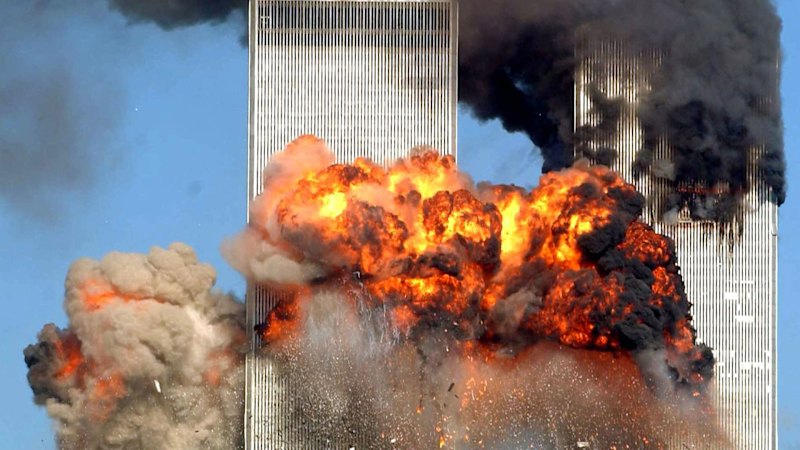
We love our minute by minute timelines.
Every single anniversary, media outlets roll out the same sterile, chronologically organized autopsy of September 11, 2001. 8:46 a.m. American Airlines Flight 11 hits the North Tower. 9:03 a.m. United Airlines Flight 1805 hits the South Tower. 9:37 a.m. Flight 77 strikes the Pentagon. 10:03 a.m. Flight 93 goes down in Shanksville.
It reads like an air traffic control logbook. It gives us the comforting illusion of sequence. It tells us that history happened in a neat, linear fashion, clock tick by clock tick, as if we were watching a thriller movie with a timestamp in the corner of the screen.
It is a comforting lie.
By reducing the worst terrorist attack on American soil to a breathless second-by-second countdown, we miss the actual architecture of the disaster. We confuse chronology with comprehension. We focus on the seconds while completely ignoring the institutional failures, the bureaucratic molasses, and the cognitive biases that turned a series of hijacked airplanes into a generational geopolitical trauma.
Stop reading the timelines. They are making you dumber about what actually went wrong that morning.
The Chronology Trap
The lazy consensus of mainstream journalism treats September 11 as an engineering problem gone wrong or a sudden lightning bolt out of a clear blue sky. The timelines reinforce this. They present each event as an isolated node: At 8:50 a.m., FAA personnel did X. At 9:01 a.m., NORAD did Y.
This is historical malpractice.
When you organize a tragedy by the clock, you imply that actors at every level possessed real-time clarity. They did not. For the first hour of the attack, the air traffic control system, the military radar infrastructure, and federal law enforcement were operating in a fog so dense it defies easy imagination.
Civilians sitting at home with twenty years of hindsight look at a timeline and scream at their screens. Why didn't they scramble jets faster? Why didn't NORAD intercept United 175 over New Jersey?
This is presentism at its most arrogant. The system was built for Cold War threats coming from over the polar ice caps, outward-facing toward Soviet bombers. It was not built to track domestic flights turning off their transponders over Ohio. Blaming individuals for failing to follow a minute-by-minute script ignores the fact that the script didn't exist for this scenario.
The Myth of the Instantaneous Decision
Let us look at the operational reality of that morning.
In command centers across the Northeast, people were staring at primary radar targets—blips with no altitude data, no transponder codes, and no flight identification. Imagine a scenario where you are sitting at a console in Boston Center or New York Center, and airplanes are simply vanishing from your digital scope while erratic reports drift in from flight attendants calling from cell phones that weren't even supposed to work at cruising altitude.
The timelines skip over the human paralysis. They pretend decision-makers moved like chess grandmasters making calculated moves every sixty seconds.
In truth, decision-makers were drowning in noise. False reports flooded the FAA and military command posts. At various points that morning, authorities chased phantom hijackings from Boston to California. Airspace management dissolved into a chaotic parlor game of telephone where rumors traveled faster than verified facts.
By treating the morning as a clean sequence of timestamps, timeline journalism airbrushes the administrative chaos. It lets the institutions off the hook by pretending everyone knew what was happening while it was happening.
They didn't. And pretending they did prevents us from fixing the real vulnerabilities in our current security apparatus.
Institutional Failure is Not a Watch Tick
The obsession with the clock hides the deeper rot: bureaucratic stovepiping.
Before 8:46 a.m. on September 11, the barrier between domestic intelligence and foreign intelligence was not just a wall; it was a moat filled with alligators. The FBI and the CIA were playing a high-stakes game of bureaucratic keep-away, hoarding intelligence memos like baseball cards.
A minute-by-minute breakdown of the actual attacks does not capture the months of missed signals in Kuala Lumpur, Phoenix, and Minneapolis. It starts the story when the landing gear leaves the runway, completely bypassing the systemic incompetence that allowed the plot to incubate in plain sight.
Focusing on the timeline is a brilliant evasion strategy for the establishment. It focuses your attention on the 102 minutes between the first impact and the collapse of the South Tower, rather than the preceding five years of inter-agency rivalry and intellectual laziness.
When you ask people what went wrong on 9/11, they point to the lack of fighter jets over Manhattan at 9:02 a.m. That is the wrong question. The right question is why an immigration system, a visa vetting process, and a federal investigative apparatus failed to connect dots that were drawn in bright red ink.
The Danger of Nostalgic Trauma Porn
There is another dark side to the minute-by-minute format: it has morphed into a form of historical true-crime entertainment.
We consume the audio logs, the dispatch transcripts, and the cockpit voice recorders like voyeurs looking for a thrill. We parse the final words of flight crews and passengers as if they are clues in a mystery novel. This turns solemn historical analysis into emotional pornography.
It paralyzes national discourse. Whenever anyone tries to rationally evaluate the massive overreach of the post-9/11 national security state—the warrantless wiretapping, the creation of the Department of Homeland Security, the PATRIOT Act—defenders of the status quo drag out the emotional bludgeon of the timeline. They recount the exact minute the towers fell to shut down debate about whether our security responses actually made us safer or just more paranoid.
We are trapped in a perpetual reenactment. Every September, we hit play on the same digital tape, watch the same towers burn in high-definition loop, and feel the exact same spike of national cortisol.
It feels like remembrance, but it functions as amnesia. It stops us from asking whether the multi-trillion-dollar security apparatus built in the wake of those minutes actually prevented future threats or merely bureaucratized our fear.
Breaking the Loop
If you want to honor the reality of September 11, throw away the stopwatch.
Stop looking at the day as a domino chain where one minute triggers the next. Look at it as the convergence of structural frailties that had been accumulating for decades. Look at it as a failure of imagination at the highest levels of government, paired with an extraordinary display of decentralized human courage at the lowest levels—the firefighters, the port authority officers, and the passengers on Flight 93 who acted without waiting for permission from a chain of command that had already shattered.
The heroes of that day did not check a timeline. They improvised in the dark.
It is time for the rest of us to step out of the dark and stop watching the clock.