The media narrative following the chaotic scene at the Canfield Fair is built on a foundational lie of modern political theater: that a guy carrying legally owned hardware while plowing through a tent full of pensioners constitutes a textbook political assassination attempt.
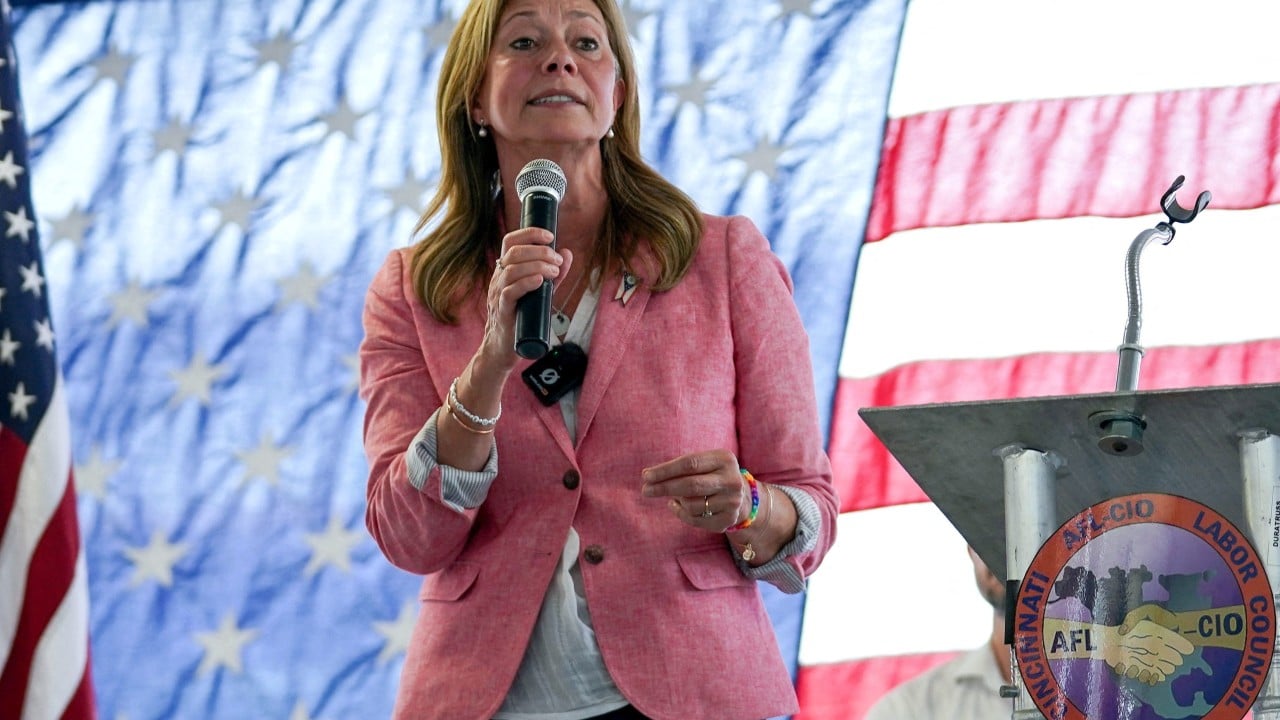
Let us look at the actual facts stripped of partisan hysteria. Patrick Havas didn't pull a weapon. He didn't brandish a firearm. He possessed two legal handguns and a taser, shoved his way aggressively toward Democratic gubernatorial candidate Amy Acton while holding up a cell phone, and knocked down elderly attendees in the process. He was booked on misdemeanor assault and disorderly conduct.
Yet within minutes, the digital commentariat and institutional mouthpieces spun this into a grand saga of domestic terror and democratic peril. Both sides rushed to issue identical, focus-grouped statements condemning the "violence". They are selling you a comforting fiction. They want you to believe we are living in an era where every localized scuffle is an existential crisis for the republic.
The lazy consensus is that open-air political retail politics has become uniquely fatal, requiring an iron wall of security around every candidate who dares to eat a corn dog in public. That conclusion is wrong, lazy, and dangerous.
The Myth of the Soft Target
We have cultivated an absurd security theater complex that treats normal public interactions like high-threat diplomatic missions. When a man shoulder-checks his way through a crowded partisan tent to chase internet clout or create a localized disturbance, calling it an "asssassination attempt" misdiagnoses the pathology entirely.
Let us define terms accurately. Political violence requires intent to coerce political change through physical harm or destruction. A clout-chasing agitator plowing through a crowd with a phone in one hand and holstered gear he never touched is a public order nuisance. Treating him like a seasoned insurgent elevates a low-level disorderly conduct suspect into a historical villain.
When you inflate a misdemeanor into a civil war preview, you achieve two perverse outcomes. First, you incentivize copycats who crave that exact scale of mainstream infamy. Second, you give risk-averse campaign managers the excuse they want to lock candidates inside armored bubbles, completely severing them from actual human interaction.
The Retail Politics Trap
Campaigns love these incidents because they serve as instant fundraising fuel. Within hours of the Canfield Fair chaos, donation text blasts were flying. The automated outrage machine requires a steady diet of near-misses to keep checkbooks open.
Imagine a scenario where the media simply reported the event for what it was: a local disturbance managed effectively by state troopers and county deputies, resulting in immediate misdemeanor charges for a guy with poor impulse control. No national hysteria. No emergency statements from opposing campaigns. Just baseline law enforcement handling local lawlessness.
Instead, we get breathless updates treating an un-brandished firearm as proof that the social fabric is shredding. Ohio's open-carry and concealed-carry laws mean that at any crowded county fair, a significant percentage of the attendees are packing hardware legally. If every time someone acts like an aggressive jerk near a politician, we treat it as an existential threat, we are signaling that civil society cannot handle public friction.
The Real Danger Is the Bubble
The institutional reaction to these events creates a feedback loop of alienation. Candidates retreat further behind glass shields, private security cordons, and curated digital spaces. They stop talking to regular voters who might be angry, erratic, or abrasive.
Democracy survives on friction, not sterilization. When public figures insulate themselves from the raw, unscripted reality of everyday citizens, they lose touch with the baseline grievances powering our current political volatility.
Stop demanding that every county fair be turned into a fortified green zone just because a few adults forgot how to behave in public. The solution to a man shoving people in a partisan tent isn't less access; it's arresting the offender, treating the local injuries, and getting back to the microphones without a national panic attack.
Give the public some credit, ditch the trauma porn, and let candidates walk through a crowd without treating every aggressive loudmouth like a historical turning point.