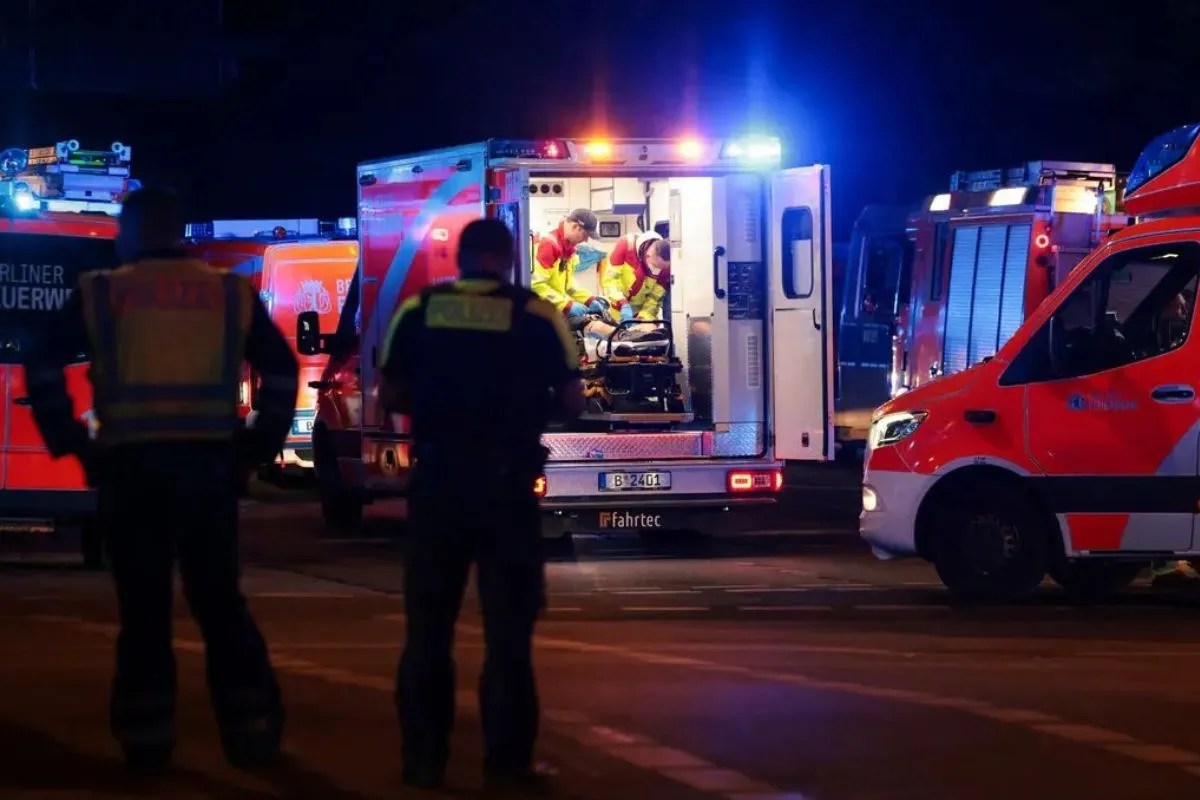
The media coverage surrounding the Berlin Pride vehicle incident follows a tired, predictable playbook. A tragedy occurs, mass gatherings are instantly branded as sitting ducks, and editorial boards rush to demand more concrete barriers, heavier policing, and total urban lockdown. This lazy consensus treats public celebration like a security liability waiting to be exploited.
Stop accepting the narrative that urban joy requires militarized fortification to survive.
When a vehicle breached the parade perimeter, the immediate reflex across newsrooms was to sound the alarm on crowd safety protocols. They missed the structural reality of modern urban vulnerability entirely. Physical bollards and armed guards do not solve the root pathology of reckless driving or intentional vehicular attacks in densely populated zones. They merely shift the risk profile elsewhere while transforming open cities into sterile, defensive compounds.
The Illusion of Fortress Urbanism
I have spent years consulting on large-scale urban event logistics. I have watched municipal governments blow millions of euros on temporary concrete blocks and panic-driven road closures that achieve exactly one thing: choking pedestrian flow while offering zero actual deterrence against a determined actor.
Fortress urbanism fails because cities are fundamentally designed for movement, connection, and density. The moment you attempt to turn a festival route into a demilitarized zone, you surrender the very essence of public space.
Consider a scenario where every major European boulevard is permanently cordoned off with steel-reinforced anti-ram barriers for every weekend gathering. You eliminate vehicular access, yes. You also create chokepoints that trap thousands of pedestrians during a routine medical emergency or stampede, rendering evacuation logistics an absolute nightmare.
The mainstream press focuses on the weapon because it is tangible. A car crashing into a crowd is visceral. It makes for terrifying footage and high-engagement clickbait. But fixating on the tool ignores the systemic failures of municipal traffic governance, driver vetting, and emergency response speed.
Dissecting the Panic Narrative
Let us look closely at how these incidents are reported. The standard formula reads like an incident report mixed with a civic obituary. Details of the crash, casualty counts, a frantic search for the driver, and mandatory quotes from local politicians expressing deep shock.
What is missing? A frank assessment of why inner-city streets remain open to high-speed transit arteries right up until the exact hour a massive cultural event kicks off.
Municipal planners treat traffic management and public events as two separate silos. They issue permits for Pride parades, marathons, and street festivals, then hand the traffic management over to standard civil departments that treat crowd protection as an afterthought rather than a primary engineering constraint.
When a driver crashes into a crowd, the media screams about security lapses. The real failure is spatial design. We design streets that prioritize throughput for heavy vehicles over the safety of human feet on pavement. Until cities redesign their core transit grids to naturally slow traffic year-round through permanent pedestrianization and intelligent micro-zoning, temporary barricades are nothing more than theatre.
The Cost of Over-Policing Public Joy
There is a darker, often ignored trade-off to the demand for heightened security at marginalized community events. More police presence and heavy perimeter fortification do not automatically translate to safety for everyone in attendance.
For many attendees, particularly those from immigrant backgrounds or minority communities, an overwhelming show of state security forces creates its own form of hyper-vigilance and anxiety. You cannot foster a liberating environment of self-expression when participants feel like they are processing through a checkpoint.
When security budgets balloon to accommodate endless threat vectors, the money is pulled away from community support systems, mental health crisis response teams, and public infrastructure that actually reduces societal friction. We are spending fortunes on the symptom while starving the cure.
Rethinking Event Security from the Ground Up
If we want to stop these tragedies, we have to abandon the knee-jerk call for more walls and stricter bans.
- Decouple Transit from Event Zones Permanently: Stop relying on temporary road closures implemented hours before an event. Major cultural corridors should feature built-in, passive traffic calming measures, such as raised intersections, narrow lanes, and retractable bollards integrated into the municipal grid, making accidental breaches physically impossible without active system override.
- Prioritize Behavioral Detection Over Hardening: Static concrete blocks do not think. Trained, plainclothes crowd-safety spotters integrated directly into community organizations can identify erratic behavior, medical distress, or vehicle anomalies long before a breach occurs.
- Hold Municipalities Accountable for Infrastructure: Stop blaming organizers for failing to secure public streets that the city itself designed for high-speed vehicular traffic. Cities that grant permits for massive pedestrian gatherings should bear strict liability for failing to provide safe, geometrically protected spatial layouts.
The outrage cycle following the Berlin incident will fade the moment the next news cycle takes over. City councils will quietly pack away their temporary barriers until the next calendar date rolls around, changing nothing about how our streets are built.
Tearing down the illusion of safety is uncomfortable, but clinging to it is lethal. Tear up the asphalt, narrow the roads permanently, and stop treating public celebration as an operational hazard.