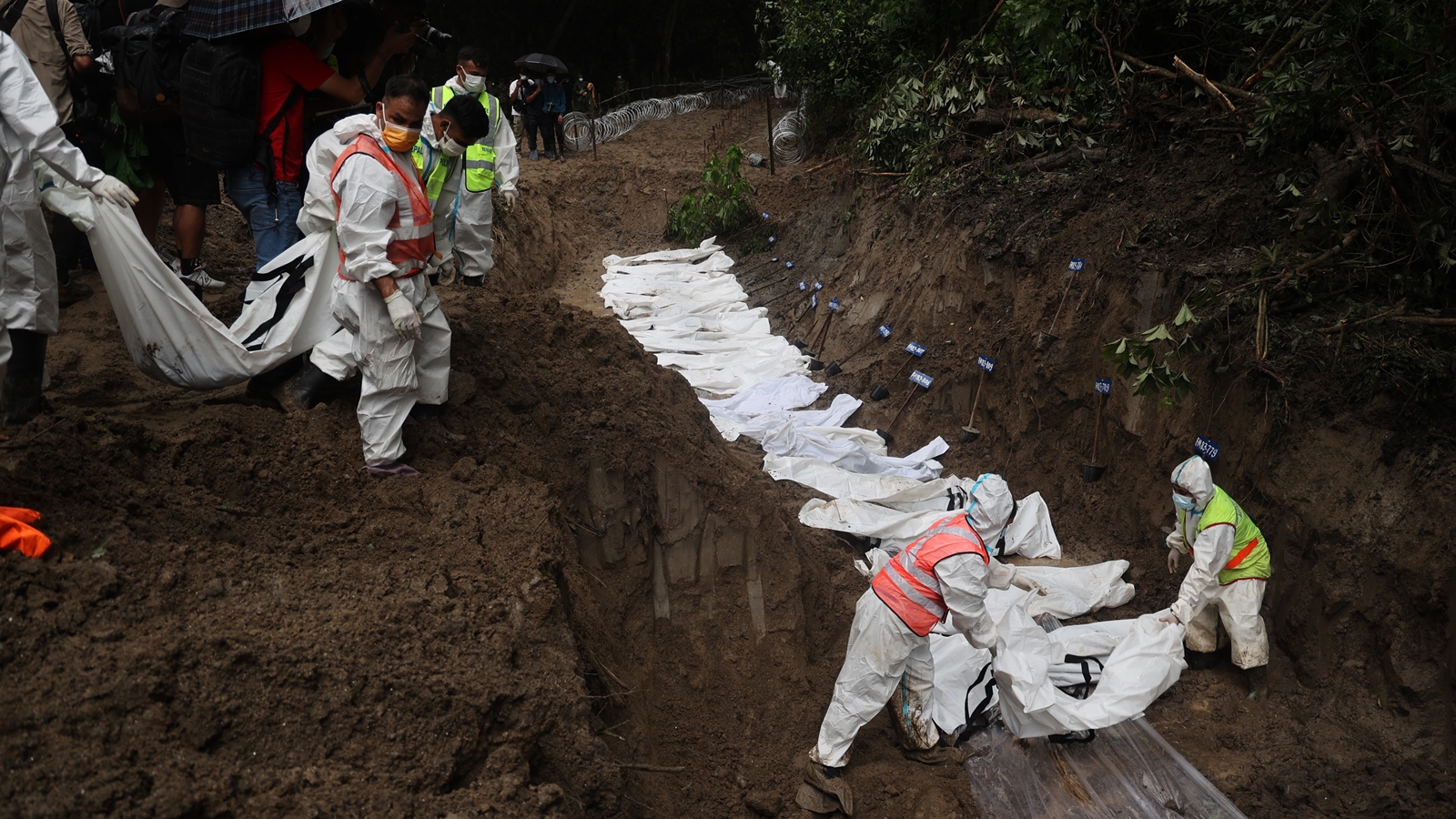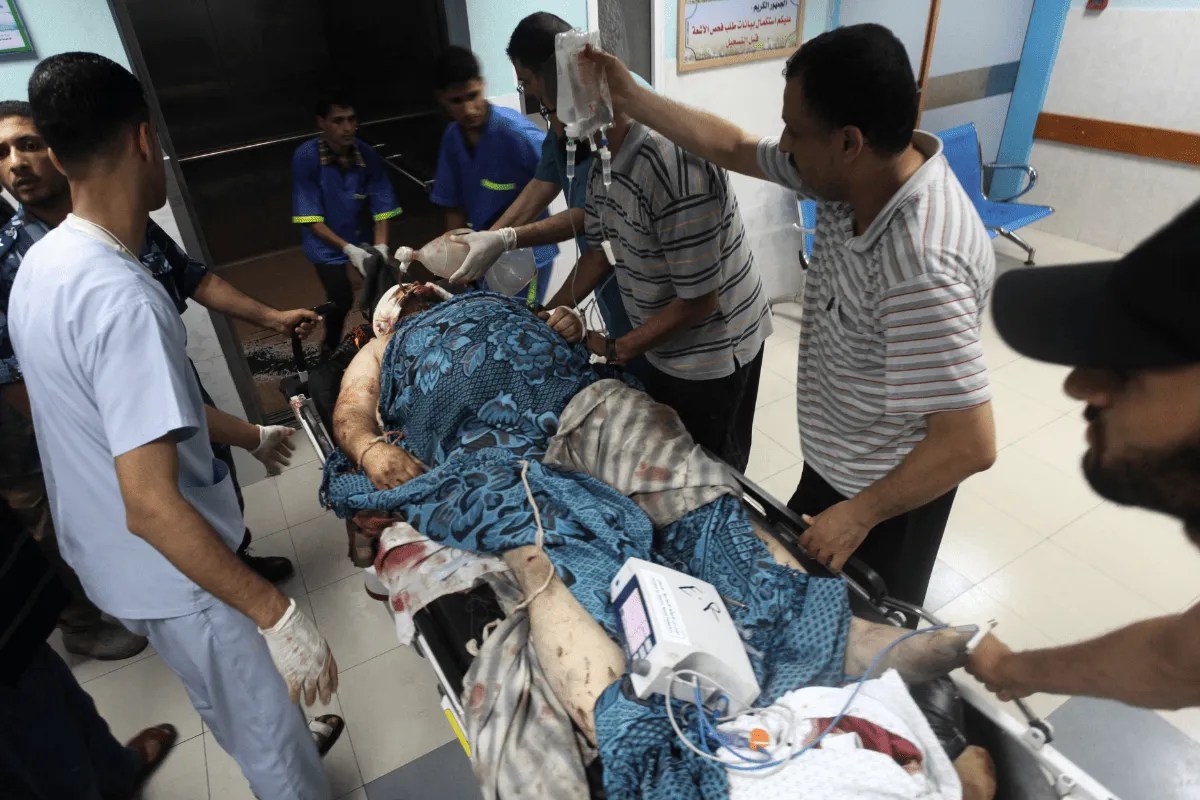
The headlines scream about evacuation orders. They show panicked crowds, flashing ambulance lights, and military ultimatums delivered via dropped flyers and phone calls. The narrative presented by mainstream outlets is neat, tragic, and fundamentally superficial. It frames the crisis in Gaza around a logistical tug-of-war: an army telling medical staff to clear out, and doctors refusing to abandon patients on ventilators.
Everyone is arguing about the logistics of moving sick people under fire. They are fighting over corridors, fuel supplies, and international law.
They are arguing about the wrong thing entirely.
Focusing exclusively on whether an evacuation order is humane or feasible misses the underlying structural mechanics of modern urban combat. In asymmetric warfare against entrenched non-state networks, hospitals are not just civilian sanctuaries caught in the crossfire. They function as dual-use nodes within an integrated subterranean military architecture. When analysts treat a medical facility purely through a humanitarian lens while ignoring its structural integration into a command-and-control grid, they produce analysis that is dangerously naive.
The Myth of the Pure Sanctuary
International humanitarian law grants hospitals protected status under the Geneva Conventions. That protection is absolute until those facilities are used, outside their humanitarian function, to commit acts harmful to the enemy.
The lazy consensus in global media assumes that protection remains absolute regardless of tactical reality. It treats the hospital compound as a static, isolated bubble detached from the surrounding geography. Military planners know better, even if pundits refuse to acknowledge it.
When a network embeds command centers beneath operating rooms, weapon caches inside pediatric wards, and rocket launch sites within fifty meters of emergency triage, the physical architecture of the hospital changes. It stops being solely a place of healing. It becomes a hardened military asset designed to exploit the very protections international law provides.
Commanders facing this environment deal with a cruel optimization problem. Do you sacrifice the tactical initiative and accept higher friendly casualties to preserve the enemy's shield, or do you dismantle the shield regardless of the diplomatic fallout?
History shows militaries will almost always choose the latter. Pretending otherwise is moral posturing that costs lives by misrepresenting the nature of the threat.
The Logistics of Impossible Moves
Let us address the practical realities of clearing a medical facility during active hostilities. The coverage implies that with enough time, proper coordination, and safe corridors, evacuation is just a matter of moving beds from point A to point B.
That is absurd.
I have evaluated emergency logistics in disaster zones and active conflict theatres. Moving a major tertiary care hospital in peacetime is an agonizing, multi-month operation requiring massive transport fleets, uninterrupted power grids, and stable receiving facilities. Doing it while artillery falls, roads are cratered, fuel is rationed, and power is failing is not an evacuation. It is an abandonment exercise disguised as compliance.
The Structural Failures of Wartime Medical Transfers
- Power Dependency: Patients on mechanical ventilators or ECMO cannot survive a transfer across active combat zones without specialized mobile life support units and continuous generator power, neither of which exist in sufficient quantities during a siege.
- Infrastructure Collapse: Receiving hospitals outside the immediate combat zone are already operating at three hundred percent capacity, lacking basic sterile supplies, clean water, and surgical gauze.
- Transport Vulnerability: Ambulances and convoy vehicles lack guaranteed safe passage, regardless of prior coordination with international bodies, due to communication breakdowns and local militia volatility.
Demanding an evacuation under these conditions creates a tragic paradox. If the staff stays, they risk direct exposure to urban combat. If they attempt to move, the transit itself becomes a lethal hazard for the most vulnerable patients. The order functions less as a genuine safety measure and more as a legal checkbox for military command, shifting the liability of civilian harm onto the defending side's inability or refusal to clear the zone.
Dismantling the Legal Theater
The debate over these orders relies heavily on legalistic performative outrage. International organizations issue stern condemnations. Diplomats draft resolutions that go nowhere. Legal scholars debate the proportionality test under Article 51 of the UN Charter.
None of this stops a single bullet or saves a single premature infant in an incubator.
The law of armed conflict was codified for traditional interstate wars fought by uniformed armies across defined frontlines. It assumes a clear separation between military objectives and civilian infrastructure. That framework fractures completely when applied to high-density urban insurgencies where combatants wear civilian clothes and weaponize civilian architecture as a matter of standard operating doctrine.
When a defensive network deliberately blurs the line between combatant and non-combatant, it invalidates the traditional application of proportionality. You cannot apply twentieth-century legal models to twenty-first-century subterranean warfare without breaking the logic of the law itself.
The insistence on viewing these events through standard humanitarian frameworks blinds observers to the cold calculus driving military decisions on the ground. Armies do not issue evacuation notices out of benevolence. They do it to satisfy legal thresholds before initiating kinetic operations against dual-use sites. Understanding that reality requires stripping away the emotional rhetoric and looking at the raw mechanics of force projection.
The Uncomfortable Truth About Urban Sieges
If you want to understand how this ends, stop looking at the press releases and look at the geometry of the terrain.
Urban sieges do not resolve through diplomatic compromises or sudden humanitarian epiphanies. They grind forward until one side’s physical infrastructure is completely neutralized or the cost of continuation becomes politically unsustainable for the attacker. Hospitals caught in the middle of this grinding process are casualties of a strategy that prioritizes tactical dominance over civilian preservation.
The debate should not focus on whether the evacuation order was given politely or with adequate warning. The focus must shift to why modern military doctrine permits the co-location of military assets within protected civilian infrastructure in the first place, and why international bodies have zero enforcement mechanisms to prevent it.
Until policymakers address the weaponization of civilian spaces, every evacuation order will remain what it is today: a grim prelude to the inevitable collision of unstoppable force and immovable shields.