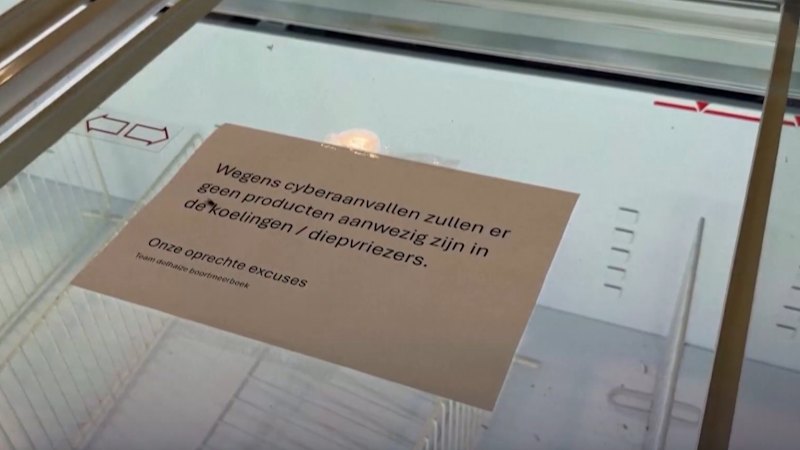
Your local grocery store's freezer aisle is quietly becoming one of the easiest targets on the internet. While everyone obsesses over ransomware hitting hospital networks or Wall Street banks, attackers have realized that spoiling ten tons of frozen salmon and ice cream gets a ransom paid way faster than locking up a corporate spreadsheet.
When a cyberattack hits European supermarket freezers, it isn't just an annoying IT glitch. It's a physical, ticking clock. You've got roughly four to six hours before internal temperatures rise enough to ruin an entire store's perishable inventory, forcing managers to toss tens of thousands of euros worth of food into dumpsters.
I've spent years auditing operational technology (OT) and industrial control systems, and the retail cold chain is consistently the most neglected piece of infrastructure I see. Companies spend millions securing their point-of-sale terminals so your credit card numbers stay safe. Meanwhile, the refrigeration controllers sitting on the exact same network are running firmware from 2014 with default passwords printed right on the manufacturer's public PDF manual.
How Attackers Actually Hijack a Grocery Store's Cold Chain
Most people picture a hacker furiously typing code to manually crank up the thermostat on a freezer case. That's not how it works.
Modern commercial refrigeration relies on automated Building Management Systems (BMS) and programmable logic controllers (PLCs) made by companies like Danfoss, Emerson, and Carel. These devices constantly monitor compressor pressure, defrost cycles, and cabinet temperatures. To save money on maintenance, supermarket chains connect these controllers to the internet so third-party HVAC technicians can tweak settings remotely instead of driving a van out to the store.
That remote access is the front door.
Attackers don't even need sophisticated zero-day exploits to get in. Using basic internet scanning tools like Shodan, anyone can find thousands of exposed refrigeration gateways sitting directly on the public web across Germany, France, the UK, and the Nordics. Many of them still use standard Modbus or BACnet protocols—industrial languages built decades ago with zero built-in encryption or authentication. If you can reach the IP address, you can send commands to the compressor.
In other cases, the breach starts on the corporate side. A store manager clicks a phishing link, ransomware encrypts the central server, and the malware spreads laterally into the operational network because nobody bothered to set up basic network segmentation. Once the central control server goes dark, the refrigeration units lose their scheduling commands, fail to trigger defrost cycles, or simply shut down to prevent mechanical damage.
The Real-World Fallout Across European Retail
This isn't a theoretical threat cooked up by cybersecurity vendors trying to sell you a firewall. European grocers have been quietly absorbing blows to their supply chains for years, even when they try to keep the specifics out of the press.
Look back at what happened to major European retail chains like Coop Sweden and Spar. When ransomware hit Coop's third-party IT provider Kaseya, roughly 800 stores had to shut their doors because the cash registers wouldn't work. While the registers got the headlines, store operators behind the scenes were scrambling to keep cold storage facilities running manually before food safety regulations forced a massive write-off.
More recently, security researchers at firms like Claroty and Dragos have flagged a sharp spike in opportunistic actors targeting European building automation systems. Specifically, researchers have documented exposed Danfoss refrigeration controllers across Europe where an attacker could remotely disable alarms, alter temperature thresholds, or trigger continuous defrost cycles—effectively turning a deep freeze into a warm oven while telling the store manager's dashboard that everything is sitting comfortably at minus 18 degrees Celsius.
That last part is what makes these attacks so nasty. It's called a spoofing or replay attack on the sensor telemetry. By the time a stock clerk notices water pooling under the frozen pizza aisle, the product is already compromised. Under strict EU food safety laws (Regulation EC No 852/2004), once frozen goods cross a specific temperature threshold for a set period, you can't just refreeze them and sell them. You have to destroy them.
Why Supermarket IT Security Is Stuck in the Past
If this is such an obvious vulnerability, why haven't retail giants fixed it? Honestly, it comes down to a brutal clash between how IT teams work and how refrigeration mechanics work.
IT departments love patching systems, rotating passwords, and rebooting servers every Tuesday. Refrigeration engineers hate reboots. If you reboot a central refrigeration controller during a heatwave in July, you risk locking up a compressor and blowing a 50,000-euro piece of hardware. Because of that fear, retail facilities teams treat their cold-chain controllers like untouchable black boxes. "If it's cooling, don't touch it" is the unspoken rule across almost every grocery chain I've ever walked into.
Then there's the vendor problem. Supermarkets rarely maintain their own freezers. They outsource it to regional HVAC contractors. Those contractors demand frictionless remote access so they can hit their service-level agreements without paying overtime. To make their lives easier, they'll plug a cheap cellular modem directly into the refrigeration control panel, completely bypassing the supermarket's corporate firewall. The store's Chief Information Security Officer usually has no idea these rogue modems even exist until an incident happens.
The Regulatory Squeeze in Europe
Things are finally starting to shift, though mostly because Brussels is forcing retailers' hands. The EU's NIS2 Directive officially expanded cybersecurity requirements to cover critical sectors, including food production, processing, and distribution.
Under NIS2, large supermarket chains can no longer shrug off a freezer outage as a mere facilities hiccup. If a cyber incident disrupts essential food supply chains, executives face steep fines and mandatory incident reporting. On top of that, the EU Cyber Resilience Act is pushing hardware manufacturers to stop shipping industrial controllers with hardcoded credentials and unencrypted protocols.
Still, legislation moves slowly. The legacy controllers already bolted to the walls of 50,000 European supermarkets aren't going to magically update themselves just because a directive passed in Brussels.
What Actually Works to Lock Down Cold Storage
You don't need an unlimited budget or an army of threat hunters to stop someone from hacking your freezer aisle. Most attacks against retail operational technology rely on sheer laziness on the defender's part. Fixing the basics cuts out 90 percent of the risk immediately.
1. Rip the controllers off the public internet.
There is zero excuse for a Danfoss or Carel gateway to have a public-facing IP address in 2026. Run a scan of your own external IP ranges right now. If any building management port shows up, pull it offline and put it behind a properly configured VPN with multi-factor authentication.
2. Segment the refrigeration network from the store Wi-Fi.
Your freezers should never share a flat network with the point-of-sale systems, the back-office PCs, or the guest Wi-Fi. Put all HVAC and refrigeration gear on its own isolated VLAN. Even if someone in accounting opens a malicious invoice, the ransomware shouldn't have a network route to reach the compressor room.
3. Audit your third-party HVAC contractors.
Walk your mechanical rooms and look for unauthorized cellular routers or TeamViewer installations left behind by maintenance vendors. Force every contractor to connect through a monitored jump host where their sessions are logged, and revoke their credentials the second their contract ends.
4. Put physical alarms on the analog side.
Don't rely entirely on the digital dashboard to tell you if the freezers are failing. Independent, battery-backed analog temperature alarms that trigger a physical buzzer or send an SMS over a separate cellular network will catch a temperature spike even if a hacker is spoofing the main BMS screen.
Stop treating refrigeration gear like dumb appliances. The moment you plug a freezer into an Ethernet cable, it becomes a computer—and if you don't secure it like one, someone else will eventually decide what temperature your inventory stays at.