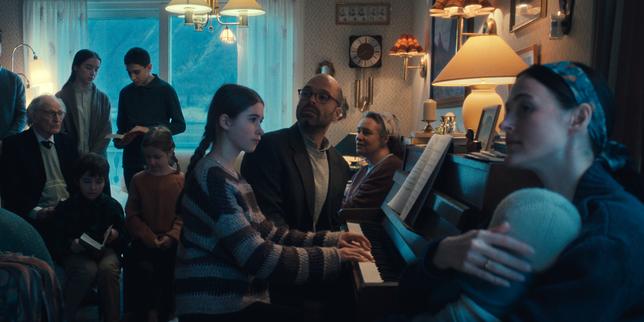
The industry is gasping for air. While trades and fan accounts breathlessly tweet about the "euphoric" return of Sam Levinson’s glitter-soaked tragedy, they are missing the autopsy happening in plain sight. Euphoria Season Three isn't a comeback. It’s a cautionary tale about the total collapse of the showrunner model and the death of the very "prestige" era it helped define.
We are being sold a narrative of triumphant return. In reality, we are watching a fractured production scramble to justify its existence after the cultural zeitgeist moved on three years ago. The delay isn't just about strikes or Zendaya’s scheduling conflicts. It’s about a fundamental lack of narrative purpose.
The High School Mirage is Dead
The most glaring flaw in the "Season Three hype" is the refusal to admit that the central premise has expired. Euphoria banked on the visceral, neon-drenched horror of the teenage experience. But time is a brutal editor. You cannot have twenty-something movie stars with global franchises pretending to hide vape pens from their mothers in a high school hallway.
The rumored "time jump" isn't a creative choice; it’s a desperate survival tactic. By moving the characters into adulthood, Levinson is effectively pitching a new show using the skin of an old one. This creates a massive dissonance. If the show is no longer about the unique volatility of adolescence, what is it? Without the "teen" shock factor, it’s just another bleak drama about beautiful, miserable people in Los Angeles. We have plenty of those. They usually get canceled after one season.
The Cult of the Single Auteur
The "lazy consensus" among critics is that Sam Levinson is a visionary who needs total control. I have watched studios sink nine-figure sums into "visionary" creators who refuse to use a writers' room. It almost always ends in a structural mess.
Euphoria Season Two was already showing the cracks of "One-Man-Band" syndrome. Plot lines were abandoned (remember Laurie, the drug kingpin?), characters were sidelined based on behind-the-scenes friction, and the pacing was dictated by vibes rather than internal logic.
In a standard television production, a writers' room acts as a series of checks and balances. It ensures that character arcs have a "North Star" and that the internal physics of the world remain consistent. When you remove that and give one person total autonomy over every frame, you don't get better art. You get a self-indulgent mood board. Season Three is poised to be the ultimate expression of this ego-driven decay.
The Zendaya Paradox
The industry assumes Zendaya is the show's greatest asset. Logically, she is. She is a generational talent. But from a production standpoint, her massive success is the very thing strangling the show.
When your lead actor becomes too big for the small screen, the show becomes a hostage. The production schedule is no longer built around what the story needs; it’s built around when the star has a three-month gap between Marvel or Dune press tours. This leads to the "Staccato Production Cycle"—years of silence followed by a rushed shoot.
This kills momentum. TV thrives on habit and cultural rhythm. By the time Season Three hits screens, the high schoolers who started watching in 2019 will be graduating college. The emotional connection has cooled. You can't reheat a three-year-old meal and expect it to taste fresh.
The Aesthetic Trap
Critics love to talk about the "visual language" of the show. The cinematography is undeniably stunning. But aesthetics are the cheapest form of depth.
Euphoria mastered the art of making trauma look like a music video. This worked in 2019 because it felt "edgy." In 2026, that style is a cliché. It has been parodied, copied by every fast-fashion brand, and filtered to death on social media.
If Season Three doubles down on the glitter and the wide-angle loneliness, it will feel like a period piece. The show is trapped in its own visual identity. To change the look would be to lose the brand; to keep it is to remain stagnant. This is the "Aesthetic Trap"—where the packaging becomes more important than the product inside.
Dismantling the "Relatability" Myth
One of the most common "People Also Ask" queries is: Is Euphoria a realistic depiction of Gen Z?
The answer is a resounding no, but not for the reasons moral guardians think. It’s not "too graphic." It’s too polished. Real Gen Z struggle isn't lit by $50,000 Arri Alexa rigs. It’s messy, beige, and often boring. Euphoria presents a hyper-stylized version of suffering that functions as "trauma porn" for older audiences and an aspirational mood board for younger ones.
By shifting to a post-high school setting, the show loses its claim to "documenting a generation." It becomes a soap opera. And if we wanted a soap opera, we’d watch something with a faster release schedule and less pretension.
The Economic Reality of HBO's Gamble
HBO (or Max, or whatever the branding department decides to call it this week) needs Euphoria because it drives subscriptions among a specific demographic. But the cost-to-value ratio is tipping into the red.
- Production Costs: The delay-inflated budgets are ballooning.
- Opportunity Cost: The years spent waiting for this cast could have been used to develop three new hits.
- Brand Dilution: Every time a show lingers too long past its prime, it weakens the network's reputation for curated excellence.
I have seen networks hold onto "legacy" hits long after the creative soul has left the building. They do it out of fear. Fear that they can't find the "Next Big Thing." But holding onto the past is the fastest way to miss the future.
The Script is the Problem, Not the Strike
The strikes of 2023 were a convenient scapegoat. They allowed the production to mask a deeper issue: the story wasn't ready. You can't write a coherent Season Three when the world has changed more than your characters have.
The political and social climate of 2026 is vastly different from 2019. The way we talk about mental health, addiction, and identity has shifted. Euphoria's brand of "shock and awe" storytelling feels increasingly dated in a world that is already shocked and awed by the daily news cycle.
A Lesson in Moving On
If you want to understand how to handle a hit, look at The White Lotus. It’s an anthology. It refreshes the cast. It changes the location. It keeps the "vibe" but discards the baggage.
Euphoria is doing the opposite. It is dragging a heavy, rusted chain of plot points and aging actors through a changing cultural landscape. It’s trying to force a lightning-in-a-bottle moment to happen for a third time.
The smart move for Levinson and HBO would have been to end at Season Two. Leave the characters in that hazy, unresolved amber. Instead, they are opting for a slow-motion car crash that will likely tarnish the legacy of the first two seasons.
Stop waiting for a "masterpiece" return. Prepare for a bloated, confused swan song that proves once and for all that in the streaming age, knowing when to quit is the rarest talent of all.
Don't tune in for the story. Tune in for the funeral of an era. Drawing out the inevitable doesn't make it better; it just makes the ending more painful.
Burn the glitter. Bury the blue eyeshadow. The party ended years ago, and we’re just sitting in a dark room waiting for someone to turn on the lights.