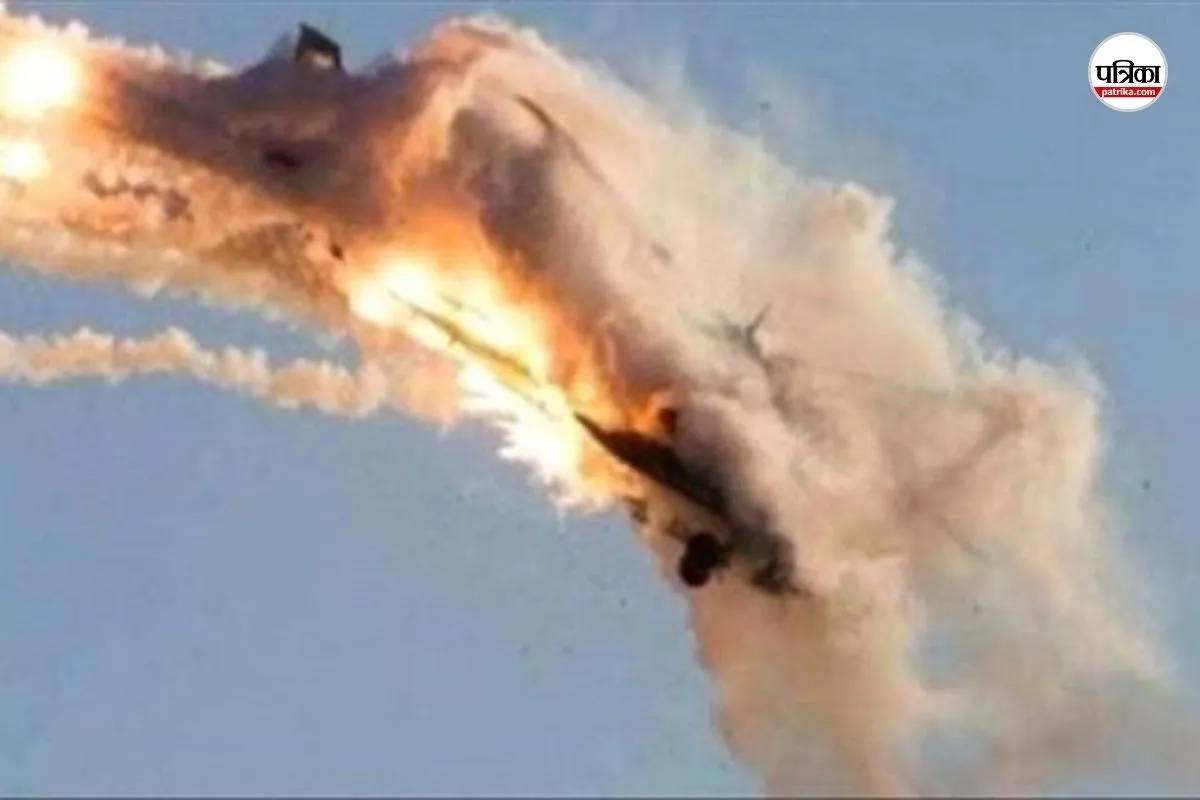
Sensational headlines tracking multiple waves of airstrikes and hundreds of shattered military targets obscure the grim reality of modern warfare in the Middle East. Airpower alone cannot break the strategic deadlock between Washington and Tehran. While defense ministries routinely broadcast footage of precision-guided munitions striking command nodes, radar installations, and storage facilities, these tactical victories rarely translate into political surrender. The belief that a sustained bombing campaign can quietly neutralize a regional power without sparking a wider, uncontrollable conflagration is an illusion that ignores decades of military precedent.
Air campaigns look clean on briefing maps. They are messy, unpredictable, and prone to rapid escalation in practice.
When international forces target state infrastructure or proxy networks across the region, the primary objective is deterrence. Yet deterrence requires the adversary to value what is being destroyed more than the political objective they are pursuing. For decades, Tehran has built a security architecture designed specifically to survive prolonged aerial bombardment. By decentralizing its military assets, moving critical assembly lines deep underground, and relying on a highly distributed network of regional allies, the Iranian state has insulated itself from the immediate shock of conventional air strikes. A three-wave bombardment hitting scores of targets might degrade specific capabilities for months, but it fails to alter the underlying geopolitical calculus.
The core issue remains the physical limits of airpower against an adversary practiced in asymmetry. You cannot bomb an ideology, nor can you easily destroy thousands of highly mobile, low-cost drones hidden in civilian basements or remote mountain ridges.
The Illusion of Target Counters
Tracking the success of a military campaign by the sheer number of neutralized targets is a flawed metric inherited from the conflicts of the late twentieth century. In modern warfare, counting smoking craters gives a false sense of progress. If an air strike destroys a drone manufacturing facility that cost five million dollars to build, but the adversary can replace that capacity within weeks using off-the-shelf commercial technology and underground workshops, the strategic gain is negligible.
The Western defense establishment frequently overestimates the long-term impact of kinetic strikes on deeply entrenched adversaries. Consider the massive logistical effort required to plan, fuel, and execute a multi-wave strike involving dozens of strike aircraft, refueling tankers, and electronic warfare support vessels. The financial cost to the attacking force often dwarfs the material value of the targets destroyed. This economic asymmetry works heavily in favor of a regime that has spent forty years operating under strict international sanctions.
Furthermore, targeting intelligence is never perfect. A bunker identified as a command post may have been emptied weeks prior, its communications gear moved to a nondescript commercial truck. When strike planners claim a high success rate based on satellite imagery of collapsed roofs, they are measuring physical damage, not operational disruption. The adversary adapts instantly, shifting communication protocols, utilizing hidden fiber-optic networks, and deploying decoy targets specifically designed to draw expensive precision munitions away from actual operational assets.
The Strait of Hormuz and Economic Retaliation
Any sustained air campaign against a major power in the Middle East carries an immediate threat to global energy security. The Strait of Hormuz remains the most critical choke point in the global oil trade, with roughly a fifth of the world’s petroleum passing through its narrow waters daily. Tehran does not need a blue-water navy to disrupt this flow. A sophisticated arsenal of anti-ship cruise missiles, smart sea mines, and swarming fast-attack craft gives the state the ability to effectively close the strait to commercial shipping, driving global energy prices to catastrophic heights within days.
This asymmetric leverage changes the entire risk calculation for Western planners. An air strike that hits a missile storage site near Bandar Abbas could trigger a retaliatory response that shuts down international shipping lanes. The economic shockwaves would be felt in real-time on stock exchanges in New York, London, and Tokyo.
- Sea Mines: Inexpensive, easily deployed from civilian fishing vessels, and incredibly difficult to detect and clear under combat conditions.
- Anti-Ship Missiles: Concealed in rugged coastal terrain, utilizing mobile launchers that can fire and disappear into cave networks before aircraft can respond.
- Swarm Tactics: Utilizing dozens of armed speedboats to overwhelm the defensive systems of commercial tankers and naval escorts simultaneously.
This reality forces military planners into a dangerous corner. To truly secure the region after an initial round of air strikes, the attacking force must execute a massive, preemptive campaign against every potential coastal launch site, radar tower, and civilian port that could support asymmetric naval operations. What begins as a limited action to punish a specific provocation rapidly balloons into a full-scale regional air war with no clear exit strategy.
The Proxy Network as a Strategic Shield
The most effective component of the regional defense strategy is its forward defense doctrine, executed through a sprawling network of aligned militias across Iraq, Syria, Lebanon, and Yemen. This decentralized system allows a central authority to project power and strike back at its enemies without firing a single missile from its own sovereign territory. When Western forces strike targets inside a nation’s borders, the response rarely comes from the immediate vicinity of the attack. Instead, it manifests as a barrage of low-cost rockets targeting isolated military outposts in Syria, drone strikes on logistics hubs in Iraq, or commercial shipping disruptions in the Red Sea.
This network creates a profound dilemma for conventional military powers. Hitting the proxy does not stop the supplier, but hitting the supplier risks a major war.
[Central Command] ---> (Financial & Technical Support) ---> [Decentralized Proxies]
                                                                  |
                                                                  v
[Air Strike Retaliation] <---------------------------- [Asymmetric Attacks on Allies]
This structural reality means that even a highly successful air campaign that cripples domestic military infrastructure leaves the external proxy network largely intact. The groups operating in Yemen or Iraq possess their own indigenous assembly capabilities, logistical routes, and localized command structures. They do not require daily instructions to exploit vulnerabilities. In fact, aggressive air strikes on sovereign soil often serve as a powerful recruitment tool for these groups, validating their narrative of foreign aggression and strengthening their political standing within their respective countries.
Air Defense Networks and the Reality of Electronic Warfare
Modern air operations against a well-armed regional adversary are vastly more complex than the enforcement of no-fly zones over fractured states. The proliferation of advanced air defense systems, coupled with sophisticated electronic warfare capabilities, means that strike aircraft must operate in highly contested environments. Early-warning radars, mobile surface-to-air missile batteries, and GPS-jamming arrays present a constant threat that requires a significant portion of any strike package to be dedicated purely to suppression and defense.
When an attacking force claims to have struck dozens of targets, a substantial percentage of those munitions are used simply to clear a path through the defensive envelope. Electronic warfare units work around the clock to jam communication links, spoof radar signatures, and disrupt the guidance systems of incoming missiles. This invisible battle in the electromagnetic spectrum determines the success or failure of the kinetic strikes that follow.
If an adversary successfully jams the satellite guidance of a precision bomb, causing it to miss its target by fifty meters, the mission is a failure, even if the weapon detonates successfully. The defensive side does not need to shoot down every incoming aircraft to win; they merely need to degrade the accuracy of the strike and force the attacker to expend limited inventories of high-end munitions on low-value targets.
The Strategic Exhaustion of Western Policy
The reliance on repeated rounds of air strikes reveals a deeper structural failure in Western foreign policy. When diplomatic channels freeze and economic sanctions reach the point of diminishing returns, military action is often used as a default tool to signal resolve rather than achieve a concrete political outcome. This approach mistakes activity for strategy. Executing periodic bombing runs to "put a lid on the problem" creates a cyclical pattern of violence that offers no long-term resolution.
This cycle of violence induces strategic exhaustion. The attacking forces consume billions of dollars in precision ordnance, wear down airframes through intensive operational tempos, and risk the lives of flight crews, all to achieve a temporary pause in the adversary's activities. Meanwhile, the defending state uses each pause to analyze the tactics used against them, rebuild their underground infrastructure with greater reinforcement, and refine their own asymmetric countermeasures.
The historical record is clear on the limitations of punitive air operations. From the bombing campaigns of the mid-twentieth century to the contemporary strikes against non-state actors across the global south, airpower alone has never successfully forced a determined, ideologically committed adversary to abandon its core strategic objectives. It alters the timeline, but it does not change the destination.
The belief that another round of strikes, another hundred targets destroyed, or a newly deployed carrier strike group will finally break the deadlock ignores the structural realities of the region. Wars of attrition favor the party willing to endure the most pain for the longest period. In the narrow waters and rugged mountains of the Persian Gulf, a high-tech military machine face to face with a deeply dug-in, highly adaptable adversary will eventually run out of targets before the adversary runs out of patience.