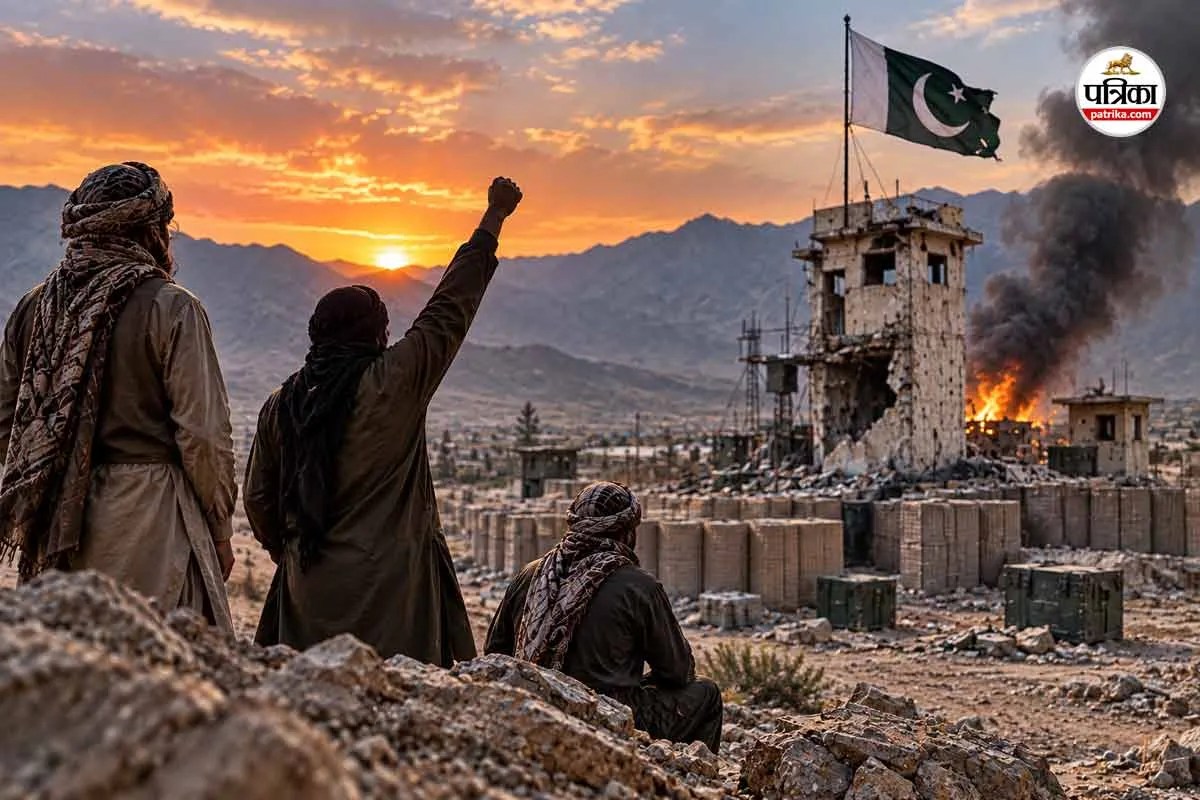
If you think the security situation in Pakistan is just a localized headache, you're missing the bigger picture. Over the past few months, the separatist insurgency in the country's largest province has intensified into something much more aggressive. The Balochistan Liberation Army, commonly known as the BLA, has ramped up its campaign against state forces, claiming major territorial grabs and coordinated strikes that security analysts can no longer brush aside.
When insurgent groups release sweeping statements about overrunning military outposts and seizing caches of weapons, the official response from Islamabad usually minimizes the impact. But the ground reality in districts like Mastung and Gwadar tells a story of persistent friction, high-casualty fidayeen attacks, and a widening security vacuum.
The Real Driver Behind the Recent Spikes
Why is this happening now? To understand the current wave of violence, you have to look at the economic stakes. Balochistan is rich in natural resources, including gas, gold, and copper, but local populations have long complained of systemic economic marginalization. Add the massive infrastructure footprints associated with the China-Pakistan Economic Corridor (CPEC) into the mix, and you get a volatile flashpoint.
Separatist factions frequently time high-profile assaults to send direct messages to foreign investors and federal authorities. Recent operations, such as the intensive vehicle-borne explosive strikes and coordinated camp raids in regions like Mastung, show a tactical shift. These aren't just hit-and-run ambushes anymore. They are complex, highly organized assaults designed to challenge the writ of the state directly.
What the Numbers and Claims Tell Us
Insurgent propaganda always needs to be filtered through a healthy dose of skepticism. Independent verification of battlefield claims—such as the capture of numerous military posts or large numbers of seized weapons—is notoriously difficult in restricted conflict zones.
At the same time, the state's counter-terrorism figures reveal the sheer scale of the ongoing operations. Pakistan's military media wing regularly reports dozens of militant casualties following intelligence-based sweeps across Balochistan and neighboring Khyber Pakhtunkhwa. Yet, despite heavy security deployments, the ability of groups like the BLA to execute complex urban and highway infiltrations proves that traditional containment strategies are struggling to keep up.
The Broader Regional Fallout
This conflict doesn't stay neatly contained within provincial borders. Escalating violence in the southwest strains an already fragile national economy and tests the limits of military bandwidth, especially while authorities simultaneously fight separate, intense insurgencies involving the Pakistani Taliban in the northwest.
Border closures, disrupted trade routes, and civilian casualties are the immediate human costs. Meanwhile, the strategic competition over critical infrastructure projects ensures that international eyes remain glued to the region.
Ignoring the depth of the grievances in Balochistan guarantees that the cycle of crackdowns and retaliatory strikes will continue. Until policymakers address the root causes of regional alienation alongside hardline security measures, the frontier will remain intensely volatile.


