England does not have a 60-year World Cup drought because of bad luck, missed penalties, or the curse of a Russian linesman in 1966. The reality is far colder. For decades, the Football Association operated an outdated developmental system that treated tactical innovation as a foreign threat, relying on physical superiority and media-driven hype to mask systemic structural flaws. While defending champions consistently built repeatable, institutionalized blueprints for international success, England relied on the hope of a generational savior. To finally win a second World Cup, England must dismantle its culture of reactionary panic and fully commit to the clinical, identity-first models used by the nations that keep defeating them.
The narrative of "60 years of hurt" is excellent for selling television slots and replica shirts, but it is a poor tool for sporting analysis. When looking at the gap between England and the elite tier of international football, the difference is not talent. The Premier League produces or refines some of the finest players on the planet. Instead, the gap is one of institutional philosophy.
The Defending Champion Blueprint
To understand why England has struggled, look at how the nations that actually win the tournament operate. The modern defending champions did not find success by accident. They designed it.
France, Germany, and Spain did not just stumble into their golden eras. They built centralized systems of play that run from the youth academies all the way to the senior national team.
+-----------------------------------------------------------------+
|                    THE CHAMPIONSHIP BLUEPRINT                   |
+------------------------------------+----------------------------+
| Systemic Factor                    | English Historical Equivalent|
+------------------------------------+----------------------------+
| Centralized tactical identity      | Reactionary manager hiring |
| Decoupled from club-level politics | Over-reliance on club form |
| Proactive tournament management    | Fear of elimination        |
+------------------------------------+----------------------------+
Take the French model based at Clairefontaine. It is an assembly line of athletic and technical profiles designed to fit a specific, adaptable style of tournament play. They do not care about style points in autumn qualifiers. They care about physical resilience and defensive solidity in July.
England, conversely, has historically built its national team around the prevailing tactical trend of the Premier League at any given moment. When 4-4-2 was king, England played a rigid 4-4-2, regardless of whether they had the central midfielders to sustain it. When high-pressing possession became the league's dominant style, England tried to replicate it on three days of international training. You cannot copy-paste club tactics into the international arena. There is simply not enough time on the training pitch to install those complex patterns of play.
The Club Over Country Tax
The Premier League is a financial behemoth, but its immense wealth acts as a double-edged sword for the national team.
In Spain or Germany, the domestic league often works in loose alignment with the national federation to ensure domestic players receive adequate recovery and tactical integration. In England, the relationship is openly adversarial. The sheer intensity of the English domestic calendar, complete with two domestic cup competitions and no meaningful winter break for many years, routinely delivers exhausted players to summer tournament camps.
Physical fatigue is only half the battle. The psychological tax is heavier.
Our players spend ten months of the year under intense pressure from global club brands. They are coached by the world’s elite tactical minds—Pep Guardiola, Carlo Ancelotti, Mikel Arteta—who micromanage every step they take on the pitch. When these players transition to the international camp, they enter a tactical vacuum. A national team manager cannot provide that level of detailed, daily instruction. Players accustomed to being told exactly where to stand to create a passing lane suddenly find themselves told to "go out and express themselves."
Against organized, compact international defenses, this lack of structural automation leads to slow, sideways passing. It looks like possession, but it is actually fear.
The Psychological Burden of the Savior Complex
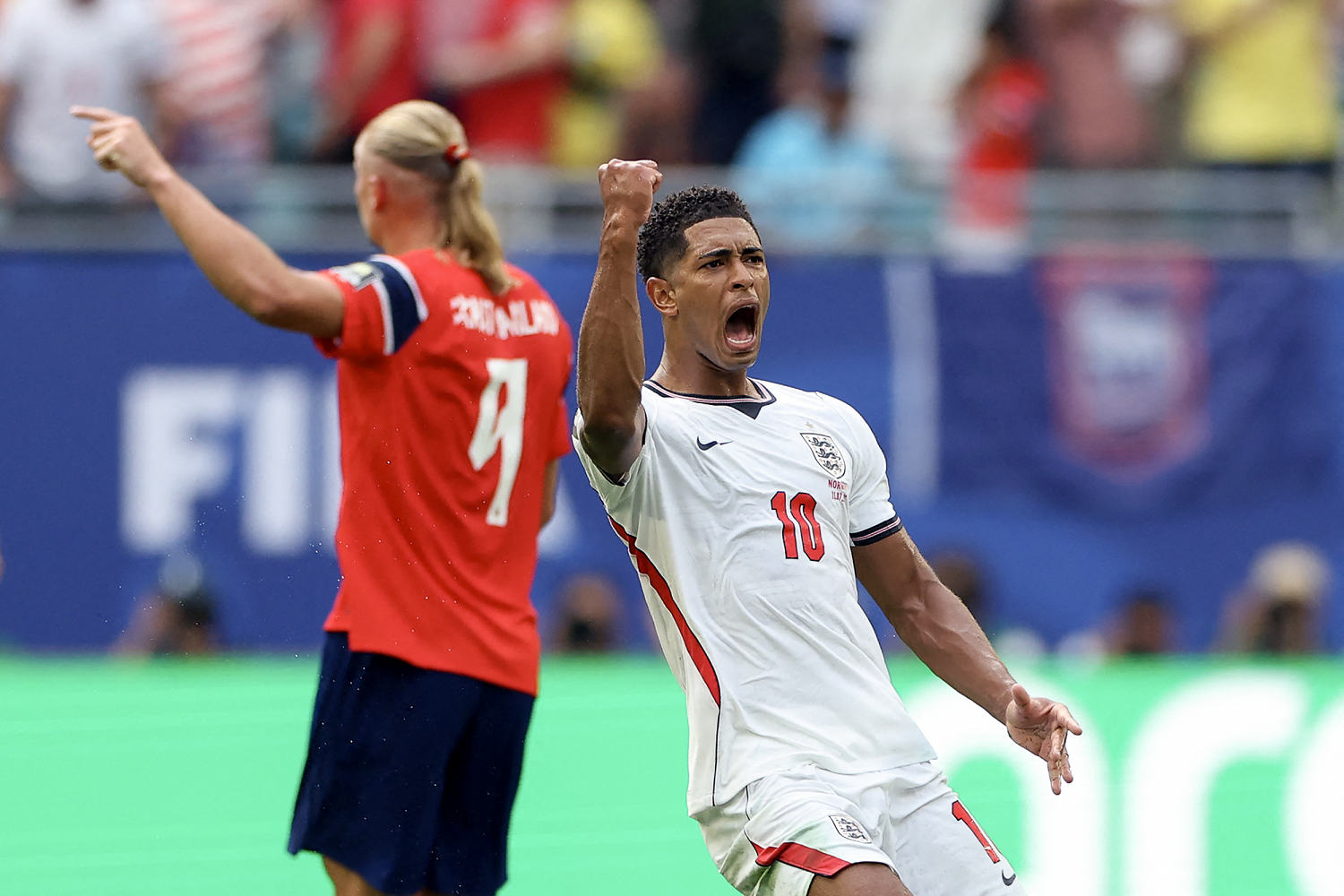
Every tournament cycle, the English football ecosystem designates a savior. It has been Paul Gascoigne, David Beckham, Wayne Rooney, and more recently, Jude Bellingham.
This savior complex is deeply damaging. It absolves the rest of the team of collective responsibility and concentrates the tactical focus on a single point of failure. If the designated savior is injured, out of form, or marked out of the game, the entire system collapses.
       [ Media Hype & Expectation ]
                   │
                   ▼
       [ The Designated Savior ] ──(Underperforms/Injured)──┐
                   │                                         │
                   ▼                                         ▼
       [ Tactical Paralysis ]                      [ Systemic Collapse ]
When France won in 2018 and reached the final in 2022, they did so with superstars, but those superstars worked within a rigid defensive framework. Kylian Mbappé was given freedom because N'Golo Kanté, Blaise Matuidi, or Antoine Griezmann did the dirty work behind him. England has rarely managed to strike this balance. We tend to shoehorn every creative player into the starting eleven, regardless of tactical balance, simply to appease public demand.
Structural Fixes for a Broken Engine
If England wants to beat the defending champions and end the cycle, the solutions must be structural, not emotional.
First, the Football Association must establish a permanent tactical identity for the national team that is completely independent of who is currently managing the senior squad. This identity should be simple, robust, and designed specifically for the unique demands of knockout tournament football. Tournament football is won on transitions, set pieces, and defensive organization. It is rarely won by playing expansive, high-line possession football that leaves the defense exposed to counter-attacks.
Second, the developmental pathway must prioritize press-resistant midfielders over athletic wingers. England produces an abundance of attacking talent, but we still struggle to produce central midfielders who can control the tempo of a game when under intense pressure. Without players who can "pausa"—the Spanish concept of slowing the game down to control the rhythm—England will always remain vulnerable to teams that can dominate possession.
We must stop treating international tournaments as a showcase for individual talent. They are tests of collective resilience, tactical clarity, and physical endurance. Until the English football establishment values the boring, defensive mechanics of tournament play over the flashy individual brilliance of its stars, the trophy will remain in the hands of those who do.