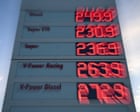
Record fuel prices across the European Union have forced politicians into a familiar corner. When energy markets spike and household utility bills surge past breaking point, governments reach for the same blunt instrument. They propose a bloc-wide windfall tax on energy firms. The political logic is immediate and seductive. Extract surplus profits from companies benefiting from geopolitical chaos and high commodity costs, then funnel that cash back to battered consumers.
This mechanism sounds righteous on paper. In practice, it exposes a profound misunderstanding of how global energy supply chains operate. Also making waves in this space: The Hidden Economic Fracture Breaking American Households.
Energy price shocks are rarely isolated events managed purely within domestic borders. They are symptoms of systemic supply constraints, structural underinvestment, and fragile trade routes. When Brussels threatens broad retrospective levies on corporate balance sheets, capital does not simply sit still to be taxed. It flees. Energy majors operating across member states shift their capital expenditure budgets toward jurisdictions offering predictable regulatory frameworks. The immediate political win of taxing corporate earnings routinely guarantees long-term supply scarcity.
To understand why this strategy repeatedly backfires, one must look past the press releases and examine how refiners, traders, and major producers price risk. More insights into this topic are detailed by Bloomberg.
Capital allocation in the energy sector operates on multi-decade timelines. Refineries, natural gas extraction facilities, and cross-border interconnectors require massive upfront capital expenditures. Investors accept high cyclicality because extreme market highs compensate for deep cyclical troughs. When governments alter the rules mid-cycle through retroactive taxation, they destroy the risk-reward calculation that underpins private infrastructure investment.
Markets remember intervention. European utility providers and international oil majors are already quietly trimming exposure to regional projects that carry high regulatory volatility.
The political argument for a windfall levy rests on the premise of excess profits. During periods of tight supply and surging crude or gas quotes, integrated energy corporations record astronomical net margins. To the public eye, these numbers look obscene while families choose between heating and eating. Yet those exact profits serve a vital economic function. They represent the internal liquidity required to fund transition technologies, secure alternative import contracts, and maintain aging extraction assets.
Stripping those reserves away leaves companies leaner precisely when they need to be resilient. Worse, it relies on a faulty definition of excess. What looks like a windfall during a supply panic is often just the normalization of returns after a decade of artificially depressed commodity prices and negative margins following the pandemic lockdowns.
Governments attempting to mandate bloc-wide tax harmonization face an even more stubborn structural barrier. The European Union is not a single fiscal entity. Member states possess vastly different energy mixes. France relies heavily on nuclear generation. Germany transitioned away from atomic power while remaining deeply dependent on imported gas before the supply shocks of recent years. Poland draws the bulk of its baseline power from domestic coal.
Trying to impose a uniform windfall extraction formula across such divergent industrial landscapes creates severe market distortions.
A tax structure that feels manageable for a diversified multinational operating in the North Sea could bankrupt smaller regional distributors in Eastern Europe. These smaller players often act as crucial buffers, absorbing price spikes before they hit municipal grids. When pan-European policy ignores these microeconomic realities, it triggers unintended consolidation. State-backed giants or private equity funds sweep up distressed regional assets, reducing overall market competition and concentrating pricing power even further.
Furthermore, price caps and revenue skimming create perverse operational incentives. If a power generator knows that any revenue earned above a government-mandated threshold will be confiscated via taxation, the economic rationale for optimizing output vanishes. Why run facilities at maximum capacity during a critical winter shortage if the state captures the upside while the corporation retains 100 percent of the operational risk and liability?
Efficiency drops. Maintenance schedules are dragged out. Output stalls. The policy intended to lower prices for consumers ends up restricting supply, thereby driving market rates even higher.
The recurring panic over fuel costs reveals a deeper institutional reluctance to address root causes. Subsidizing demand through tax revenues collected from the same supply chain creates a circular loop of inflation. Pumping cash injections into household bank accounts while simultaneously penalizing the producers of the commodity ensures that high prices persist. Demand remains artificially inflated because consumers do not feel the full market signal to conserve, while supply remains constrained because producers face punitive taxation.
True reform requires confronting uncomfortable structural truths about energy independence and industrial policy.
Building resilient energy grids and securing diversified supply lines requires billions in sustained, unhindered capital deployment. It demands streamlining environmental permitting processes that currently take years to clear, reducing bureaucratic drag on domestic extraction and storage projects, and accepting that commodity prices are set by global supply and demand dynamics that regional edicts cannot repeal by legislative decree.
Policymakers who continue to chase the illusion of effortless revenue through punitive taxation are treating a systemic circulatory failure with a temporary bandage. Each time the bandage is ripped off, the underlying condition worsens.
The next market shock is already building across maritime trade lanes and geopolitical flashpoints. When it arrives, European capitals will likely reach for the same fiscal cudgel once more, ignoring the wreckage left by the last attempt. Capital will continue to migrate toward more welcoming shores. Infrastructure will age without adequate reinvestment. And the consumer, caught in the middle of this regulatory loop, will continue to bear the ultimate cost of policies designed to protect them.


