The desert is a patient predator. It waits for anything that doesn't belong to eventually turn back into dust. For three years, a different kind of mirage shimmered over the professional golf world—a vision built of private jets, nine-figure signing bonuses, and a relentless, deafening assurance that money could buy legacy. But the winds are shifting. The Public Investment Fund (PIF) of Saudi Arabia is tightening the purse strings on LIV Golf, and the silence following that decision is louder than any gallery roar.
Money used to be the only language spoken in this feud. Now, the conversation is about the one thing even a sovereign wealth fund can't manufacture: sustainability.
The Architect in the Glass Tower
Consider a man like Yasir Al-Rumayyan. He sits at the intersection of unimaginable wealth and a very human desire for global validation. When the PIF launched LIV, it wasn't just about sports; it was a venture capital play on a global scale. They looked at the PGA Tour—a century-old institution—and saw a vulnerable, aging monopoly. They decided to break it.
They succeeded in the breaking. They tore the fabric of the sport, forcing legendary names to choose between their history and a generational payday. But the PIF is not a charity for bored athletes. It is a fund that demands returns, either in cultural capital or hard currency. As the bills for LIV’s operational costs began to rival the GDP of small nations, the cold logic of the balance sheet finally caught up to the heat of the ambition.
The withdrawal of aggressive funding isn't a surrender. It is a recalibration. The Saudi leadership has realized that a league existing in a vacuum—without broadcast ratings, without historical weight, and without a path to reconciliation—is a depreciating asset.
The Weight of a Golden Handcuff
Walk into a locker room at a LIV event. The air smells of premium leather and expensive cologne. But look at the players. Not the ones who were already heading toward the twilight of their careers, but the young stars who took the leap. There is a quiet, creeping realization that the "growth of the game" was a slogan, while the reality was a gilded cage.
When the funding slows, the cage starts to feel smaller.
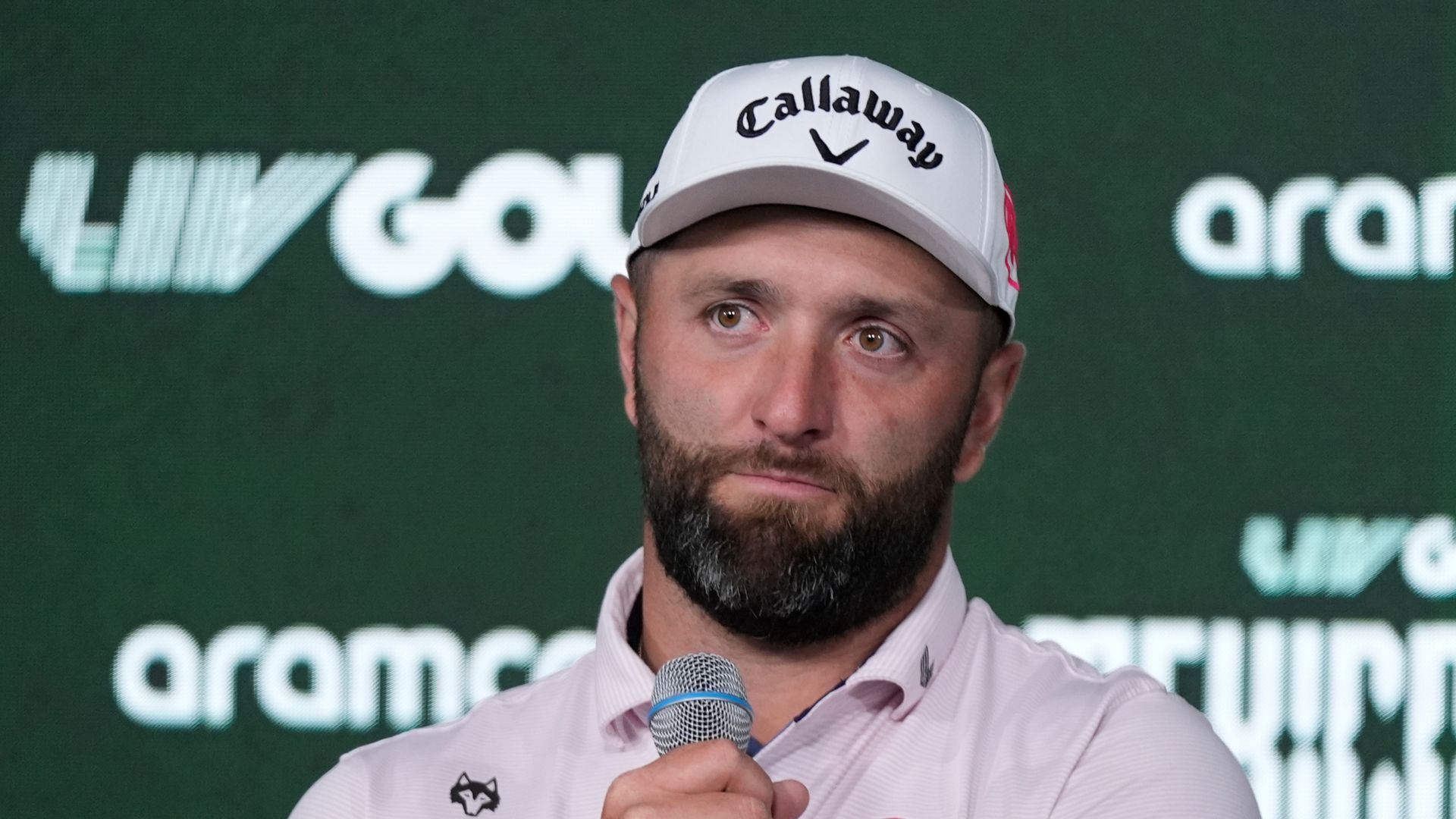
The initial strategy was to overwhelm the senses. If you pay Phil Mickelson $200 million, the world stops and stares. If you sign Jon Rahm for a reported $500 million, you prove that no one is untouchable. But what happens in year four? What happens when the novelty of the team format wears thin and the TV audience remains a fraction of the traditional majors?
The PIF is pivoting toward a "unification" model because they’ve learned a hard lesson in the entertainment business: you can buy the actors, but you can’t buy the audience’s soul. The fans stayed with the history. They stayed with the 18th green at Augusta and the windswept dunes of St. Andrews. They didn't migrate to the neon-lit exhibitions in the desert in the numbers required to justify a permanent, bottomless subsidy.
The Illusion of the Bottomless Well
We often talk about "oil money" as if it is a magical, regenerating fountain. It feels infinite. It feels like it can’t be exhausted. This is the fallacy that led the golf world into a civil war.
In reality, the PIF is governed by Vision 2030, a massive, multi-trillion-dollar blueprint to diversify the Saudi economy. Golf is a small tile in that mosaic. When the costs of building futuristic cities like NEOM begin to climb, a secondary sports league that loses hundreds of millions of dollars annually suddenly looks like a luxury that needs a haircut.
The strategy has shifted from conquest to integration. By slowing the direct funding of LIV, the PIF is signaling to the PGA Tour that they are ready to stop fighting and start owning. It is a classic corporate squeeze. You drive the competitor to the brink of exhaustion, then you offer to fund the peace treaty on your terms.
The Ghost of the Gallery
Imagine a hypothetical fan named Thomas. Thomas has watched golf for forty years. He knows the sound a ball makes when it's struck perfectly by a master. He remembers where he was when Tiger Woods completed the "Tiger Slam."
When LIV arrived, Thomas didn't feel angry. He felt confused. He saw players he admired talking about "freedom" and "new formats," but when he turned on the TV, it felt like a loud party he wasn't invited to. The stakes felt invisible. If a player wins $4 million in a tournament where they can't be cut and their contract is already guaranteed for $50 million, does the final putt actually matter?
Thomas stopped watching. Multiply Thomas by millions, and you have the crisis currently facing the Saudi investment.
The human heart is stubborn. It craves risk. It craves the possibility of failure. Without the threat of losing everything, winning means nothing. LIV’s biggest mistake wasn't the money; it was the removal of consequence. By insulating the players from the struggle of the professional grind, they accidentally drained the drama out of the sport.
The New Architecture of Power
The withdrawal of funding is the first step in a long, complicated merger that will likely redefine the sport for the next century. The PIF isn't leaving golf; they are moving into the walls of the house. They are trading the flashy, expensive billboard of LIV for a seat at the head of the table in a new, global entity that combines the assets of the PGA, DP World Tour, and their own interests.
It is a quieter, more effective form of influence.
Instead of a rival league, they become the primary stakeholders in the entire ecosystem. The "funding withdrawal" is the sound of the door closing on the era of the wild, unregulated spending spree. It is the beginning of the era of the monopoly.
The Residue of the Conflict
What remains?
A fractured fan base. A group of players who are vastly wealthier but significantly less relevant. And a sport that has been forced to look at itself in the mirror and admit that its traditions were far more fragile than anyone realized.
The desert is patient. The flashy stages will be packed away. The loud music will fade. The private jets will find new destinations. Eventually, the game will return to what it always was: a ball, a club, and a person trying to conquer their own limitations. But the grass on the fairways will be owned by different people now.
The gold was never the point. The point was the leverage the gold could buy. Now that the leverage has been secured, the gold is being put back into the vault, leaving the players and the fans to figure out what, if anything, is left of the spirit of the game.
The fairways are quiet tonight, and the wind is blowing the sand back over the tracks of the giants.