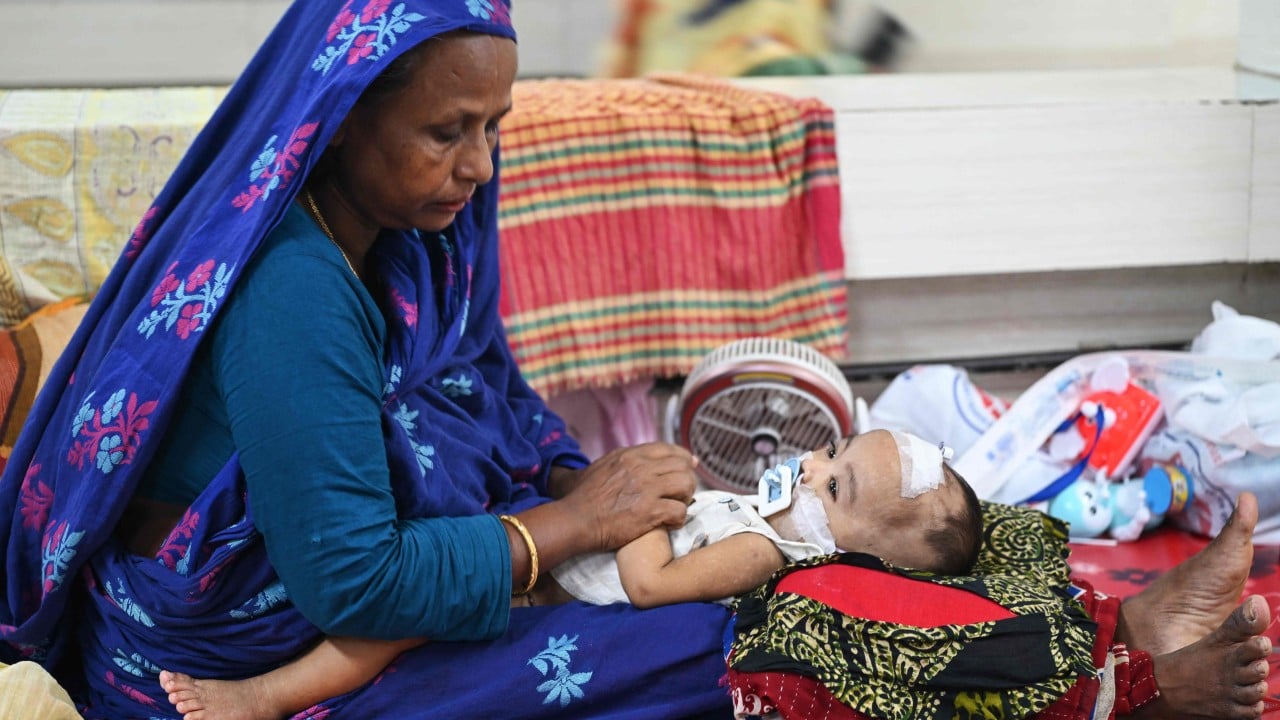
Mass casualty events in healthcare environments expose the fragility of institutional response systems under acute physical stress. When a neonatal intensive care unit experiences a structural fire, the operational protocol shifts from chronic care management to hyper-compressed triage. The incident involving the nurse struggling to evacuate infants during Pakistan's nursery fire is frequently framed through an emotional lens of individual heroism. This narrative obscures the underlying systemic failures that place frontline workers into untenable optimization dilemmas. Analyzing an event of this magnitude requires stripping away anecdotal tragedy to examine the mechanics of evacuation failure, resource allocation under duress, and the structural design flaws inherent in high-risk pediatric wards.
The Mechanics of Evacuation Bottlenecks in Neonatal Care
The evacuation of a neonatal unit presents a distinct operational challenge compared to standard hospital wards. Patients are entirely non-ambulatory, heavily reliant on continuous biomedical monitoring, and bound to thermal support infrastructure like incubators. When a fire breaches a perimeter, the time constant for structural collapse or smoke inundation is measured in minutes, while the manual extraction time per patient is fixed by physical human constraints.
A single healthcare worker possesses a finite carrying capacity. Standard medical evacuation training assumes dual-operator transport for critical equipment or patients. In an understaffed emergency, nurses default to serial single-patient extraction. This creates a severe linear bottleneck against an exponential threat curve. An incubator weighs significantly more than an infant, yet abandoning the incubator strips the neonate of thermal regulation and oxygen delivery systems. The decision to abandon support hardware to save biological life introduces secondary clinical risks, including severe hypothermia and hypoxic ischemic encephalopathy during transit.
Institutional risk management frameworks often fail to account for the physical throughput limits of staff. Evacuation drills frequently test theoretical clearance rates under optimal staffing conditions rather than baseline operational realities where night shifts operate at minimum headcount. When a ward operates below required staffing ratios, the mathematical probability of complete patient extraction drops precipitously, transforming an evacuation protocol into a triage of abandonment.
Systemic Vulnerabilities in Pediatric Infrastructure
Fire safety engineering in developing healthcare markets frequently suffers from capital allocation deficits and regulatory enforcement gaps. Neonatal wards require specific environmental controls, including positive pressure rooms and high-density electrical configurations to support banks of ventilators, monitors, and phototherapy units. These dense electrical arrays represent primary ignition vectors.
The propagation velocity of a hospital fire is dictated by three primary environmental variables:
- Material combustibility of interior finishes, particularly acoustic insulation and medical privacy curtains.
- Ventilation system design, which can inadvertently act as a forced-induction mechanism for toxic smoke distribution across sterile corridors.
- Compartmentalization failure, where fire doors are propped open for operational convenience or fail due to maintenance neglect.
In the referenced incident, the transition from localized electrical spark to total room involvement occurred within minutes because passive fire protection systems lacked active suppression redundancy. Sprinkler systems in older municipal healthcare facilities are often non-functional, improperly zoned, or completely absent due to historical budget constraints. Consequently, containment relies entirely on architectural barriers. When those barriers are breached, the environment transitions from a controlled medical facility to a hazardous industrial zone instantly.
The Cost Function of Heroism and Human Capital
Relying on individual acts of extraordinary self-sacrifice to compensate for structural design failures is an unsustainable risk management strategy. In operational research, heroism is a symptom of system failure. If a nurse must choose which infants to leave behind because structural exits are blocked and backup alarms fail, the system has already collapsed at multiple preventative layers.
The psychological toll on surviving staff manifests as acute operational paralysis and long-term post-traumatic stress disorder, which degrades the institutional knowledge base of the hospital. High-stress environments without robust debriefing and psychological support frameworks experience elevated attrition rates among specialized neonatal nursing staff. Replacing an experienced neonatal nurse requires extensive capital and time investments, directly impacting the quality of care for subsequent patient cohorts.
Furthermore, post-crisis accountability loops frequently target low-level operators rather than systemic capital deficiencies. Blaming a nurse for an incomplete evacuation ignores the upstream failures of hospital administration, regulatory bodies, and municipal safety inspectors who signed off on substandard fire suppression infrastructure.
Operational Redesign for High-Risk Medical Wards
Mitigating catastrophic loss in neonatal environments demands a transition from reactive evacuation protocols to proactive engineering controls. Healthcare facilities must decouple patient survival from the instantaneous physical strength and presence of mind of individual nurses during a crisis.
First, evacuation sleds engineered explicitly for neonatal transport must be staged at every bedside, pre-loaded with portable oxygen supplies and chemical warming pads to replace incubator dependency. Second, compartmentalized safe zones must be integrated directly into the floor plan, utilizing two-hour fire-rated walls and independent ventilation purges to allow in-place shelter when hallway extraction is impossible. Third, automated fire suppression systems must transition from traditional water-based deployment—which risks electrical short circuits in sensitive equipment—to clean-agent gaseous suppression systems capable of extinguishing electrical fires without compromising immediate atmospheric safety.
Capital expenditure directed toward these structural upgrades yields a demonstrably higher risk reduction factor than annual classroom-based fire safety training. Until institutional priorities shift from compliance theater to engineering resilience, frontline medical staff will continue to bear the fatal costs of infrastructural inadequacy.
Allocate capital budgets immediately toward the installation of localized clean-agent fire suppression systems and bed-level rapid-extraction sleds across all high-dependency neonatal care units, bypassing administrative review cycles that prioritize aesthetic or non-critical structural modernization.