Walk into a data center at three in the morning and the first thing you notice isn't the data. It’s the heat. It is a physical, pulsing thing—the collective breath of thousands of servers crunching numbers for the world’s insatiable appetite for artificial intelligence. If the power fails for even a second, that hum stops. The heat lingers, then the silence becomes expensive. Very expensive.
Investors watched Eaton’s latest earnings report and saw a heartbeat skip. They saw a slight miss in organic growth and panicked. They dumped the stock, sent the price tumbling, and retreated to the safety of spreadsheets. They were looking at the flickering lightbulb instead of the copper wiring behind the walls. They missed the forest because they were squinting too hard at a single, slightly charred leaf.
We are currently living through the greatest reconstruction of the physical world since the Industrial Revolution, yet Wall Street is treating it like a retail inventory cycle.
The Invisible Foundation
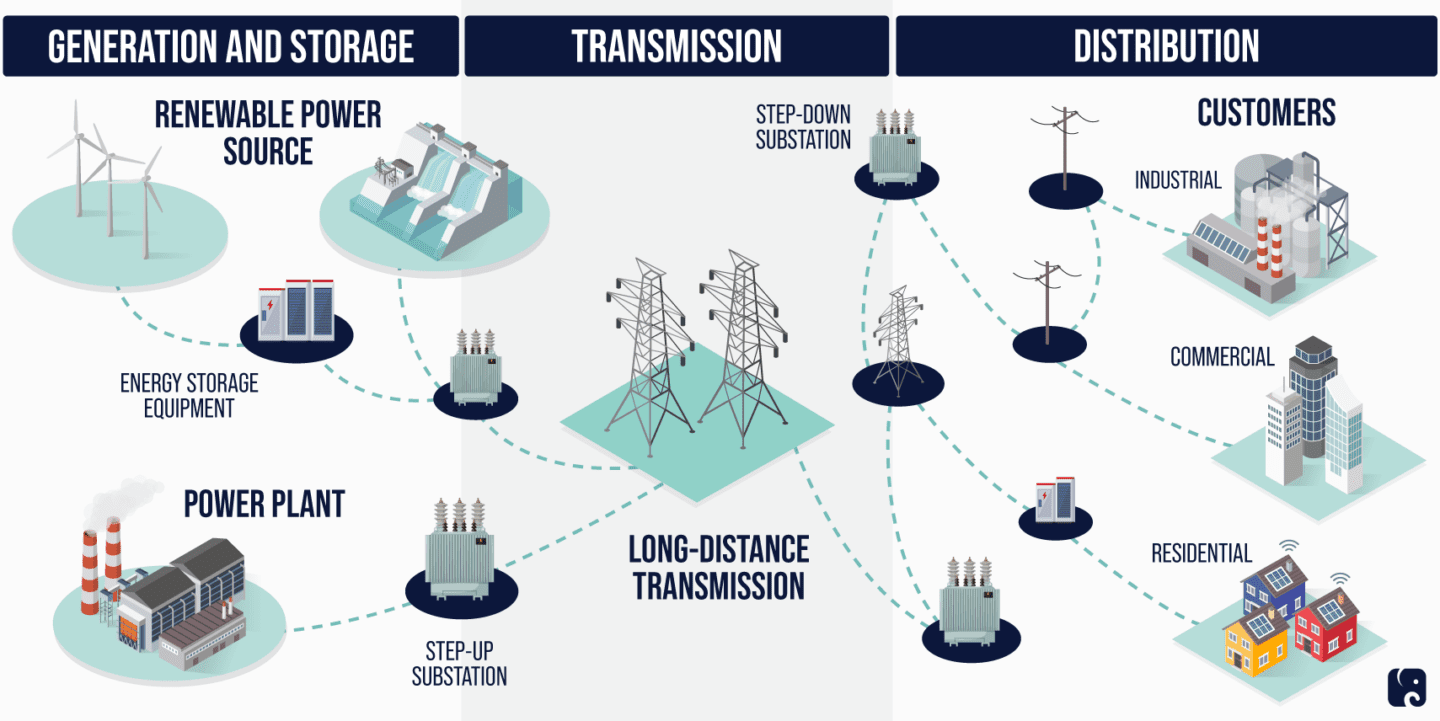
Think of the modern economy as a sprawling, high-tech mansion. Everyone is obsessed with the new furniture—the shiny AI software, the sleek electric vehicles, the hyper-fast chips. But no one is looking at the fuse box. Eaton is the company that builds the fuse box. More accurately, they build the entire nervous system that allows the mansion to exist without burning to the ground.
When a massive tech giant decides to build a $100 billion data center, they don't start by ordering GPUs. They start by calling someone who can manage the sheer, terrifying volume of electricity required to run them. This isn't just about plugging things in. It’s about complex power management systems, switchgear, and transformers.
The backlog at Eaton isn't a fluke. It’s a waiting list for the future.
Consider a hypothetical project manager named Sarah. Sarah is tasked with bringing a new regional hospital online. In the old world, the electrical infrastructure was an afterthought—a line item at the bottom of a budget. Today, Sarah is sweating. She knows that if her transformers don't arrive on time, the entire multi-billion-dollar facility is a paperweight. She isn't looking for the cheapest bid; she is looking for the only company capable of delivering high-end, reliable power solutions in a world where everyone else is also screaming for them.
Sarah’s reality is the reason why a "miss" in quarterly organic growth is a mathematical ghost. The demand hasn't vanished. It is simply so massive that it is bottlenecked by the physical limits of how fast we can build the spine of the digital age.
The Re-Shoring Mirage
For decades, the West outsourced its muscles. We kept the brains and sent the heavy lifting overseas. We let our factories rust and our power grids settle into a comfortable, dangerous middle age. Then the world changed. Supply chains snapped. Global tensions rose. Suddenly, making things at home wasn't just a political slogan; it became a matter of survival.
This shift, often called re-shoring, is a massive, clanking machine of a trend. You cannot build a semi-conductor factory in Ohio or a battery plant in Georgia with 1970s electrical tech. These facilities require power precision that would baffle a previous generation of engineers.
When Eaton reports its numbers, the "sellers" see a company that makes hardware. What they should see is a company that sells "certainty." In an era of volatile energy prices and crumbling public infrastructure, certainty is the most valuable commodity on earth.
The electrical grid in the United States is essentially a patchwork quilt of technologies from different eras, held together by hope and a lot of maintenance crews working overtime. To transition this mess into a smart grid—one that can handle the bi-directional flow of solar power and the massive spikes of EV charging—requires a total overhaul.
Eaton is the lead architect of that overhaul.
The Arithmetic of Misunderstanding
The recent sell-off was triggered by a specific set of numbers that looked soft on a screen. But the math of the real world is different from the math of the trading floor.
Let's look at the "Megaprojects." We are talking about investments of $1 billion or more. In the past, a handful of these might happen in a decade. Now, they are being announced weekly. Each one of these projects has an "electrical intensity" far higher than anything we’ve seen before.
A traditional warehouse might need some lights and a few charging stations for forklifts. A modern automated fulfillment center needs a power system that rivals a small city.
The market looked at Eaton’s margin expansion and wondered if it had peaked. That’s like looking at a marathon runner at mile ten and wondering why they aren't sprinting yet. The efficiency gains Eaton is seeing aren't just from cutting costs; they are from a fundamental shift in their product mix toward high-value, high-complexity systems that nobody else can build at scale.
If you own a house and the roof starts to leak, you can ignore it for a month. Maybe two. But eventually, the water will find the electrical wires. You will pay whatever it costs to fix it because the alternative is losing the entire house. The global power grid is currently leaking. The "repair bill" is in the trillions.
The Human Cost of Getting it Wrong
When we talk about "load growth" and "grid resiliency," it sounds clinical. It sounds like something that happens in a boardroom.
It actually happens in a suburban neighborhood during a heatwave. It happens when a surgeon is mid-procedure and the hospital’s microgrid has to kick in flawlessly. It happens when an entire town’s economy depends on a local factory that cannot afford five minutes of downtime.
We are moving toward an all-electric life. This isn't a choice made by a few environmentalists; it is a structural pivot of the entire human species. We are trading internal combustion for electrons. That trade requires a massive increase in the capacity to move, protect, and distribute those electrons.
Eaton is the gatekeeper of that transition.
The people who sold the stock after the earnings call were worried about the next ninety days. They were worried about whether the "organic growth" line hit the specific decimal point predicted by an analyst in a glass tower.
They weren't thinking about Sarah and her hospital. They weren't thinking about the data centers humming in the dark. They weren't thinking about the sheer, undeniable momentum of a world that is hungry for power and terrified of the dark.
Confidence is a fragile thing in the markets, often shattered by a single headline. But the physical reality of copper, steel, and electricity is remarkably stubborn. You can’t download a transformer. You can’t "disrupt" the laws of physics with a new app.
The grid is being rebuilt, wire by wire, city by city. The people doing the work know that the demand isn't slowing down. They know the backlog isn't a burden; it’s a map of the next decade.
The market has a habit of occasionally pricing things as if the future has been canceled. But the lights are still on, the servers are still hot, and the work of re-electrifying the world is only just beginning.
We are raising our price target because the reality on the ground is far louder than the noise on the ticker. The sellers were looking for a reason to leave, so they found a statistical anomaly to justify their exit. They left behind a company that is more essential today than it was yesterday.
The mistake wasn't in the earnings report. The mistake was believing that a temporary fluctuation in the data could stop the permanent transformation of the world’s infrastructure.
Gravity always wins in the end. And in the world of global industry, the need for power is as constant as gravity.
The hum of the data center continues. The heat rises. The work goes on.